
Google just put Gemini on your face. Google AI glasses — the company’s first Intelligent Eyewear — opened for pre-order on November 12, 2026, starting at $395, and they go on sale December 10, just in time for the holidays. They are Google’s direct answer to Meta’s Ray-Ban line, and the first pair of AI glasses you can buy from a regular eyewear store.
The pitch is simple: a 12-megapixel camera, hands-free Gemini, and real-time translation in a frame that weighs about 41 grams — roughly the same as ordinary glasses. No screen in the lens, no bulky headset, and no subscription required for the AI features. Here is what you get, what it costs, and how to make money from it.
Intelligent Eyewear, at a glance
| Launched | November 12, 2026, by Google (Shahram Izadi, VP & GM of XR) |
| Pre-orders | Open now, online and in stores at Warby Parker and Gentle Monster |
| On sale | December 10, 2026, in the US; Gentle Monster range also in South Korea |
| Price | From $395 (Warby Parker); from $449 (Gentle Monster, up to $489 by frame) |
| Weight / battery | About 41 grams; up to 9 hours; charging case recharges frames up to 7 times |
| Camera | 12MP ultra-wide, HDR processing, image stabilization, video up to 3K |
| Built by | Samsung engineered the hardware; Warby Parker and Gentle Monster designed the frames; Google supplies Gemini and Android XR |
Source: Google — Intelligent eyewear collections with Gemini features, November 12, 2026; Google product documentation via reporting.
Two collections, 30 styles, one price ladder
Google is not selling one pair of glasses. It is selling two fashion collections with 30 styles between them, built on the same Samsung hardware:
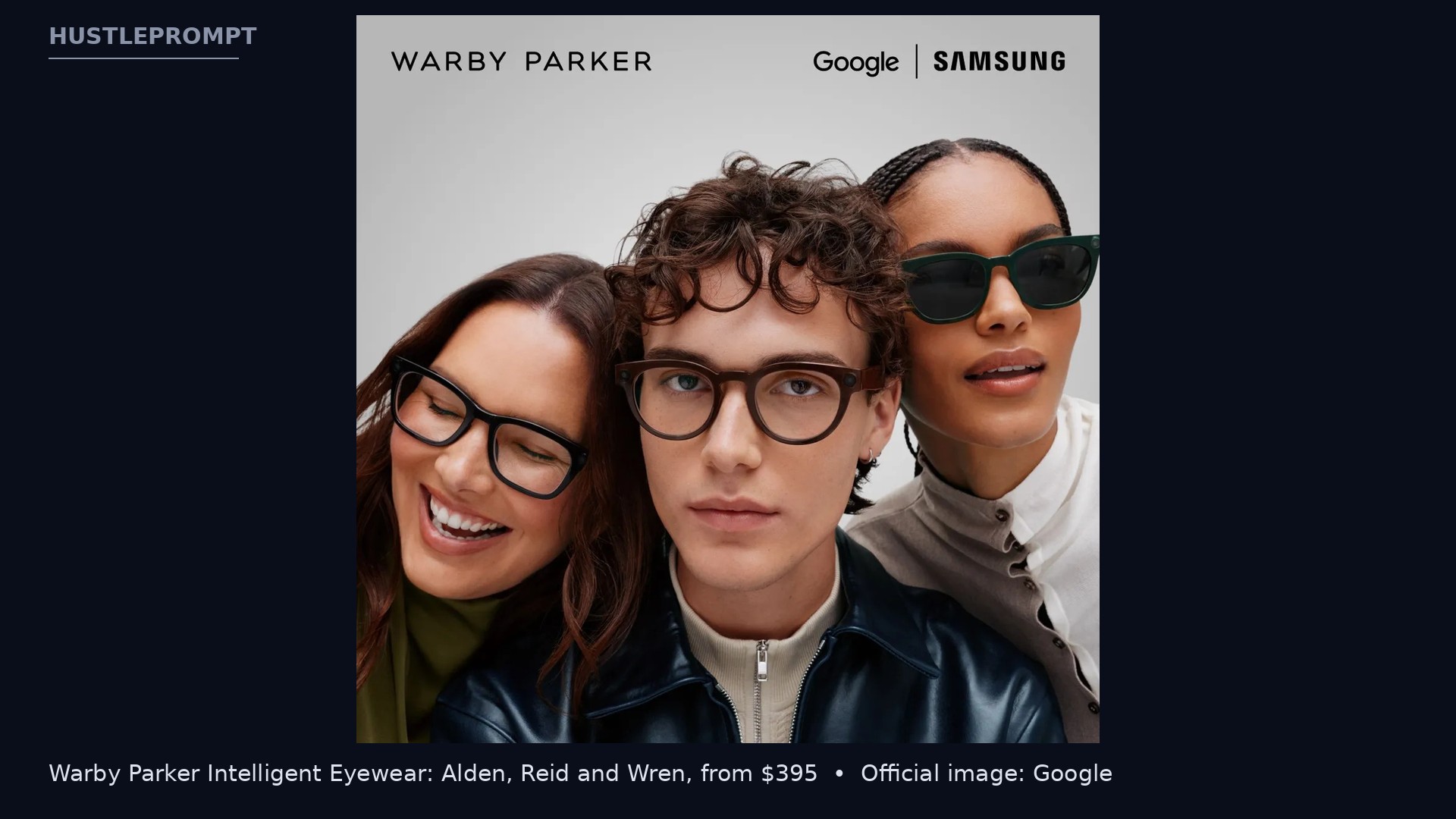
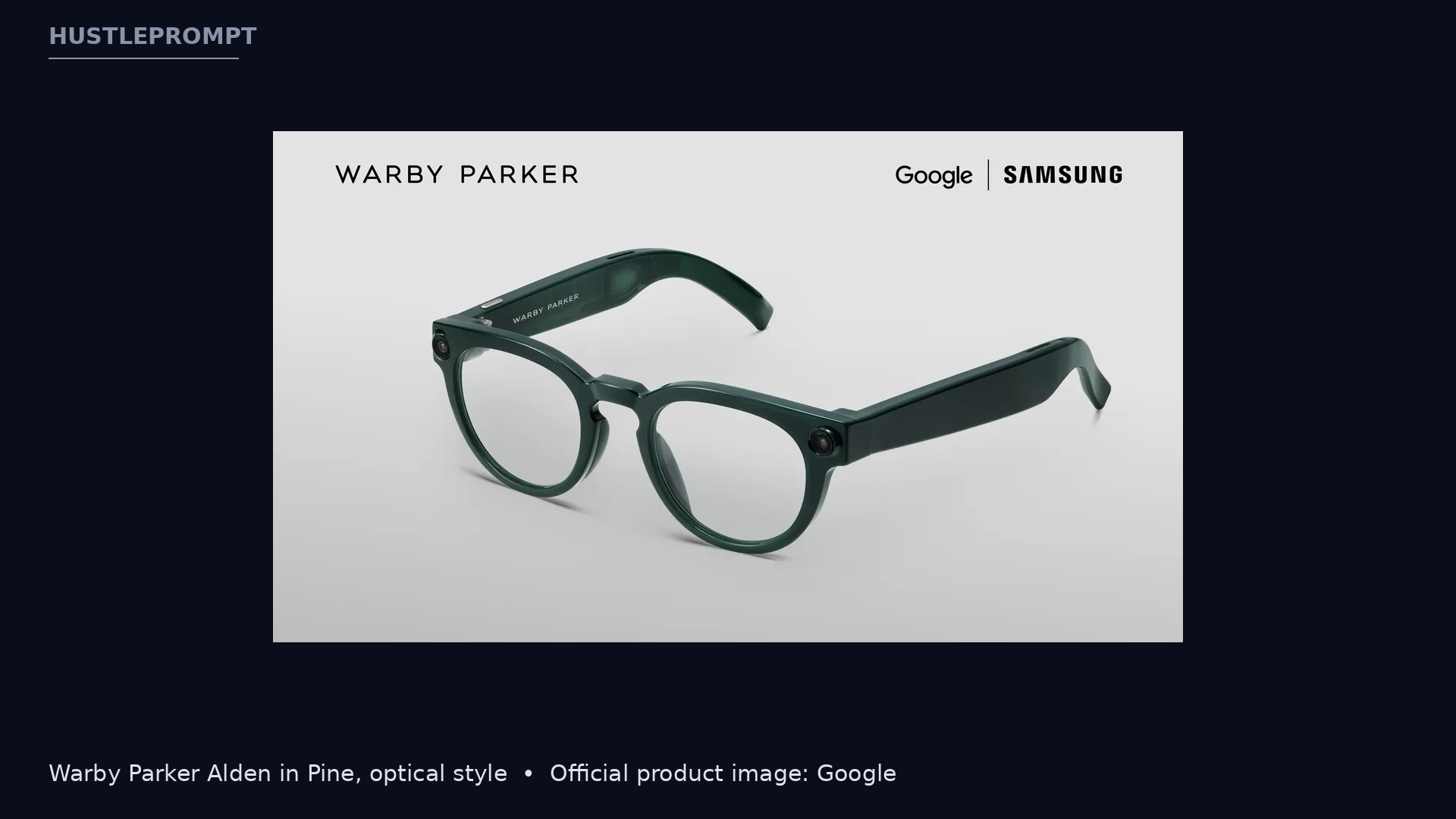
- Warby Parker — from $395. Three refined styles, Alden, Reid, and Wren, inspired by the brand’s most popular silhouettes. Optical or sun versions in Pine, Saddle, and Jet Black, with prescription, width, and lens options. Demos run at more than 360 Warby Parker stores.
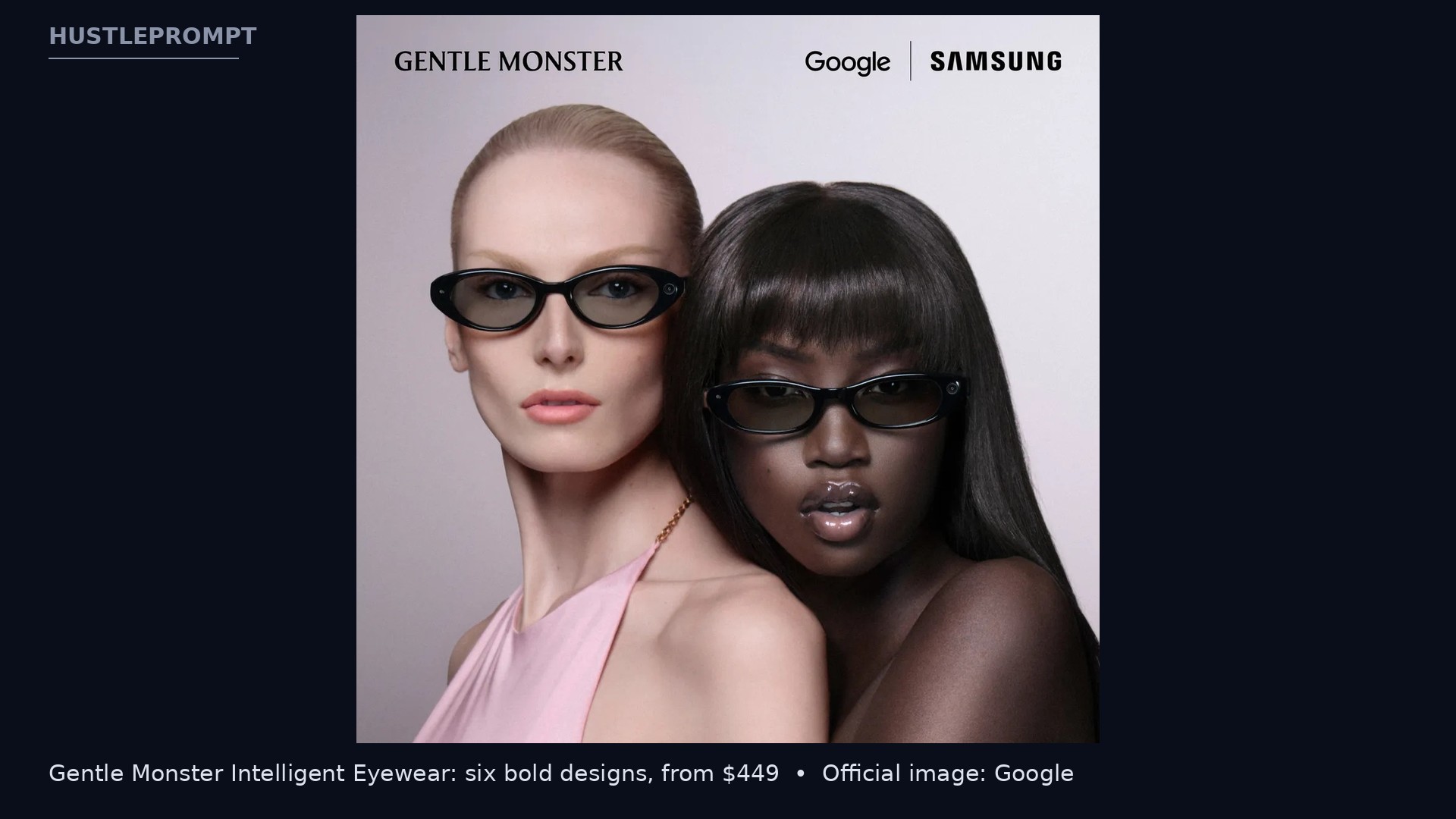
- Gentle Monster — from $449. Six bolder designs in dark red, pink, gray, and yellow, with tinted, clear, blue, or brown lenses and prescription options for most frames. Gentle Monster’s US store lists the six frames from $449 to $489, and its first pre-order batch runs November 12–15.
Both collections share the same tech: a 12MP camera, open-ear speakers, four microphones, touch sensors, 2GB of RAM and 64GB of storage, according to Engadget’s hands-on with the final retail units. The glasses run on Qualcomm’s Snapdragon AR1 Gen 1 platform, per launch coverage.
What Gemini actually does on your face
The glasses are the first devices with a “Hey Gemini” hotword, according to WIRED’s hands-on coverage — say it, or tap the frame, and Gemini answers in your ear. What it can do:
- See what you see. Ask about a street-art mural you are passing, get a tailored pick from a “New Arrivals” bookshelf, or point at an event poster and check your Calendar availability on the spot.
- Handle the busywork. Add what you are looking at to your grocery list, get reminded where your next meeting is, and catch up on group chats, messages, and phone calls — hands-free.
- Translate in real time. Google Translate delivers live speech translation with automatic language detection across more than 70 languages.
- Navigate by ear. Google Maps gives turn-by-turn directions through the open-ear speakers, which keep you aware of the world around you.
- Describe the world aloud. Guided Vision, which Google launched for Android on October 1, 2026, gives conversational audio descriptions for blind and low-vision users. Say “Hey Gemini, open Aira Explorer” and the camera streams to a trained human visual interpreter.
- Capture the moment. Press a button or ask Gemini to take a photo or video. HDR and stabilization keep shots crisp, and spatial audio capture helps you relive the moment later.
Music and audiobooks run through the open-ear speakers too — YouTube Music, Spotify, Apple Music, and Audible all work from the frames.
The privacy pitch Google is leading with
Google made privacy the centerpiece of the launch, and it is the sharpest contrast with Meta’s glasses. In Google’s own words:
When technology can see the world around you, it has a responsibility to the people around you, too. We set out to design intelligent eyewear so that personal help doesn’t come at the expense of anyone’s privacy. — Shahram Izadi, VP & GM of XR, Google
The concrete protections, from Google’s announcement and its separate privacy post:
- Bystanders’ faces are redacted from camera visuals before Gemini processes them.
- Camera visuals used for Gemini answers are not saved in Gemini History, and are not used to train AI models or target ads.
- An indicator light signals photo and video capture — and the glasses are designed to stop recording if the light is covered or disabled.
- A physical off switch turns the camera, microphones, and Gemini off, so the frames work as ordinary glasses.
- Data is encrypted on the glasses and in transit, and you control which apps can access the camera and microphone.
There are limits worth knowing. Use requires a compatible Google account for an adult in the US or South Korea. And on iPhone, the feature set is smaller at launch: Guided Vision, the Aira integration, and Audible all need an Android phone paired to the glasses.
Google vs. Meta: the AI glasses price table
Google’s $395 starting price lands in the middle of Meta’s lineup — above Meta’s budget line, below its flagship Ray-Ban, and far below the screen-equipped Display model:
AI glasses in the US, November 2026
| Glasses | From | Display? | What stands out |
|---|---|---|---|
| Meta Glasses | $299 | No | Cheapest entry, Meta’s own brand |
| Google Intelligent Eyewear (Warby Parker) | $395 | No | Gemini, prescription frames, 360+ demo stores |
| Google Intelligent Eyewear (Gentle Monster) | $449 | No | Designer frames, up to $489 by style |
| Ray-Ban Meta Gen 3 | $449 | No | 12MP camera, 3K video, 9-hour battery |
| Meta Ray-Ban Display | $799 | Yes | In-lens screen + Neural Band wristband |
Sources: Google’s announcement for its own prices; current US prices for Meta’s lineup from launch reporting (AI glasses buying guide, November 2026). Google has confirmed display glasses are still in development, with no ship date.
The honest trade-off: Google wins on privacy controls, prescription eyewear retail, and Gemini’s app ecosystem. Meta wins on price at the low end — and it is the only one selling a screen in the lens today, at $799.
Will they work with your phone?
Compatibility is the catch, and it is narrow at launch. Check this before you pre-order:
- Pixel 7 or newer, running the September 2026 Android 17 update or later.
- Samsung Galaxy S or Z phones on One UI 9.0 or later.
- iPhone 13 Pro or newer, with a smaller feature set at launch (no Guided Vision, Aira, or Audible).
- Nothing else. Other Android brands are not supported yet, and Google says it will share expansion plans in 2027.
Gemini requests and media streaming need a Bluetooth phone connection. Volume control, battery checks, and photo capture can work without it.
How to profit from Google’s AI glasses
A $395 gadget that ships December 10 is a holiday-season money machine. Here is how to get a piece of it:
- Publish the buying guide first. Search interest spikes on launch day and again on December 10. A clear “which frame, which phone, which price” guide with the comparison table above is exactly what buyers search for — and it is the page affiliate links belong on.
- Chase the first-batch scarcity. Gentle Monster’s first pre-order batch runs November 12–15 only, with no word on batch two. Scarcity drives resale and “how to get one” content for weeks.
- Sell the setup, not the glasses. Most buyers will need help pairing, picking prescription lenses, and learning the voice commands. A $49 “first-week setup” service for local buyers — or a video course — turns a product launch into a service business.
- Target accessibility budgets. Guided Vision and Aira make these glasses a real tool for blind and low-vision users. Accessibility consultants, nonprofits, and employers buy in bulk — and they pay for demos and training.
- Make content with the camera. A 12MP camera with 3K video and spatial audio, worn on your face, is a first-person content rig. Travel, real-estate walkthroughs, and cooking videos shot on the glasses will stand out while the format is still new.
- Sell to tourists and guides. Real-time translation in 70+ languages plus turn-by-turn directions is a tour guide’s dream. Bundle the glasses into a premium walking-tour or relocation service.
From look to answer in 4 steps
How a question travels through the glasses
1. See it
The 12MP camera captures what you are looking at — a poster, a shelf, a street sign.
2. Ask it
Say “Hey Gemini” or tap the frame. Bystander faces are redacted before Gemini sees the image.
3. Hear it
Gemini answers in your ear through open-ear speakers — directions, translations, calendar checks.
4. Keep it
Photos and videos you asked for land in your gallery. Gemini visuals are never saved to History.
Your phone stays in your pocket the whole time. Gemini requests need a Bluetooth connection; capture and volume work without one.
Watch it in action
Google’s official launch video shows the two collections and the pitch in under a minute: Gemini help, hands-free, in frames you would actually wear.
Watch: Google introduces Intelligent Eyewear, built with Samsung, Gentle Monster, and Warby Parker. Video: Android (Google’s official Android channel).
Frequently asked questions
How much do Google’s AI glasses cost?
From $395 for the Warby Parker collection (Alden, Reid, Wren) and from $449 for Gentle Monster’s six designs, up to $489 depending on the frame. Prescription lenses and upgrades cost extra.
When can I buy Google Intelligent Eyewear?
Pre-orders opened November 12, 2026, online and in stores at Warby Parker and Gentle Monster. General availability starts December 10, 2026, in the US, with Gentle Monster’s range also on sale in South Korea. Gentle Monster’s first pre-order batch runs November 12–15.
Do the glasses have a display?
No. This first generation has no screen in the lens — all answers come through open-ear speakers. Google has confirmed display glasses are still in development, with no ship date. Meta’s Ray-Ban Display, at $799, is the only AI glasses with an in-lens screen today.
Will they work with my phone?
Only with a Pixel 7 or newer (Android 17, September 2026 update or later), a Samsung Galaxy S or Z phone on One UI 9.0 or later, or an iPhone 13 Pro or newer. Other Android brands are not supported at launch. On iPhone, Guided Vision, Aira, and Audible are unavailable at launch.
Can I get prescription lenses?
Yes. Warby Parker offers a wide range of prescription, width, and lens options, and Gentle Monster offers prescription options for most frames. Try them first: demos run at more than 360 Warby Parker stores.
What about privacy — do the glasses record people?
Google says camera visuals used for Gemini answers are not saved in Gemini History and are not used to train AI models or target ads, and bystander faces are redacted before Gemini processes them. An indicator light signals capture, recording stops if the light is covered, and a physical switch turns the camera, microphones, and Gemini off entirely.
Are Google’s AI glasses better than Meta’s Ray-Bans?
It depends on what you value. Google wins on privacy controls, Gemini’s app ecosystem, and buying prescription frames from a real eyewear store. Meta wins on price — its own-brand glasses start at $299 — and on having a display model at $799. If you want a screen in your lens today, only Meta sells one.
Keep Reading
- Gemini 4 Hydrogen Is Here and Free for Everyone — Google’s fastest Gemini 4 model is free in the app and in Search, and it is the AI inside these glasses.
- Gemini Hits Apple CarPlay: Hands-Free AI Driving — Gemini is now in your car, with hands-free voice on CarPlay.
- AI Smart Glasses: Meta’s $360 Bet Goes Mainstream — How Meta’s glasses became a mainstream product — and the market Google is now entering.
Sources: Google — Intelligent eyewear collections with Gemini features (official announcement, November 12, 2026); Google’s Intelligent Eyewear privacy protections (official, November 12, 2026); Google product documentation via reporting. Meta prices are current US prices from launch reporting. All figures are Google’s published claims unless noted.