
A six-month-old startup with about 30 employees just raised $277 million — at a $1.15 billion valuation — to build data centers that run AI on anything but Nvidia. Marlowe, founded in May 2026 by two former Microsoft executives, is betting the next wave of AI runs on cheaper, carefully tuned chips from AMD and Etched.
The deal in numbers
Accel led the $277 million seed round, Bloomberg reported on Monday, November 23. The total includes a smaller first round led by Eclipse, whose founder and CEO, Lior Susan, is Marlowe’s executive chairman. Bessemer, Altimeter, Atreides, Journey and Valor also joined.
| Item | Detail |
|---|---|
| Seed round | $277 million |
| Valuation | $1.15 billion — a unicorn out of the gate |
| Lead investor | Accel |
| First round | Smaller Eclipse-led round, included in the $277 million |
| Founded | May 2026 |
| Employees | Approaching 30 |
| Bases | Bellevue, Washington, and Redwood City, California |
The angel list includes KKR co-founder Henry Kravis, Uber CEO Dara Khosrowshahi and Box CEO Aaron Levie. Ido Susan, founder and CEO of DriveNets, sits on the board.
Who is behind Marlowe
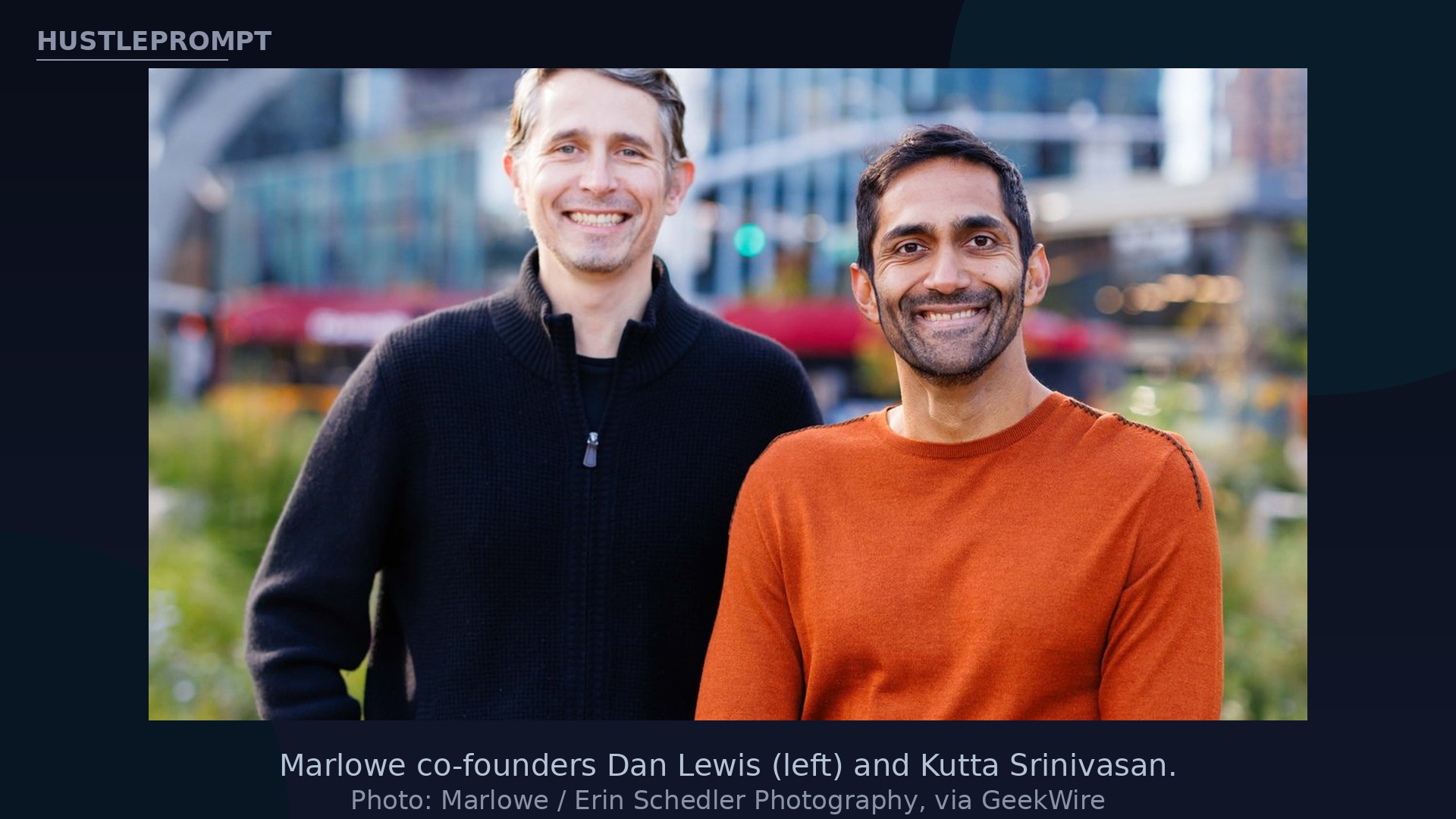
CEO Dan Lewis previously co-founded Convoy, the freight marketplace that reached a $3.8 billion valuation before shutting down in 2023. He later returned to Microsoft in enterprise AI, rising to corporate vice president. CTO Kutta Srinivasan was a Microsoft corporate vice president and the company-wide technical lead for AI infrastructure, after senior infrastructure roles at Facebook, LinkedIn and Valve.
What the founders said
“The demand for intelligence and AI is very high. It should be accessible and affordable for everyone.”
— Dan Lewis, Marlowe CEO, to GeekWire, November 23, 2026
“There were literally times when a significant portion of our non-Nvidia fleet was either idle or grossly underused or didn’t support the latest models and workloads.”
— Kutta Srinivasan, Marlowe CTO, to GeekWire, November 23, 2026
Full story: GeekWire’s Marlowe funding report; the company’s pitch is at marlowe.ai.
What Marlowe actually builds
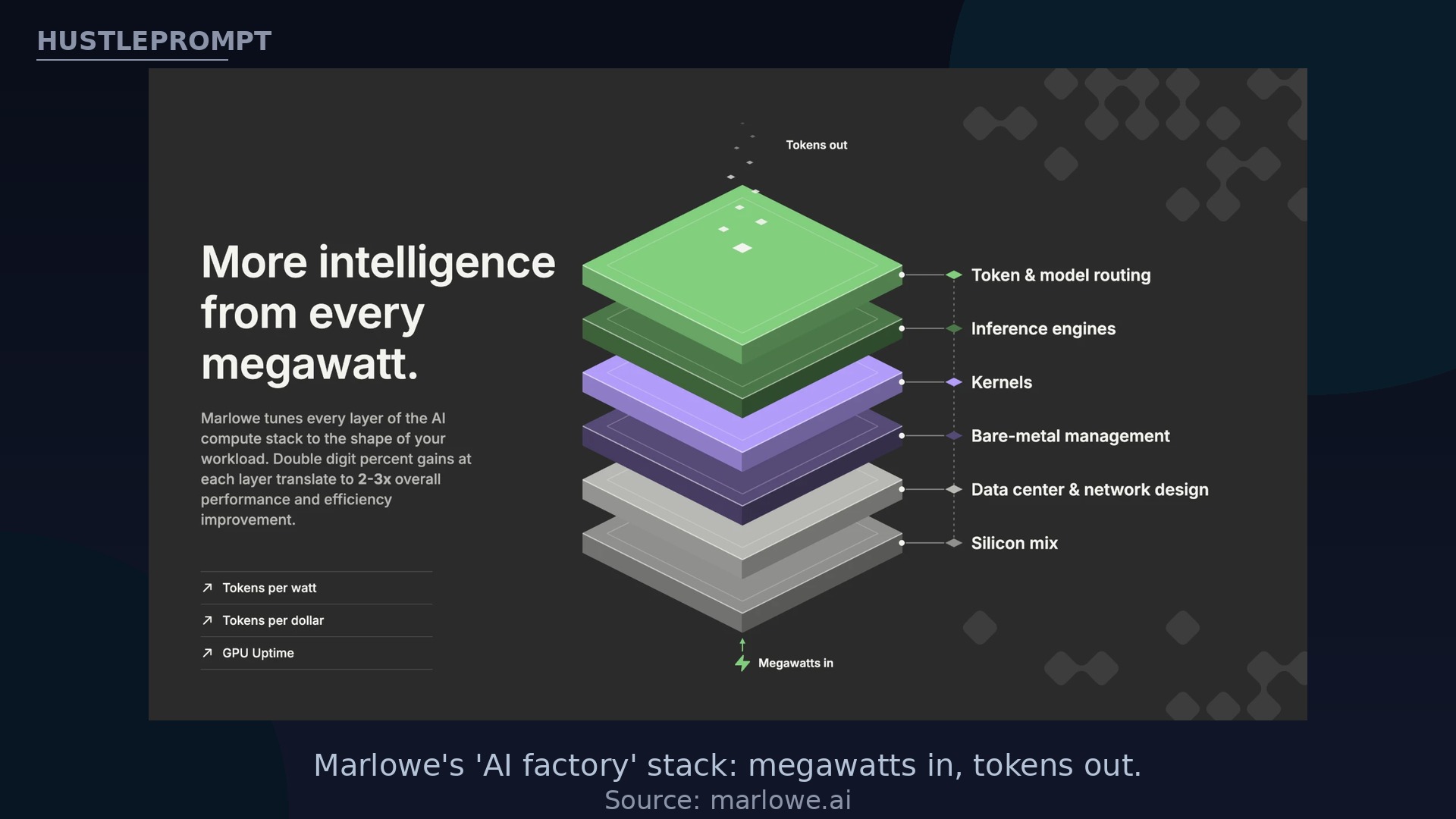
Marlowe does not design chips. It designs and operates computing systems for inference — running finished AI models to answer user requests — tuning the chips, networking, power management and software together for each customer’s workload. The idea grew out of the founders’ time at Microsoft, where inference demand kept outrunning supply while data centers were still built mainly for training.
The claim deserves a hard look: no customer, benchmark or measurement method has been published, so treat the top of that range as a pitch, not a result. What is verifiable is the pressure behind it — data-center construction costs are up 40% since 2020, a figure the company’s own site repeats.
The buildout: dates that matter
| Site | Chips | Status |
|---|---|---|
| Site 1 | Etched | Goes live in December 2026 |
| Site 2 | AMD Helios systems | On track for the second quarter of 2027 |
| Site 3 | Not disclosed | Letter of intent signed |
Both sites are under contract, and Marlowe says it has signed three customer agreements — without naming the customers or the locations. Most funding goes to chips, networking gear and hiring. Lewis is blunt: by AI infrastructure standards, $277 million does not go far. The plan is to prove the approach at tens of megawatts, then finance more capacity site by site.
The competition is already funded
Marlowe is not alone in the bet. Gimlet Labs raised $300 million at a $3 billion valuation in September, and General Compute raised $100 million in October — both building inference clouds on a mix of chips. The biggest neocloud, CoreWeave, rents Nvidia-based capacity and has taken on about $47 billion in debt. Nvidia held about 47 million CoreWeave shares as of September 30.
Lewis says Marlowe’s edge will come down to engineering skill, not hardware ownership. “You can’t just take a new chip that comes out and plug it in and expect it to produce tokens,” he told GeekWire. “You have to go do the work.”
What it means for your money
If you invest in AI infrastructure: a $277 million seed at a $1.15 billion valuation for a six-month-old company shows investors will pay unicorn prices for inference capacity — running models, not training them. Watch whether Marlowe names a customer before December.
If you build with AI: cheaper inference is the prize. If Marlowe’s tuning delivers even half its claimed gains, token costs for coding assistants and agents could fall. But do not plan around it yet — the first site is not live and no benchmark exists.
If you hold Nvidia or AMD stock: a credible non-Nvidia path pressures Nvidia’s grip on inference, and AMD’s Helios gets a showcase customer in Marlowe’s second site. Neither threat is proven, but both are now funded.
The caution: no customers named, no revenue disclosed, and the headline efficiency claim is untested. Lewis’s last company reached a $3.8 billion valuation and then shut down. Marlowe is a bet on execution, not a proven business.
Frequently asked questions
What is Marlowe?
An AI infrastructure startup that builds data centers tuned for inference — running finished AI models — on AMD and Etched chips instead of Nvidia GPUs.
How much did Marlowe raise?
$277 million in a seed round at a $1.15 billion valuation, led by Accel. The total includes a smaller first round led by Eclipse.
What chips does Marlowe use?
Chips from AMD and Etched. Its first site uses Etched chips; its second will use AMD’s Helios systems. It is not using Nvidia chips for now, but has not ruled them out.
When does Marlowe’s first data center open?
The first site, built around Etched chips, goes live in December 2026. A second, larger site using AMD Helios systems follows in the second quarter of 2027.
Is Marlowe’s 2-3x efficiency claim proven?
No. Marlowe claims two to three times more output per watt and per dollar than conventional GPU clouds, but it has published no customers, benchmarks or measurement method. Treat it as a company claim for now.
Who invested in Marlowe?
Accel led, with Bessemer, Altimeter, Atreides, Journey and Valor. Angels include KKR co-founder Henry Kravis, Uber CEO Dara Khosrowshahi and Box CEO Aaron Levie.