
Google just shipped the world’s top-ranked AI model, and almost nobody is allowed to touch it. Gemini 4 Carbon, announced on Wednesday, October 28, 2026, takes the No. 1 spot on the Artificial Analysis Intelligence Index v5.0 with a score of 59. Yet Google is handing it first to a small group of cyber defenders, not to developers or consumers.
That locked door is the story. According to Google’s official announcement, Carbon is the company’s next frontier model, built for cybersecurity defense and long, multi-day engineering work. Access starts this week for a subset of cyber defenders, then expands gradually through Google’s Fairwind Program, with no date yet for everyone else.
What Google actually announced
Carbon builds on Gemini 4 Argon, launched two weeks earlier. Where Argon was general-purpose, Carbon is a specialist, designed to run for days on hard problems like patching subtle bugs across large codebases.
No. 1 on the Artificial Analysis Index v5.0, at 59.
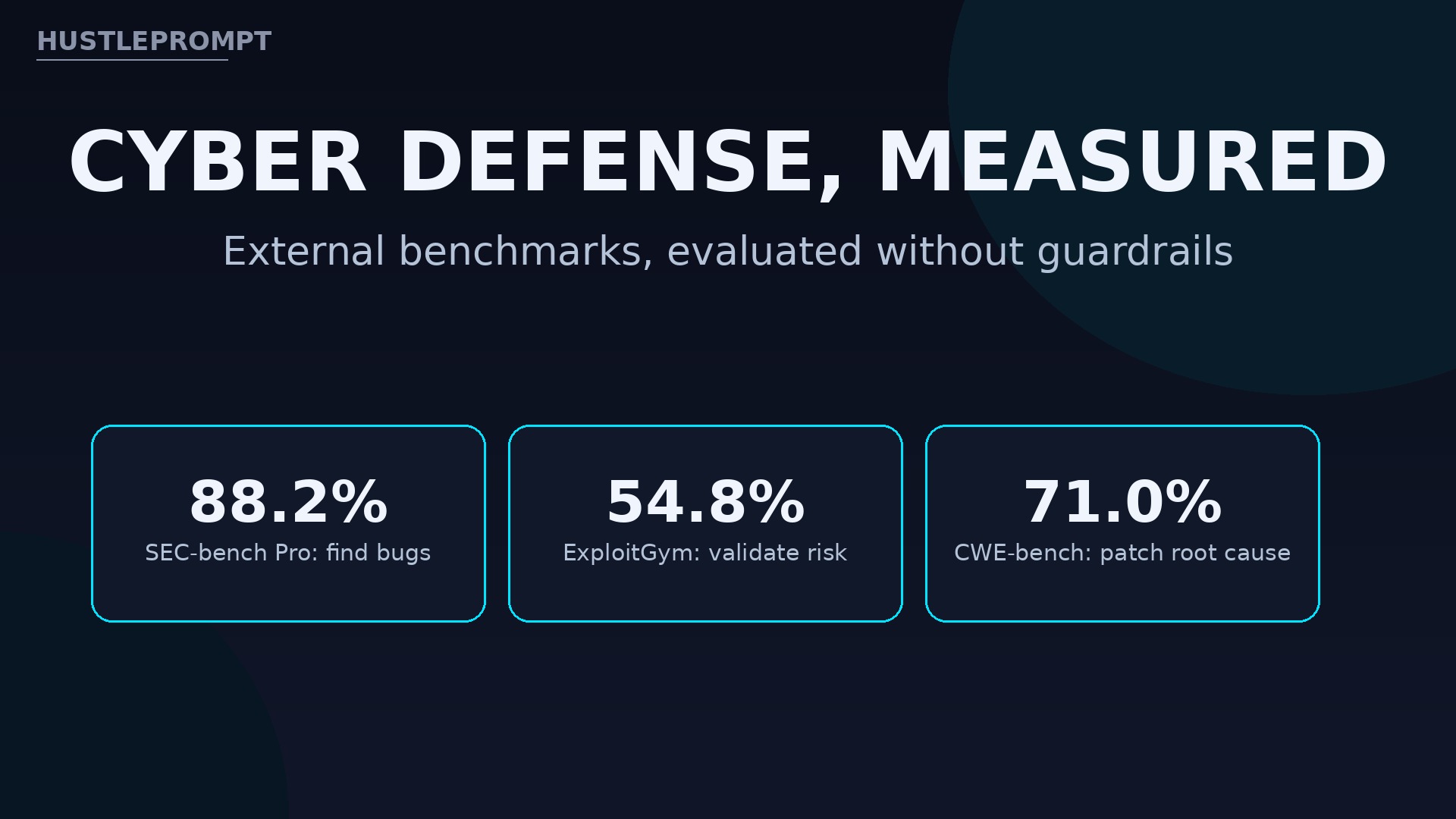
Cybersecurity bests, per Google: 88.2% SEC-bench Pro, 54.8% ExploitGym, 71.0% CWE-bench.
Rollout: a subset of cyber defenders this week, then more trusted partners; no date for anyone else.
Introductory price: $2/$10 per million tokens, cached input 95% off.
Google says it is deliberately slowing the rollout. The company states it is engaged in the U.S. government’s voluntary process for pre-release model testing, and will keep iterating on guardrails before a wider release.
The benchmark table, with sources attached
Every number below comes from Google’s announcement. The cybersecurity benchmarks were evaluated without guardrails, so read them as capability measurements, not promises about a guarded product.
| Benchmark | Carbon score | What it measures |
|---|---|---|
| Artificial Analysis Index v5.0 | 59, ranked No. 1 | Overall frontier capability |
| SEC-bench Pro | 88.2% | Finding real vulnerabilities |
| ExploitGym | 54.8% | Turning a flaw into a working exploit |
| CWE-bench (Collinear) | 71.0% | Patching at the root cause |
| WebDev Arena | 1768, ranked No. 4 | Web development quality |
| Gray Swan prompt injection | 0.0% attack success | Resisting injection attacks |
Google’s internal tests put Carbon at more than double Argon’s success rate for generating secure code. Its Chrome team reports Carbon performed more than 10 times better than another lab’s large frontier model on high-quality patches.
How the rollout works
There is no sign-up page and no API ID yet. Access runs in four stages, and only the first has started.
1. A subset of cyber defenders, this week. The first cohort gets Carbon now, under Fairwind.
2. More trusted partners, gradually. Access phases out to additional vetted partners.
3. U.S. government voluntary testing continues. Google iterates on guardrails during this phase.
4. Developers, businesses, consumers, as soon as possible. Google gives no date.
That copies Argon’s playbook, with one extra step toward caution: Argon went public about two weeks after its Fairwind-only debut, while Carbon has no public date.
Pricing: cheap to start, with a step-up already published
Carbon launches at Argon’s introductory price. Launch coverage of Google’s published pricing reports a step-up to $4 and $20 per million tokens once the introductory period ends, matching Claude Opus 5.5’s rate card. For security teams, the number that moves budgets is the 95% cached-input discount.
The safety claims, and how much to trust them
Google pairs the capability claims with specific alignment numbers, all from its own testing. Treat them as company-reported, not independently reproduced.
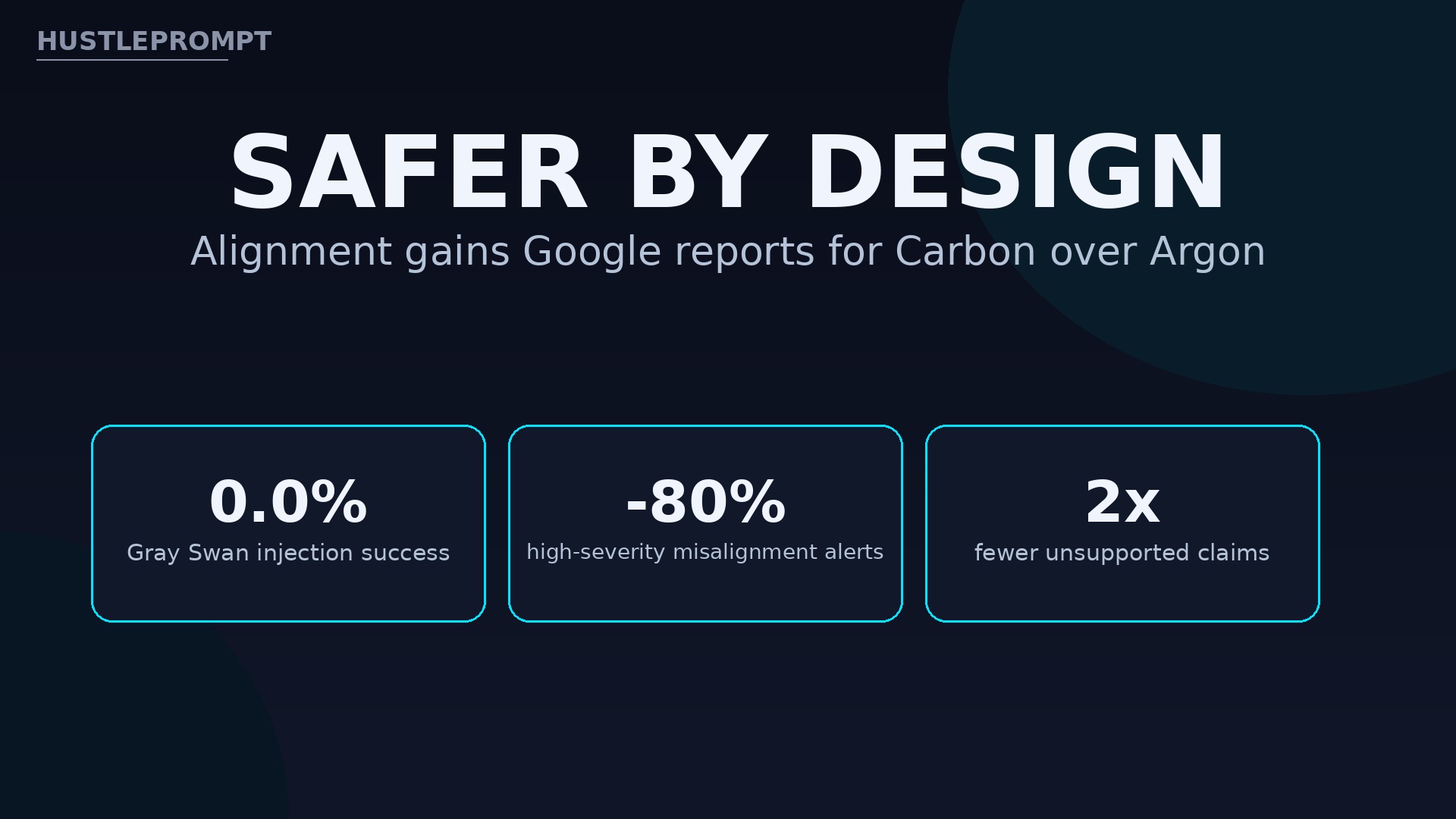
- Cheating, nearly eliminated: successful cheating on Terminal-Bench 4.0 fell to 0.0%, with attempts down to 0.4%.
- Misalignment alerts, down almost 80% in live coding environments with Google’s own teams.
- Honesty, roughly doubled: unsupported claims fell by approximately 2x versus Argon.
- Scope discipline: overreach fell 26% and under-service fell 29%.
- Injection resistance: 0.0% attack success on Gray Swan’s benchmark, versus Argon’s 0.7%.
The caveat applies to every frontier launch: these are Google’s benchmarks on Google’s chosen tests, and the 10x Chrome comparison names no rival model.
How to profit from Gemini 4 Carbon
You cannot buy Carbon today, but you can position for the moment it opens up.
- Sell security audits that assume Carbon-class models. Offer code review and patch validation now, with Carbon-grade output as the roadmap upgrade.
- Get into the Fairwind orbit if you defend systems. Pursue trusted-partner channels now; early access is a credential you can sell.
- Build the workflow, not the model. The valuable product is the pipeline around the model: intake, triage, validation, and patch review.
- Teach AI-assisted vulnerability management. Teams need training on what these models can and cannot verify, and that training sells before the model is public.
- Price API work around the step-up. Model costs at $4 and $20 per million tokens, not the intro rate, so a price rise does not erase your margin.
Build the security workflow now, so the day Carbon opens you are selling a service, not learning a model.
Frequently asked questions
What is Google Gemini 4 Carbon?
Google DeepMind’s next frontier model, announced October 28, 2026, built for cybersecurity defense and long-horizon engineering tasks.
How is Carbon different from Gemini 4 Argon?
Argon, launched two weeks earlier, is general-purpose. Carbon specializes in cybersecurity and multi-day coding, with more than double Argon’s secure-code success rate on Google’s internal tests.
When can developers use Gemini 4 Carbon?
Not yet. Access starts this week for a subset of cyber defenders through Fairwind, then expands to more trusted partners, with no date for anyone else.
How much does Gemini 4 Carbon cost?
The introductory price is $2 per million input tokens and $10 per million output tokens, with cached input at 95% off. Launch coverage reports a published step-up to $4 and $20 after the introductory period.
Is Carbon really the best AI model?
It ranks No. 1 on the Artificial Analysis Intelligence Index v5.0 at 59, per Google. That is a broad capability ranking, not an independent verdict, and its cybersecurity scores were measured without guardrails.