
ChatGPT usage limits are about to get simpler — and for the heaviest users, tighter. OpenAI has started rolling out one shared usage meter across ChatGPT and Codex, and admits a small fraction of its heaviest subscribers may hit their limits sooner.
The rollout began on November 24, 2026, with a small group of ChatGPT Pro subscribers, product lead Thibault “Tibo” Sottiaux said on X. OpenAI plans to reach more users in December, folding ChatGPT Work’s agentic features into the main ChatGPT experience.
What exactly changes in December
Today, ChatGPT and Codex draw from separate allowances: chat has its own limits, and Work and Codex share an agentic allowance over rolling five-hour windows, with weekly caps on some plans. From December, that ends on Plus, Pro, and Business.
OpenAI’s Help Center article, updated yesterday, states the change directly. Usage will be measured in tokens — the units of information a model processes and generates — instead of approximate message counts, and more advanced models and complex tasks generally use more of it.
What OpenAI says
“Starting in December, Plus, Pro, and Business plans’ usage allowance will be shared across ChatGPT and Codex as we bring the agentic capabilities of Work into the main ChatGPT experience.”
— OpenAI Help Center, Understanding ChatGPT and Codex usage limits
| Today | From December 2026 | |
|---|---|---|
| What shares one pool | Work and Codex | ChatGPT and Codex |
| How usage is measured | Approximate message counts | Tokens |
| Plans affected | Plus, Pro, Business | Plus, Pro, Business |
| Instant chat | Unlimited, outside the meter | Still unlimited, still outside the meter |
| Where to check | Settings → Usage | Settings → Usage, with combined remaining usage and reset times |

What counts against the meter — and what does not
What eats your allowance fastest? The model and the task decide: a long agentic session, a big Codex job, or heavy reasoning drains the pool faster than everyday chat.
One large exception: conversations using the Instant model remain unlimited and do not count toward the shared allowance — if you exhaust yours, you can keep using Instant. Casual questions and quick drafts cost you nothing.
OpenAI also says a small group of users may see the changes before December, to learn from early feedback. That group is already live: the first Pro subscribers saw the merged Chat and Work experience this week.
What it costs if you run out
When the allowance runs out, OpenAI lists three options: wait for the reset, upgrade your plan, or buy credits. Reset times appear in Settings, then Usage, with your combined remaining allowance.
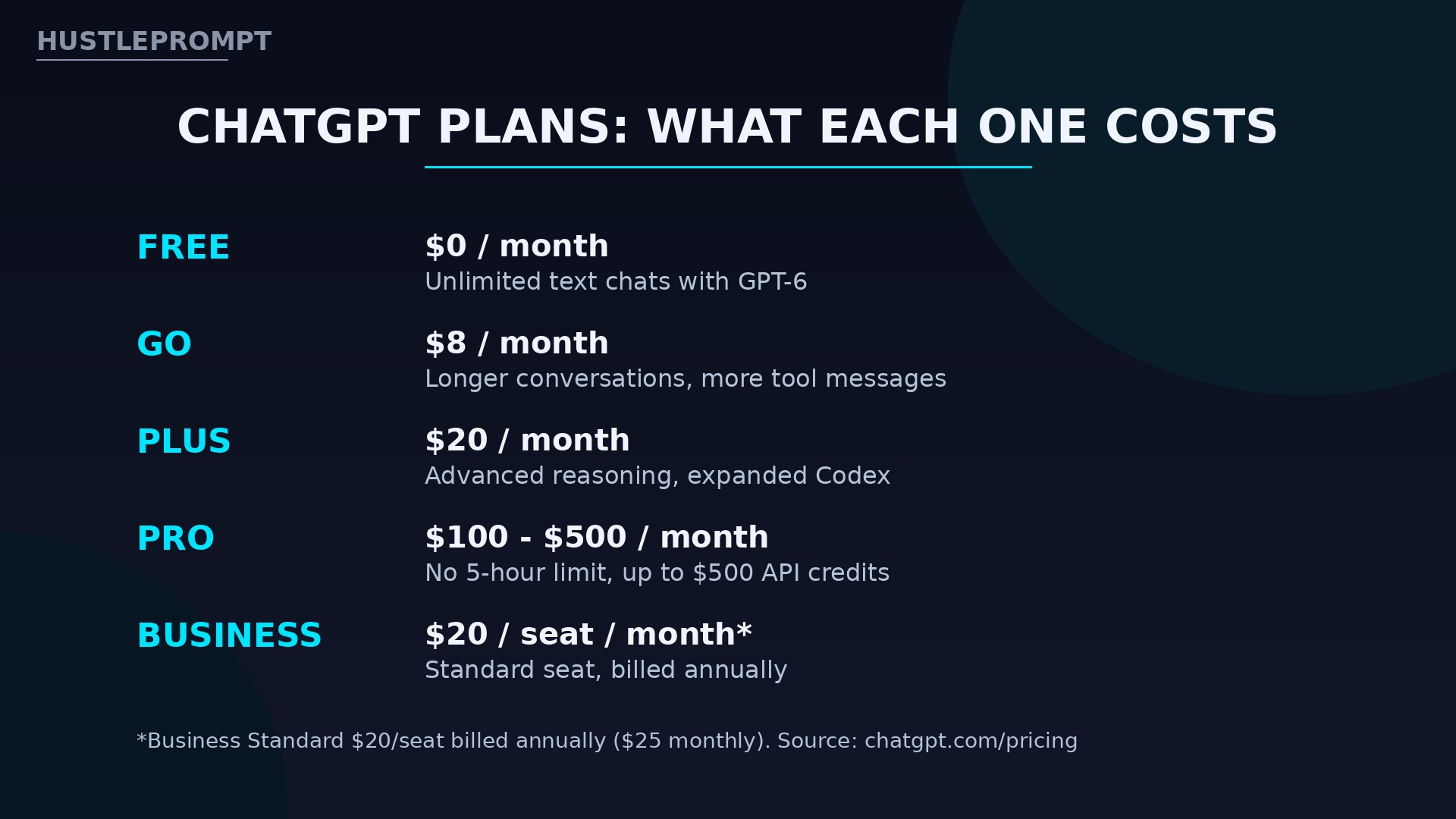
The upgrade math is worth doing before December. OpenAI’s pricing page lists Free at $0, Go at $8 a month, Plus at $20 a month, and Pro from $100 a month in three tiers of $100, $200, and $500. Pro tiers also include monthly API credits equal to the tier price, which softens the jump if you already spend on the API.
Where your allowance goes now
Think of it as one tank with three taps — and one tap that bypasses the tank entirely.
How to stretch your allowance
Most subscribers will not notice the change — OpenAI expects most users will not wait for resets more often than they do now. But if you are a heavy user, a few habits protect your budget:
- Use Instant for casual chat. Quick questions cost nothing — save the allowance for work that needs the stronger models.
- Pick cheaper models for routine work. On Plus, GPT-6.2 Sol allows roughly 17 to 180 local messages per five-hour window, while the heavier GPT-6.2 Astra allows roughly 6 to 50. Match the model to the job.
- Batch your Codex sessions. One long, well-planned coding session uses the pool more efficiently than ten scattered ones.
- Check Settings → Usage in the first week of December. It shows your combined remaining allowance and reset times — look before you pay for an upgrade.
- Do the credits math before upgrading. If you hit the wall occasionally, buying credits may be cheaper than jumping from Plus at $20 to Pro at $100 a month.
The honest caveats
Three things are still open: no exact start date inside December, no new per-plan token numbers, and no word on how each advanced ChatGPT feature will be counted. OpenAI’s statement that most users will not wait for resets more often is a projection, not a guaranteed allowance.
OpenAI is not alone in merging meters: Anthropic did the same in September, merging Claude usage into a shared pool. The industry is moving toward one allowance per subscriber, measured in tokens.
Frequently asked questions
When do ChatGPT and Codex start sharing one usage limit?
Starting in December 2026, on Plus, Pro, and Business. A small group of Pro subscribers already sees it since November 24, 2026.
Does Instant chat count toward the shared allowance?
No. Instant chats remain unlimited and do not draw from your usage — you can keep using Instant after exhausting your allowance.
How is the shared allowance measured?
In tokens. The model and the task decide how fast it goes; advanced models and complex tasks use more.
What happens when I reach my limit?
Wait for the reset, upgrade your plan, or buy credits. Your combined remaining usage and reset times appear in Settings, then Usage.
Which plans are affected?
Plus at $20 a month, Pro at $100, $200, or $500, and Business. Free and Go are not named in the change.