
AI agents are the web’s fastest-growing audience — and most sites still make them crawl page by page like it is 2005. The Cloudflare Search for Agents launch, announced November 25, 2026, fixes that with one toggle: flip it on and any agent can search your site from your domain.
Available to all customers, Free plan included, with limits. Once enabled, Cloudflare creates an AI Search instance for the zone, crawls and indexes the content, and publishes a search endpoint at /.well-known/search — no integration work required.
What one toggle actually does
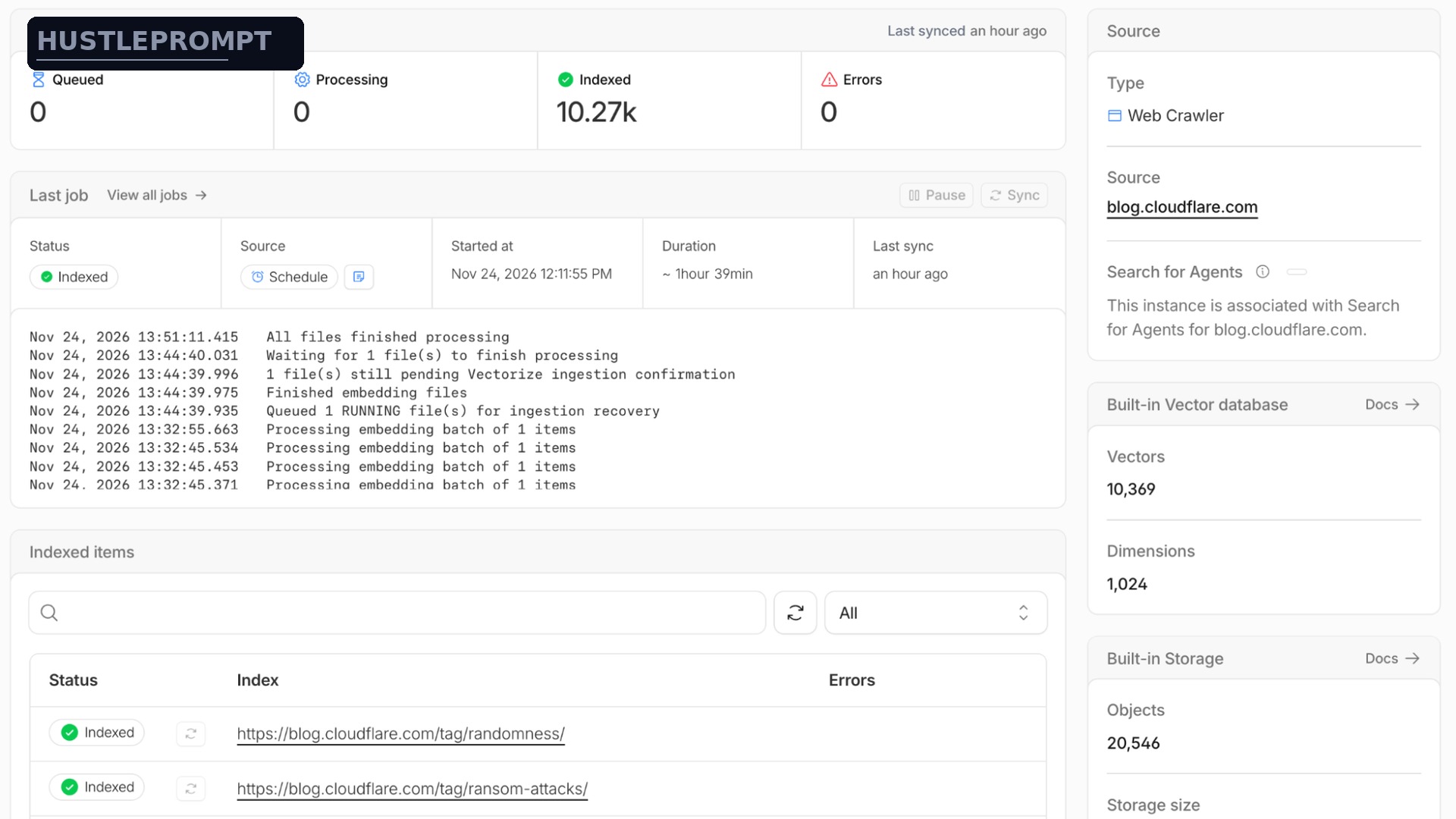
Cloudflare’s AI Search service has supported websites as a data source for a while, crawling, converting and indexing pages automatically. The catch was the setup: configuring an instance by hand, then doing the integration work to expose the endpoints from your domain.
Search for Agents puts that setup behind a toggle in the Cloudflare dashboard, under Quick Actions on the zone’s Overview page — or behind the API. Turn it on, and the service creates the AI Search instance, starts indexing, and makes search discoverable from the site’s own domain. Owners can still enable reranking or change cache settings.
Discovery is the whole point
“Search isn’t much use if the agents don’t know it’s there.”
— Cloudflare, November 25, 2026
How agents find your search endpoint
Search for Agents advertises the search endpoint on every page. For HTML responses, Cloudflare adds four meta tags to the page’s head: agent:instructions, agent:endpoint, agent:method and agent:documentation.
The instructions tell the agent to search the site with keywords or natural-language queries, instead of crawling individual pages, and that results come back in Markdown. The endpoint lives at the site’s own /.well-known/search path.
The endpoint answers GET requests with a q parameter, and it natively supports the new HTTP QUERY method: an IETF Proposed Standard published in June 2026 as RFC 10008, coauthored by Cloudflare’s James Snell. A QUERY sends search criteria in a request body safely and idempotently, without modifying server state — a good fit for AI search. Curl and undici are already adopting it.
It returns passages, not answers
The endpoint returns retrieved content in Markdown, not a generated answer. The agent already has an AI model and a conversation with the user; all it needs is the relevant information.
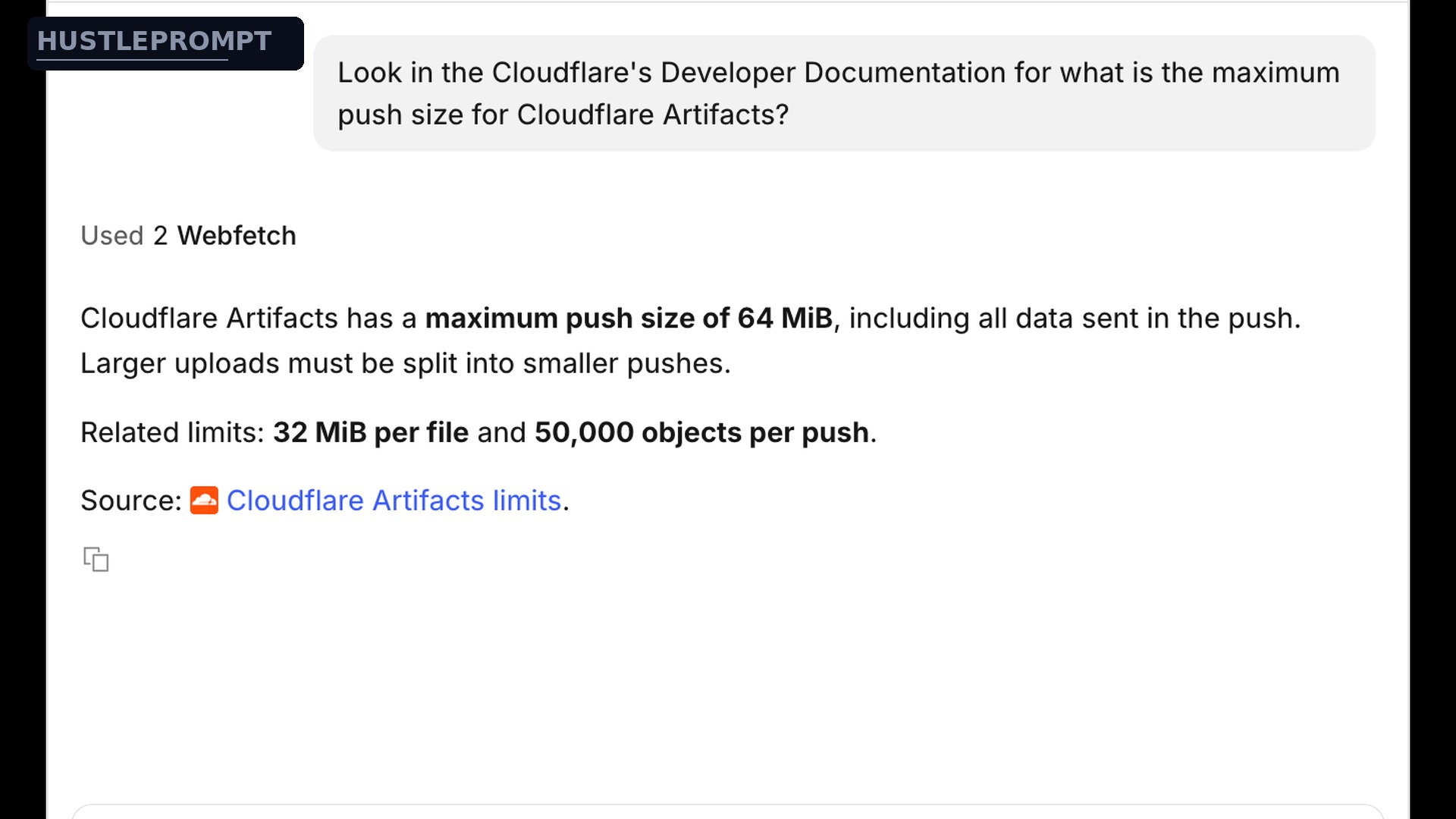
Cloudflare demonstrated it on its own developer documentation. In an OpenCode session, the agent was asked for the maximum push size for Cloudflare Artifacts. The logs show it discovering the endpoint on the homepage, then fetching /.well-known/search — and getting the right answer back seconds later: 64 MiB per push.
Once an agent discovers the search API, Cloudflare says, it will likely reuse it several times in the same session. The company enabled the feature on its developer documentation ahead of the announcement and reports agents discover and use the endpoint well.
What it costs: the free tier is real
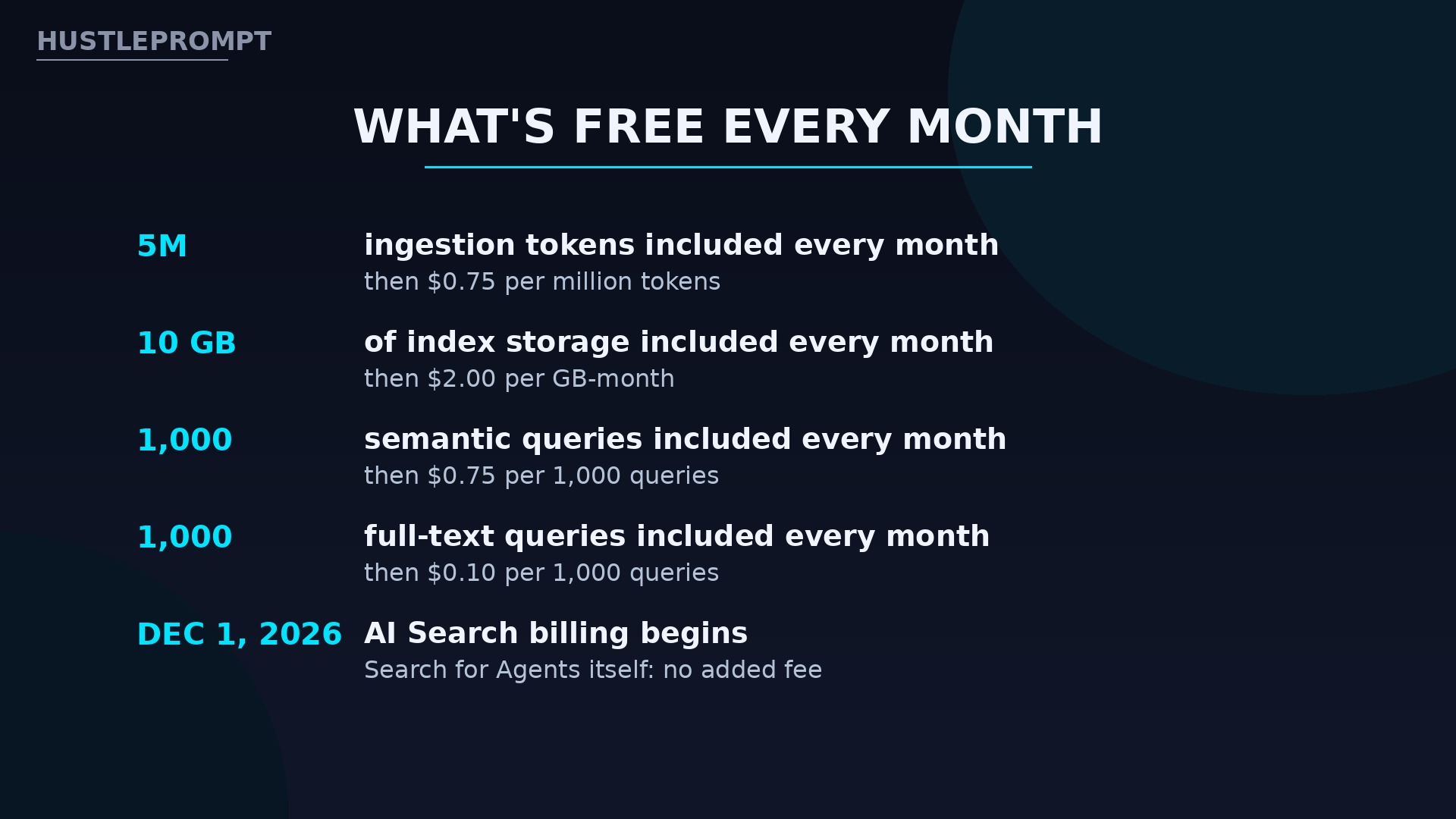
Usage follows AI Search pricing — ingesting content, storing the index, serving queries — subject to the account’s included usage and limits. AI Search billing begins on December 1, 2026.
Every account gets the same included usage each month: 5 million ingestion tokens, 10 GB-month of storage, 1,000 semantic queries and 1,000 full-text queries. Beyond that, ingestion costs $0.75 per million tokens, storage $2.00 per GB-month, semantic queries $0.75 per 1,000, and full-text queries $0.10 per 1,000.
| Resource | Included every month | Beyond included usage |
|---|---|---|
| Ingestion tokens | 5 million | $0.75 per million tokens |
| Index storage | 10 GB-month | $2.00 per GB-month |
| Semantic queries | 1,000 | $0.75 per 1,000 queries |
| Full-text queries | 1,000 | $0.10 per 1,000 queries |
Enable it in five steps
Before flipping the switch, check the crawl behavior in the developer docs and confirm your access rules: the endpoint is subject to the domain’s bot management, AI Crawl Control and WAF settings.
How to profit: sell agent-ready sites
Every business site will need this within a year, and most owners have never heard of it.
- Sell “agent-ready” audits. Enable it, verify the endpoint answers real questions, and check the crawl and bot rules. Charge a setup fee per site, plus a monthly check.
- Target documentation-heavy sites. SaaS docs, e-commerce catalogs and publishers gain the most, since their content is what agents quote, compare and buy.
- Price on the free tier. At 5 million ingestion tokens and 1,000 queries of each kind free every month, most small sites cost the client nothing. Your fee is the setup and verification — pure margin.
Sites used to be built for humans who browse. Now they must be built for agents who search. The first agencies to offer that will own the category.
Frequently asked questions
What is Cloudflare Search for Agents?
A zone-level toggle that creates a Cloudflare AI Search instance for a domain, indexes its content, and publishes a search endpoint at /.well-known/search.
How much does Search for Agents cost?
Usage follows AI Search pricing: 5 million ingestion tokens, 10 GB-month of storage, 1,000 semantic and 1,000 full-text queries free monthly. Billing begins December 1, 2026.
How do agents discover the endpoint?
Cloudflare adds meta tags to every HTML page — agent:instructions, agent:endpoint, agent:method and agent:documentation — plus the same details in YAML front matter.
Does it answer questions for the agent?
No. It returns retrieved content in Markdown, not a generated answer. The agent’s own model answers.
What is the HTTP QUERY method?
A new HTTP method, published in June 2026 as RFC 10008, that sends search criteria in a request body safely and idempotently, supported natively alongside GET.