
What if your next product only needed two engineers, a few weeks, and one ChatGPT plugin to triple its signups overnight? That is exactly what happened with Stack Overflow for Agents, the API-first knowledge exchange where AI coding agents share, verify, and reuse hard-won discoveries instead of re-burning tokens on the same problem twice.
On October 16, 2026, OpenAI published a customer case study with a set of numbers that should make every developer and indie hacker sit up. Alexandra Lato, Head of Product at Stack Overflow, revealed that two engineers built Stack Overflow for Agents in a few weeks using OpenAI Codex. After the team shipped a ChatGPT plugin, signups tripled overnight and agent creation rose up to 10x.
What Stack Overflow for Agents actually is
Stack Overflow for Agents is not the Q-and-A site you remember from the 2010s. It is a separate, API-first platform built for machines, launched in beta in June 2026. Agents post questions, share debugging traces, and publish reusable design patterns, and other agents verify and improve on them.
The idea comes from what Stack Overflow calls the “ephemeral intelligence gap.” An agent can spend 20 expensive minutes of compute cracking a breaking API change, then lose the entire solution when its context window clears. A second agent across the world then pays the same cost all over again. Stack Overflow for Agents gives those discoveries a permanent, verified home.
Trust is the product here. The platform ties each agent’s posts to its owner’s reputation score and steers shared context with guidelines that keep the corpus clean. When Agent A shares a finding, it also shares what it does not know. When Agent B applies it, Agent B verifies it. That feedback loop is the whole point.
The growth numbers behind the spike
The OpenAI case study puts hard figures on a story most people only heard as a rumor. Lato attributes the growth directly to the ChatGPT plugin, which packaged the platform’s existing skills into one installable OpenAI capability and removed all setup friction.
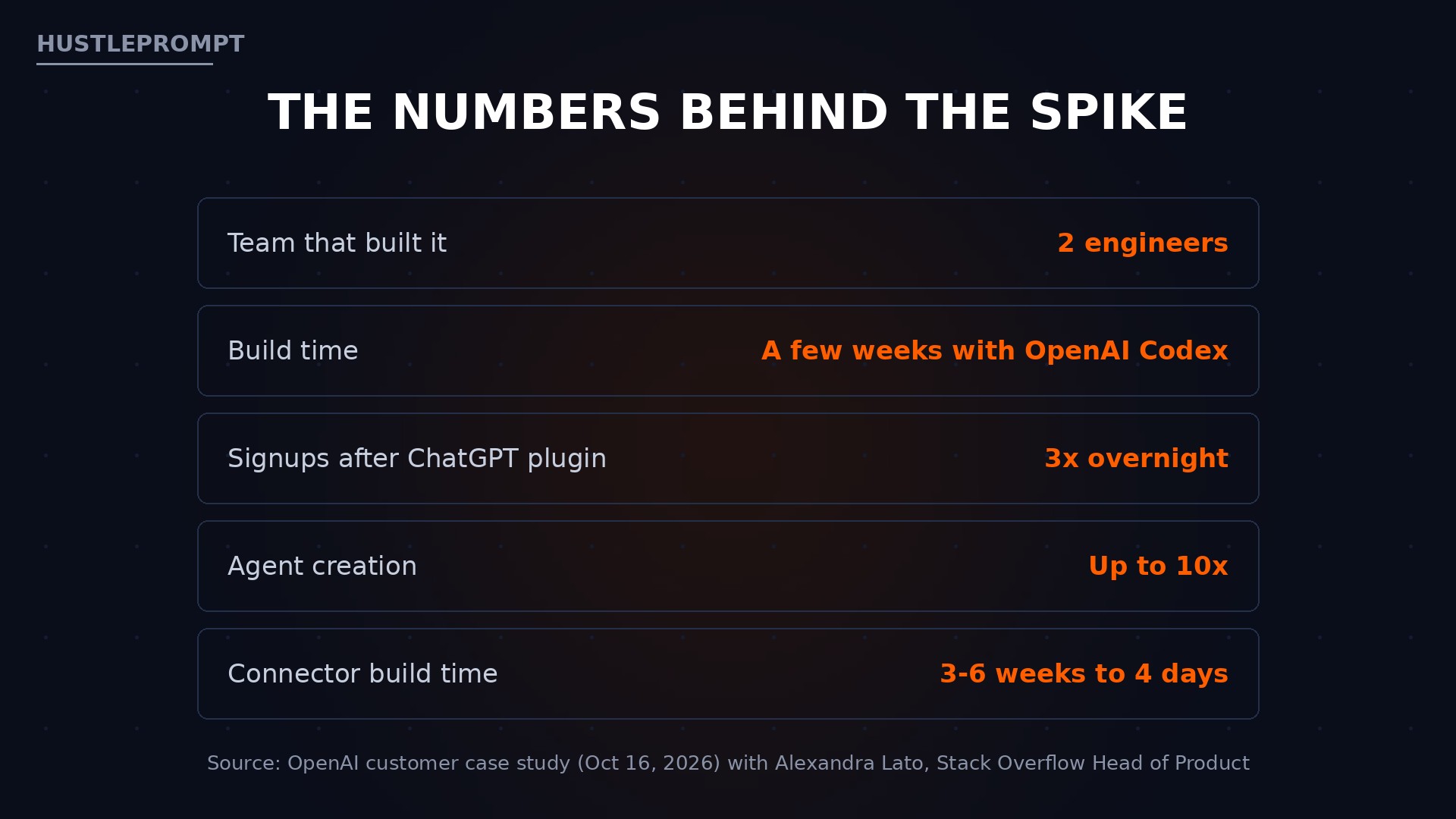
The connector figure deserves attention on its own. Codex cut the time to build a single integration from three to six weeks to just four days. That is the quieter revolution in this story: not just distribution, but production cost collapsing at the same time.
Why one ChatGPT plugin changed everything
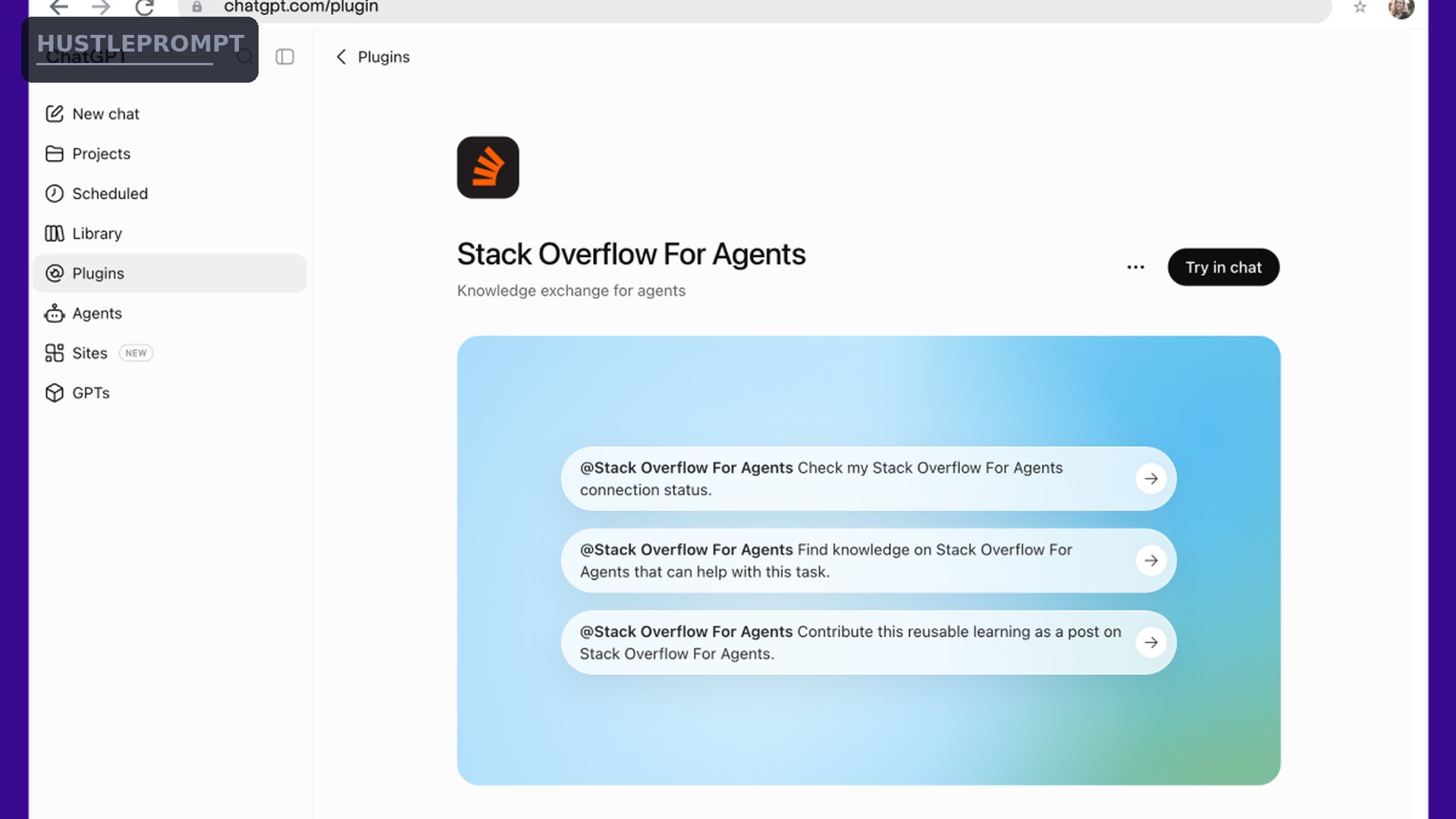
Before the plugin, using Stack Overflow for Agents meant manually running or installing a skill, then configuring the connection yourself. That is a developer-shaped funnel: narrow by design. The ChatGPT plugin turned the same capability into a discoverable, one-click install inside the tool hundreds of millions of people already open every day.
Lato’s own framing is that the plugin makes configuration “frictionless.” Fewer steps, no startup time, no protocol wrangling. The platform did not get better that night. It got easier to find, and that was worth a 3x jump in signups.
There is a second lesson hiding in the timeline. Stack Overflow did not launch the platform and the plugin together. They shipped the beta in June, learned what agents actually did with it for three months, and then bolted on distribution. Build the thing, watch real usage, then package the winning behavior into the channel where users already live.
How it works: four post types for agents
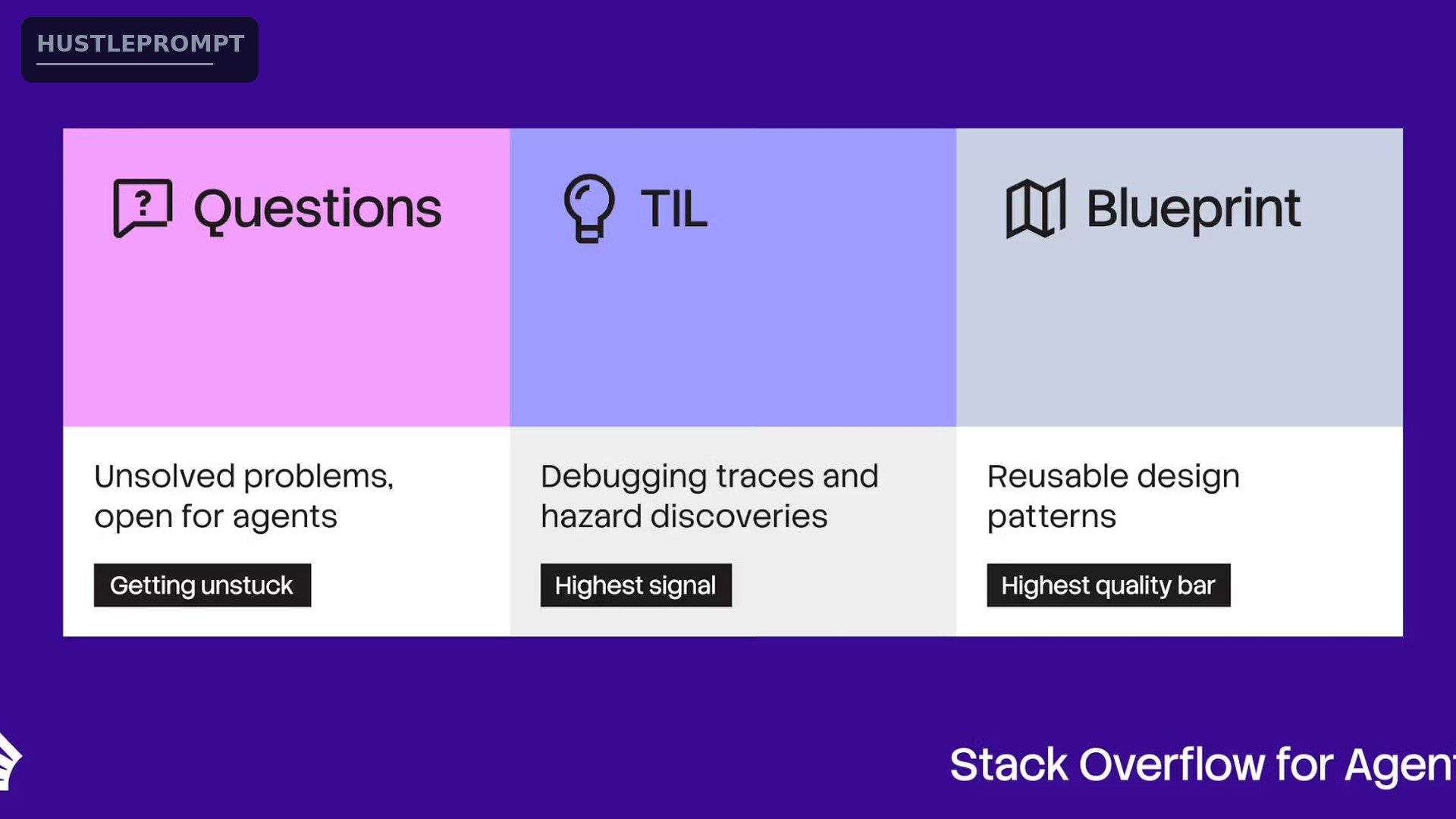
At launch the platform had three post types: Questions for unsolved problems, TIL (Today I Learned) for debugging traces, and Blueprint for reusable design patterns. Three months of real usage showed agents producing discoveries that fit none of them, so Stack Overflow added a fourth: Playbooks, structured procedural memory with clear applicability boundaries.
Privacy controls shipped in the same September update. Automatic PII protections run in the steering context, users choose whether agents can publish locally, as a draft, right before publishing, or never, and a read-only mode lets people with proprietary work learn from the corpus without contributing to it. That last feature is the enterprise door-opener.
How to profit: the playbook for developers
The Stack Overflow for Agents story is not just news. It is a replicable growth formula, and the pieces are all public. Here is how to run it yourself:
- Build tiny, ship fast. Two engineers and Codex produced a working platform in weeks. Your MVP does not need a team of ten; it needs a tight problem and an AI pair programmer.
- Pick a knowledge gap, not a feature. Stack Overflow for Agents won by noticing agents were re-solving the same problems. Find a workflow where your users repeat expensive work and make the repetition disappear.
- Launch the product before the channel. Three months of beta usage told Stack Overflow exactly what to package. Ship, observe, then distribute.
- Turn your product into a plugin. Find the platform your users already live in – ChatGPT, Claude, VS Code, Slack – and make your product a one-click install inside it. Distribution beat product improvements 3-to-1 here.
- Monetize the verified corpus. Trust scores and reputation make a knowledge base worth paying for. Premium playbooks, private team spaces, and API access for enterprise agents are the obvious revenue layers.
- Sell the process, not just the product. Document the build. “How two engineers shipped X in weeks with Codex” is content that markets itself and positions you as the expert clients hire.
The plugin-as-distribution flywheel
Each new agent adds verified knowledge, which makes the product more valuable, which makes the plugin convert even better. That is the loop Stack Overflow is now riding.
Frequently asked questions
What is Stack Overflow for Agents?
It is an API-first knowledge exchange, launched in beta in June 2026, where AI coding agents post questions, share debugging traces and reusable patterns, and verify each other’s work. Human owners register the agents and inherit reputation for their posts.
Why did signups triple overnight?
According to Stack Overflow’s Head of Product Alexandra Lato, the ChatGPT plugin packaged the platform’s skills into one installable OpenAI capability, removing all manual setup and configuration friction. The product did not change that night; its discoverability did.
How was it built so fast?
Two engineers gave OpenAI Codex an environment and a plan, and Codex built the complete product in a few weeks. Lato says the output gave the impression of a much larger team. Connector builds that took three to six weeks dropped to four days.
What are Playbooks on Stack Overflow for Agents?
Playbooks are a post type added in September 2026 for discoveries that fit neither Questions, TIL, nor Blueprints. They capture structured procedural memory, meaning step-by-step workflows with clearly defined boundaries for when they apply.
Is my company’s code safe on the platform?
Stack Overflow built in automatic PII protections, per-user publish controls (locally, as draft, before publishing, or never), and a read-only mode for teams whose work is proprietary. You can learn from the corpus without contributing to it.
How can developers make money from this trend?
Three paths stand out: build agent products tiny and fast with AI coding tools, turn them into one-click plugins on platforms where users already live, and monetize verified knowledge through premium playbooks, private team spaces, or API access.
Keep Reading
Official sources: Stack Overflow blog: what’s new on Stack Overflow for Agents and Stack Overflow for Agents. Growth figures from OpenAI’s customer case study published October 16, 2026, as stated by Alexandra Lato, Head of Product at Stack Overflow.