
What if one 30-minute conversation became the sales asset a B2B company uses for a year? That is what AI case study writing services sell — and 73% of the most successful content marketers use case studies, per Content Marketing Institute research summarized by Thrive Agency.
A case study is not a testimonial. It is a short, evidence-based story of a real problem, solution, and result — and buyers trust it because it sounds like a peer, not a pitch.
In this tutorial, you will learn how to turn a client interview into a polished case study with AI help: interview questions, drafting, fact-checking, sales-page and LinkedIn formatting, and pricing packages.
Why B2B Clients Pay for Case Studies
Most B2B companies have happy customers, but few have time to interview them, pull out the numbers, and write the story well. That gap is your service.
A good case study does three jobs at once: it answers objections before a sales call, gives sales teams proof they can forward, and gives marketing a story to reuse on a website, in email, and on LinkedIn.
How It Works: From Interview to Published Proof
The workflow has five stages, with AI speeding up the middle ones.
30 min, with permission
Transcribe, highlight quotes
AI structures, you edit
Client checks facts, quotes
Sales page + LinkedIn
Rule: no transcript or client document, no number.
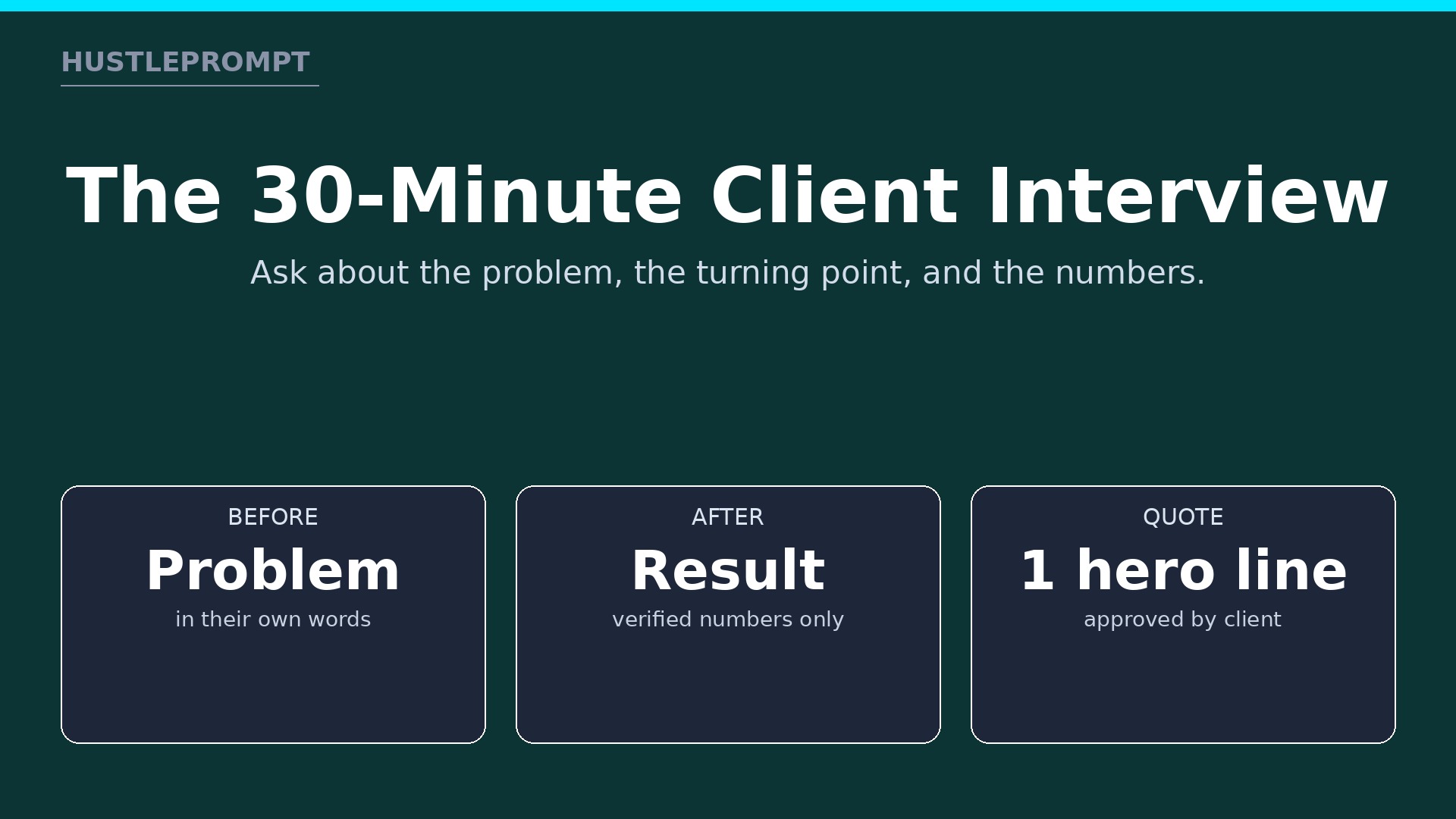
Step 1: Find the Right Story Before You Interview
Not every happy customer makes a strong case study. Look for a measurable change, a clear starting problem, and a spokesperson willing to be named.
Screening questions to ask first:
- Which customer saw the clearest result, and can we name them?
- What number changed, and over what time period?
- Who can speak on the record, and who must approve the draft?
Agree the scope in writing first: deliverables, revision rounds, approval deadline, and file ownership. This one email prevents most disputes.
Step 2: Run a 30-Minute Interview That Gets Quotes
Record only with clear permission, and explain how the recording and transcript will be used. Interviewees relax once they know they will approve the draft first.
Keep questions open. Closed questions get yes-or-no answers, and those make dull case studies.
Interview questions that work
- What problem were you trying to solve before you started?
- What made you choose this solution over the alternatives?
- What changed first after implementation, and what changed later?
- Can you share a number that shows the change, and the time period it covers?
- What would you tell a peer who is considering the same decision?
When the interviewee gives a number, pin it down: what it was before, what it is now, how it was measured, and whether you may publish it. End by asking for one sentence in their own words — that often becomes the headline quote.
Step 3: Transcribe, Then Let AI Structure — Not Invent
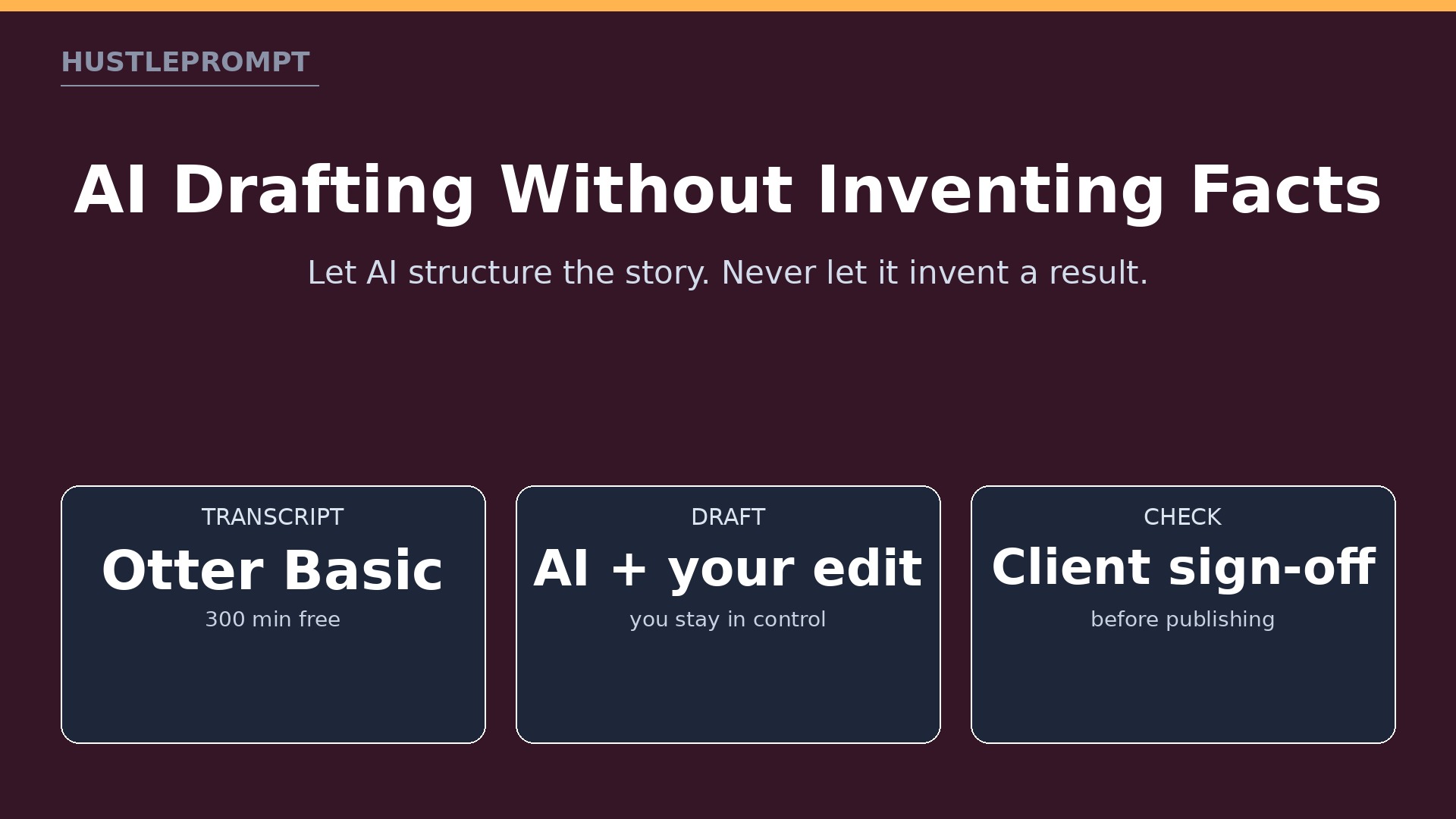
Transcribe the same day, while the conversation is fresh. Tools such as Otter.ai turn recordings into searchable transcripts, so you can find exact quotes instead of relying on memory.
Next, give your AI tool only the transcript and approved facts. Ask it to outline the story — challenge, solution, implementation, results, quote — then write and edit the draft yourself.
Never ask AI to fill gaps in the evidence. If the transcript lacks a result, leave “[NUMBER TO CONFIRM]” and ask the client. An invented metric can destroy trust.
Check every quote against the transcript, word for word. You may trim filler words, but never change meaning or merge two statements into one quote.
Step 4: Fact-Check With the Client, Properly
Send the draft as a shared document with a short approval note: confirm every number and quote, and approve the company name, job titles, and screenshots.
Checklist before calling the draft final:
- Every number matches a source the client provided.
- Every quote matches the transcript.
- Names, titles, and company details are spelled correctly.
- Written approval is saved, with the date and the approved version.
If the client asks to soften a result, do it. An approved, modest case study beats an impressive draft nobody will publish. Include two revision rounds in your base price, and charge for extra rounds.
Step 5: Format for Sales Pages and LinkedIn
One interview should produce more than one asset. That justifies a higher package price without three times the work.
For a sales page
Lead with the result in the headline, then use a scannable structure: summary, challenge, solution, results, and quote. Add a results box at the top.
Keep paragraphs short, use subheadings, and put the strongest number where readers cannot miss it. Use charts or screenshots only with permission.
For LinkedIn
LinkedIn needs a different cut: open with the problem or result, tell the story in short lines, and end with a clear next step, such as visiting the case study page.
Tag the featured company only if they agreed to it. For layout, Google Docs works well for drafts and approvals, while Canva works well for a polished PDF with the client’s branding.
What It Costs to Run This Service
Your main costs are transcription and design tools. Prices change, so confirm live prices on official pricing pages before you buy.
| Tool | Plan | Price found in research | Useful limit |
|---|---|---|---|
| Otter.ai | Basic | Free | 300 transcription minutes per month |
| Otter.ai | Pro | $16.99 per user per month, or $8.33 per user per month billed annually | 1,200 minutes per month; 90 minutes per conversation |
| Otter.ai | Business | $30 per user per month, or $19.99 per user per month billed annually | Unlimited meetings; up to 4 hours per meeting |
| Canva | Pro | $18 per month, or $144 per year ($12 per month billed annually) for one person in the US | Premium templates and brand tools for PDF layouts |
Sources: Otter.ai pricing summarized from its official page in October 2026 research (Scribbl, TranscribeX); Canva Pro pricing from Canva’s own guide (Canva: Pro vs Enterprise). Confirm live prices at otter.ai/pricing and canva.com/pricing.
Why buyers trust this format: “73% of the most successful content marketers use case studies,” and 39% say case studies produce the best results of all their content assets, according to Content Marketing Institute research summarized by Thrive Agency.
Also, 53% of B2B marketers rated case studies among their most effective content types (Dotndot). These describe surveyed marketers, not a promise for any single client.
How to Profit: Pricing Packages That Clients Understand
Price the outcome and reuse, not hours. A sales-page plus LinkedIn package sells more easily than a vague hourly rate.
| Package (illustrative) | What it includes | Illustrative price |
|---|---|---|
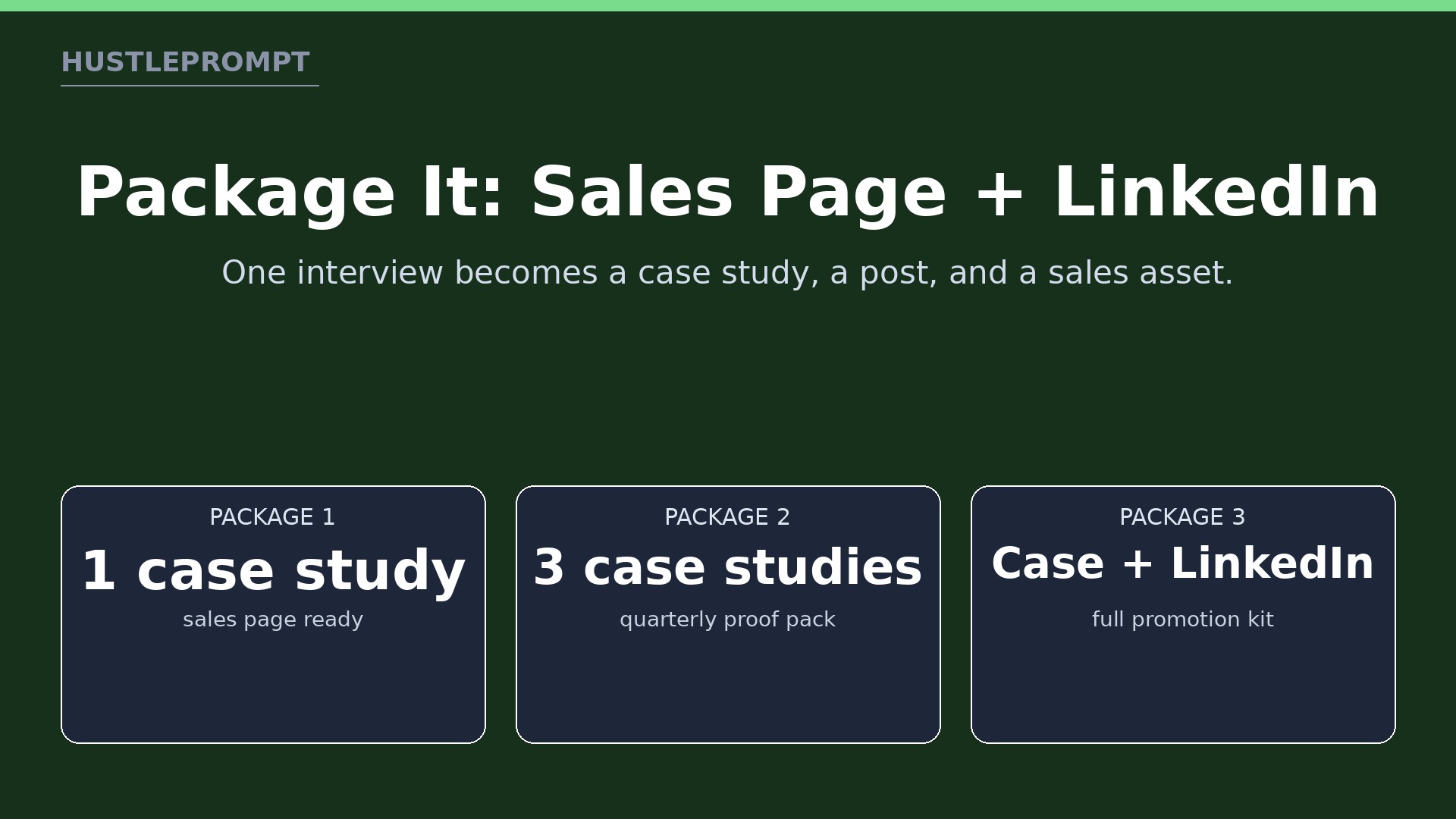
| Single case study | One interview, transcript, draft, two revision rounds, sales-page version | $600 |
| Proof pack (3 studies) | Three interviews and case studies, consistent format, one approval workflow | $1,500 |
| Case study + promotion kit | Case study plus LinkedIn post, email excerpt, and PDF layout | $950 |
These package prices are illustrative examples only, gross before tool costs and taxes, not income promises. Set your own rates for your experience and market.
Start with one pilot case study for a past client, discounted in exchange for fast approval and portfolio permission. One strong, approved sample sells the next three projects. Then pitch agencies, SaaS companies, and consultants that sell high-value work, and propose a quarterly pack once sales uses the first story.
Watch: How to Write a B2B Case Study
This guide walks through B2B case study structure, client questions, and draft approval.
Written guide embedding this video: ITPR: How to write a B2B case study.
Frequently Asked Questions
How long should a B2B case study be?
Most work well at 600 to 1,000 words for a sales page, plus a shorter LinkedIn version. Longer is not better if readers cannot find the result quickly.
Do I need the customer’s permission to publish?
Yes, always get written permission first. Confirm names, quotes, numbers, and screenshots, and save the approved version with its date.
What if the client has no hard numbers?
Use time saved, steps removed, or a clear qualitative change, and say how you know it. A confirmed process improvement beats an invented percentage.
Can AI write the whole case study?
AI can outline and draft from a transcript, but you must edit, verify every fact, and get client approval. An unchecked draft risks errors that damage you and your client.
How do I price my first case study?
Price one project covering the interview, transcript, draft, and two revision rounds. Use the illustrative packages above as a starting point, then adjust for your experience and market.
What should I deliver besides the article?
Deliver the sales-page version, a LinkedIn version, and a PDF if wanted. Reusable versions turn one article into a service clients reorder.
Keep Reading
Explore more free resources: HustlePrompt Tools and HustlePrompt Courses.