
Sell AI Restaurant Menu Copy Services: A Freelancer Guide
What if the words on a menu could sell more food without changing a single recipe? Research on descriptive menu labels found sales rose by approximately 27% when plain labels were replaced with descriptive ones, in a six-week study reported by ScienceDirect. That finding is the business case for AI restaurant menu copy services: you help restaurants describe food clearly, appetizingly, and honestly.
Most small restaurants do not have a copywriter. Their menus are rushed, descriptions are vague, allergen notes are missing, and delivery menus do not match in-store menus. You can fix that with a repeatable, AI-assisted workflow.
What the service actually includes
A menu rewrite is not just prettier adjectives. It is a menu system a restaurant can print, post online, and reuse for specials.
A clear scope beats a vague promise
Define exactly what the client gets: one menu, a set dish count, allergen labels, and a stated number of revision rounds. Larger packages add specials and delivery-app copy.
Put the scope in writing first: dish count, formats, and who supplies prices, ingredients, and allergen facts.
How it works: the menu rewrite process
Use the same process for every client. AI speeds up drafting, but the owner remains the source of truth for ingredients, prices, and allergens.
The 5-Step Menu Rewrite Process
Collect the current menu, prices, best sellers, and every place the menu appears.
Capture cooking method, origin, texture, and the story behind signature dishes.
Write short, sensory, honest descriptions with AI, then edit every line by hand.
Confirm allergen and dietary labels with the owner and kitchen before publishing.
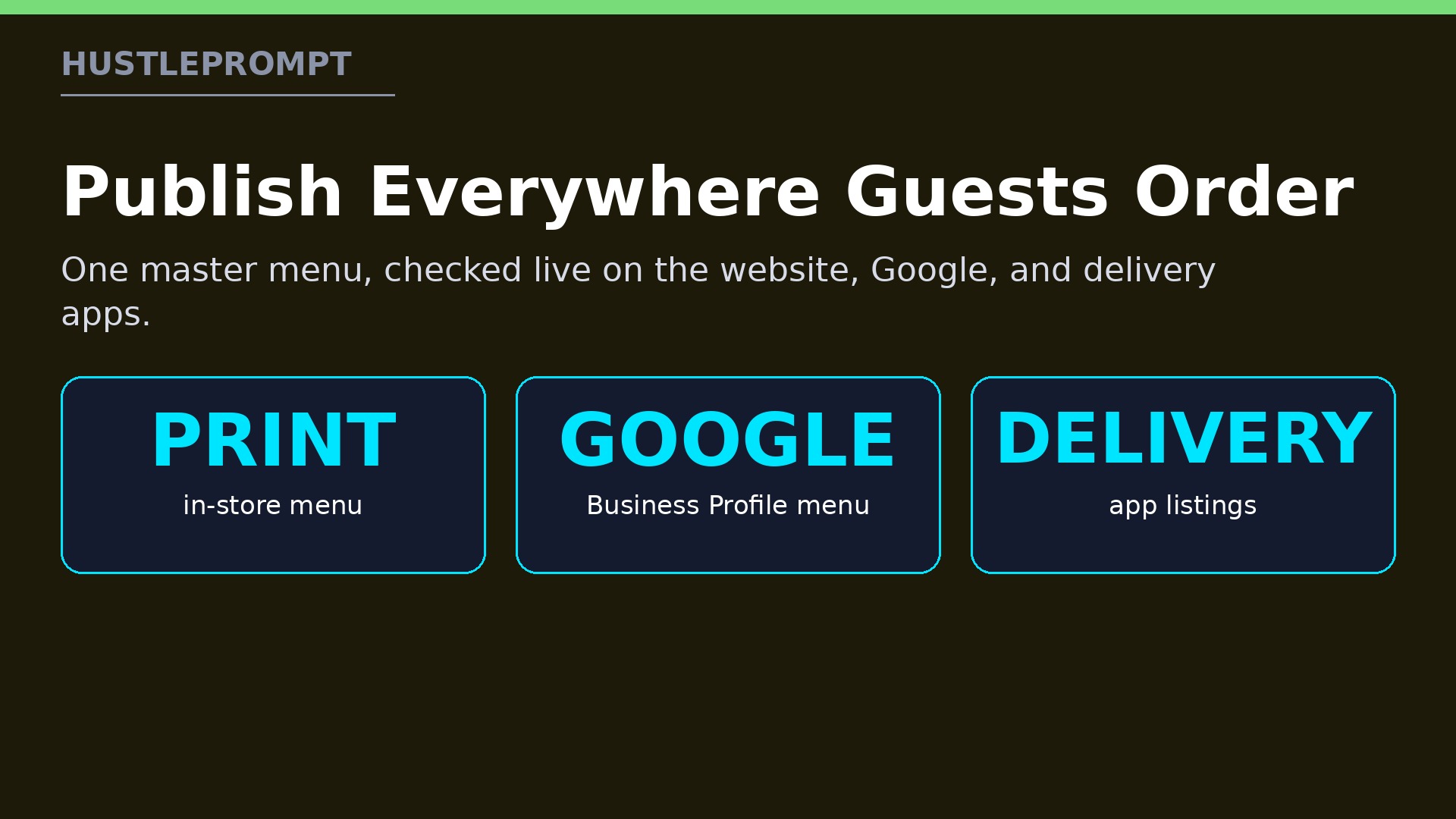
Deliver print-ready copy and update the website, Google Business Profile, and delivery apps.
Never publish allergen or dietary claims from AI alone. The owner and kitchen must confirm them.
Step 1: Audit, then collect taste notes
Ask for the current menu, best sellers, and links to every live listing. Flag dishes with different names or prices in different places.
Next, ask the chef five short questions per signature dish: cooking method, difference, texture, ingredient origin, and what regulars say. Turn the answers into a one-line brief.
Step 2: Draft with AI, then edit like a human
Use ChatGPT or Claude for first drafts from your briefs. Limit each dish to one or two short sentences, with no health claims, allergen claims, or unproven superlatives.
Then edit ruthlessly: cut filler, check every ingredient, and read each description aloud. Try this prompt structure:
“Rewrite this dish in under 25 words. Use only these facts: [cooking method, key ingredients, texture, origin]. Keep the tone warm and specific. Do not add health, allergen, or superlative claims.”
Write descriptions that sell without misleading guests
Descriptive language helps guests imagine the dish. The study summarized by ScienceDirect reports higher sales for descriptive labels, with the classic Wansink study finding approximately 27% growth — a reason to invest, not a guarantee.
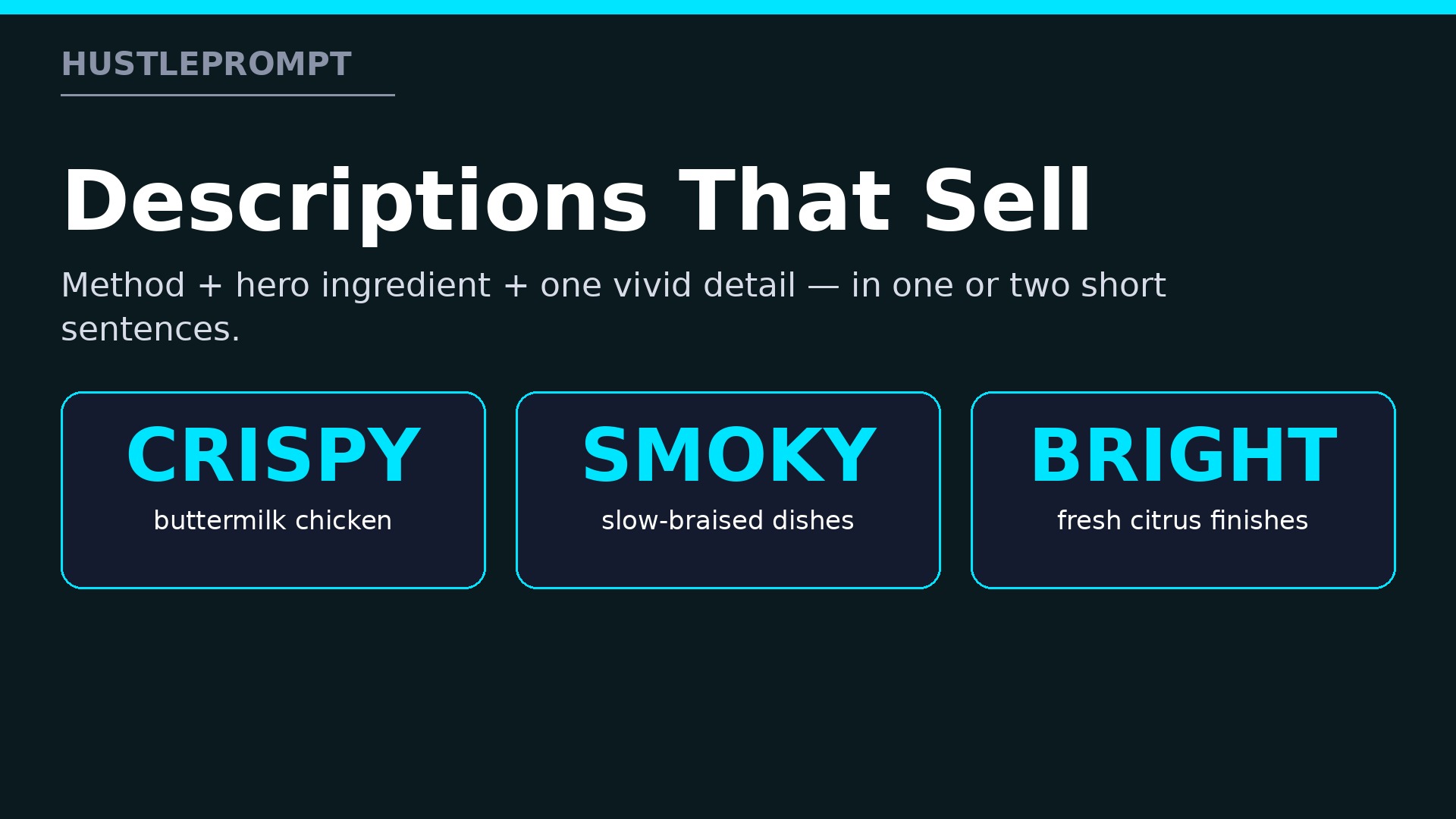
Use sensory words for real qualities: crispy, smoky, bright, buttery, or charred. Avoid unverified promises such as “healthy” or “gluten-free.”
The simple description formula
Most strong descriptions follow one pattern: cooking method plus hero ingredient plus one vivid detail. Keep it short enough to scan on a phone.
- Before: Chicken sandwich with sauce.
- After: Crispy buttermilk chicken, pickled jalapeño, and lime mayo on a toasted brioche bun.
- Before: Pasta with tomato sauce.
- After: Slow-simmered tomato sauce, fresh basil, and hand-rolled pasta, finished with aged Parmesan.
Allergen and dietary clarity builds trust
Clear allergen labels protect guests and help diners with dietary needs order with confidence. That clarity is a selling point, not a footnote.
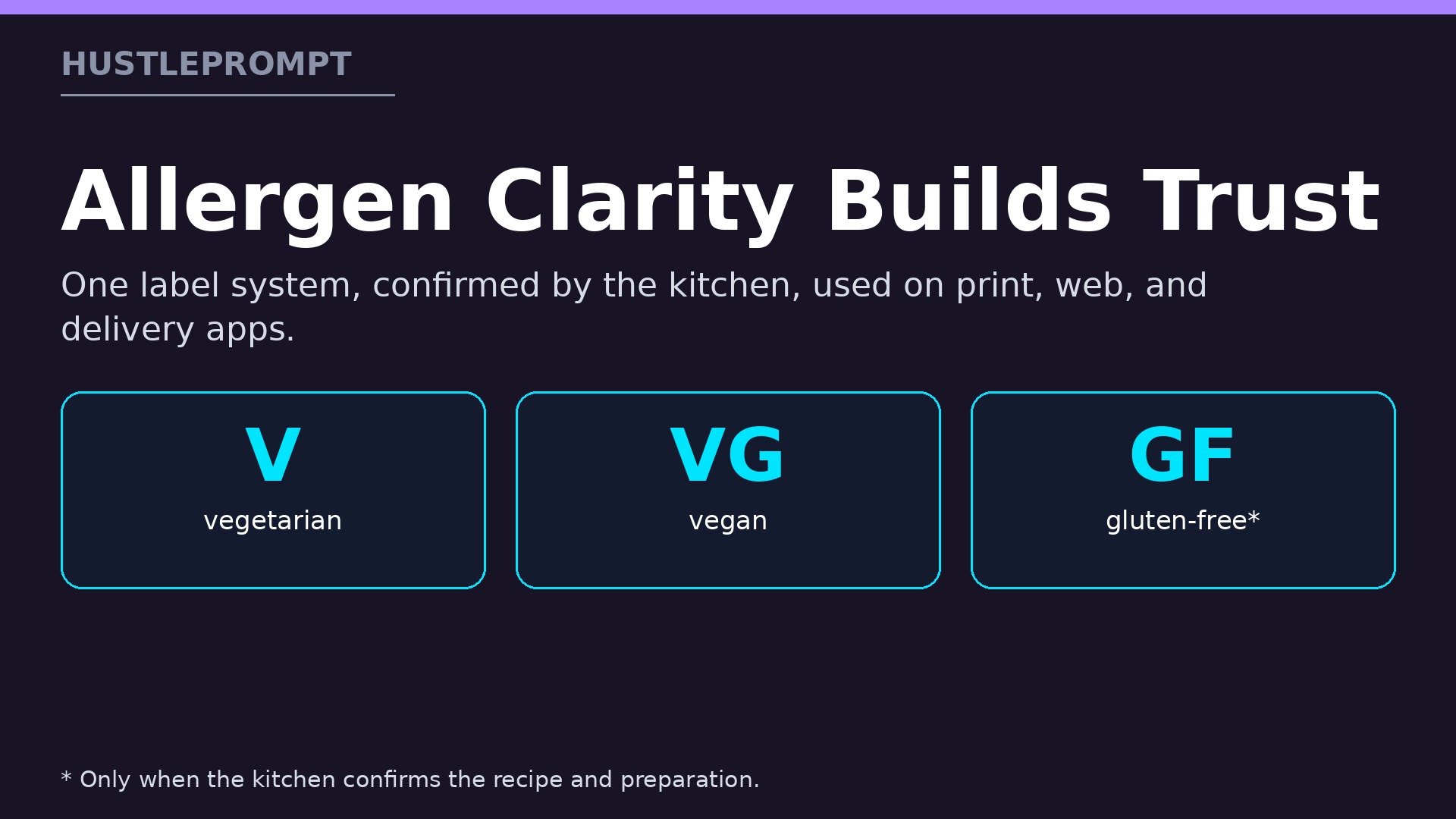
Use one label system everywhere — for example, V, VG, and GF — but only after the kitchen confirms what each code means for that dish. Explain the codes at the top of the menu.
What U.S. rules mean for your copy
For larger chains, rules are stricter. The FDA states its menu labeling rule covers restaurants in a chain with 20 or more locations, under the same name, offering substantially the same menu items. They must disclose calories for standard items.
Most independent clients will not fall under that federal chain rule, but state and local rules can still apply. Do not give legal advice; flag calorie questions for the owner and point them to the FDA menu labeling fact sheet.
Pricing psychology and seasonal specials
Keep prices aligned, easy to scan, and identical on print, web, and delivery menus. Avoid dotted lines that drag the eye straight to the price, and highlight only two or three signature dishes per section.
Seasonal specials keep menus fresh and create repeat work. Offer a monthly specials pack: one clear idea, a one-sentence description, kitchen-confirmed allergen notes, and short versions for Google and delivery apps. Retire expired specials from every channel.
Menu SEO for Google and delivery apps
Guests often search for a dish, not just a restaurant name. That is where menu SEO matters: use real search words such as “wood-fired pizza,” but only when they truthfully describe the dish.
On Google Business Profile, keep the menu link pointed to the restaurant’s own full menu page, not to a third-party ordering page. After updating copy, check the live profile on a phone.
For delivery apps, match names, descriptions, and prices to the master menu, then shorten copy for small screens. Fees vary by plan and market, so do not quote a delivery rate; tell clients to confirm current fees on official merchant pages.
How to profit: packaging and delivery
Price by package, not by hour. The table below shows illustrative starting packages only — not income promises, and gross before tool costs and taxes.
| Package (illustrative) | What is included | Starting price* |
|---|---|---|
| Menu Refresh | Up to 25 dishes, rewritten descriptions, dietary labels, 1 revision round | $350 |
| Full Menu System | Up to 50 dishes, print + web copy, Google Business Profile menu check, 2 revision rounds | $750 |
| Menu + Specials Retainer | Full menu system plus monthly seasonal specials and delivery-app updates | $250/month |
* Illustrative starting prices only, gross before tool costs and taxes. Set your own rates based on menu size and local market rates.
Evidence: what the tools cost
Keep your tool stack small. Prices below were reported in October 2026 secondary summaries of official pricing pages; confirm them live before quoting.
| Tool | Reported price | Use in this service |
|---|---|---|
| ChatGPT | Free $0; Plus $20/month | First drafts and shorter delivery-app versions |
| Canva | Free $0; Pro reported at $144/year for one person | Menu layout from approved copy, if layout is in scope |
Sources: Magai’s ChatGPT pricing summary, Lilach Bullock’s Canva Free summary, and the descriptive-labels study. Confirm live tool prices on official pages.
Stat highlights
- Approximately 27%: sales increase reported when descriptive menu labels replaced plain labels in the six-week study summarized by ScienceDirect.
- 20 or more locations: chain threshold in the FDA menu labeling rule for covered restaurants and similar retail food establishments.
- $0 to start: both ChatGPT Free and Canva Free were reported at $0 in October 2026 summaries, so a first sample needs no paid tool subscription.
This tutorial shows a practical workflow: clean up wording with ChatGPT, build the menu in Canva Free, and proofread before printing.
Frequently asked questions
Do I need to be a chef to sell menu copy?
No. You need clear writing, good questions, and respect for kitchen facts. The chef supplies cooking details; you turn them into copy guests understand.
Can AI write the whole menu by itself?
It can draft, but it should not publish alone. AI can invent ingredients or allergen claims, so check every line against the owner’s facts.
How long does a menu rewrite take?
A small menu can take a few focused days, including owner review. Larger menus take longer, so agree on a timeline first.
Should I change the restaurant’s prices?
Do not change prices without the owner’s written approval. You can suggest clearer price presentation, but the owner owns pricing decisions.
What if the restaurant has no allergen information?
Pause that part of the job and ask the kitchen to confirm it. Publish no allergen or dietary claim until the restaurant approves the exact wording.
Can I reuse the same descriptions for every client?
No. Reused copy sounds generic and may describe dishes incorrectly. Use a repeatable process, but fresh facts for each restaurant.
Keep Reading
Explore more free resources on HustlePrompt: browse the free AI tools and the free courses to keep building your freelance service.
Restaurants do not need louder menus. They need clearer ones. Turn kitchen facts into short, honest copy, publish it everywhere guests order, and you have a repeatable service.