
A virtually staged property photo that cost about €50 now costs less than €0.10. That single number explains why OpenAI Heimstaden property AI is the most practical AI profit story of the day — and it comes straight from OpenAI’s own case study, published November 3.
Heimstaden, a European residential real estate operator, chose OpenAI in June 2025 after evaluating several platforms. It launched ChatGPT Enterprise in September 2025, and half of employees were using it within two to three months, OpenAI reports.
What OpenAI actually reported
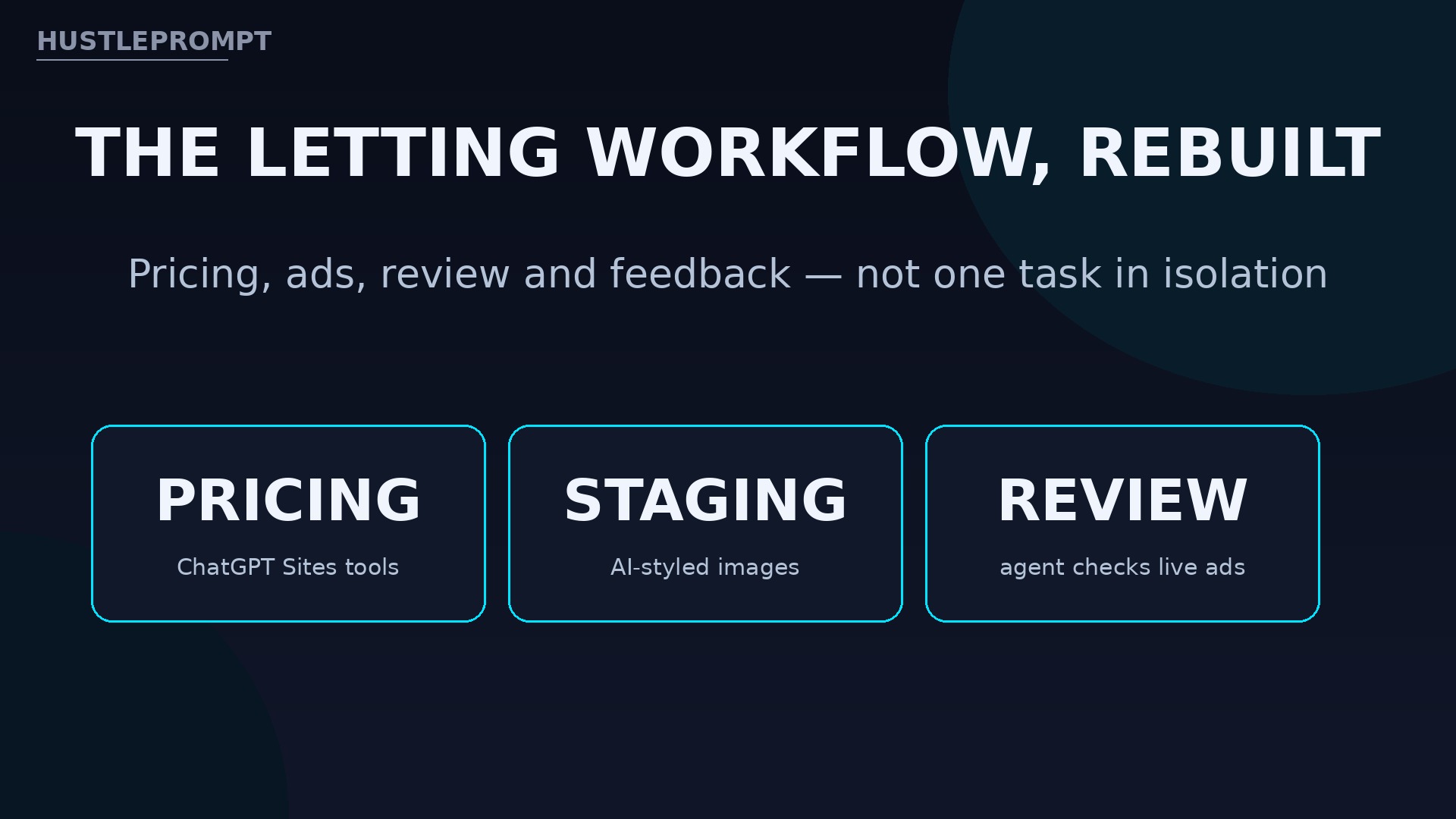
OpenAI’s case study, “Heimstaden is changing residential real estate management with AI,” describes a letting process rebuilt end to end, not one task automated in isolation. When a home becomes vacant, AI now supports pricing, advertising, listing review, and market feedback.
Brammer’s strategy: train staff, run a central office with AI champions, and ready property data for AI.
One honest caveat: these are Heimstaden’s figures as reported by OpenAI in a vendor case study, not independently audited results.
The letting workflow, rebuilt
| Letting step | What AI does | Who decides |
|---|---|---|
| Pricing | Intelligence and recommendations from tools built in ChatGPT Sites | Employees review and approve |
| Advertising | Image styling and apartment descriptions done by AI | Employees review before sending |
| Listing review | An agent reviews all live ads against Heimstaden’s quality standards | Employees approve corrections |
| Market feedback | AI-generated feedback helps teams take corrective action, making prices more dynamic | Letting teams act on it |
Source: OpenAI’s Heimstaden case study on AI in residential real estate management.
Home becomes empty
Price, staged image, description
Agent reviews live ads
Market feedback, dynamic price
Employees review AI content before sending and approve decisions.
The 99% number, in context
In the Netherlands, the cost of producing a virtually staged property image — an empty room digitally furnished — fell from approximately €50 to less than €0.10, a reduction of more than 99%. Heimstaden estimates annual savings potential of €130,000 in that market alone.
That is the most quotable figure in the case study, and also the easiest to misread. It is a per-image production cost in one market, not a company-wide profit figure. Its real lesson is narrower: virtual staging was a repeatable, high-volume cost, so collapsing it changed the economics of every listing that used it.
Adoption backs the story up. After ChatGPT Enterprise launched in September 2025, half of employees were using it within two to three months.
Codex and the climate-risk study
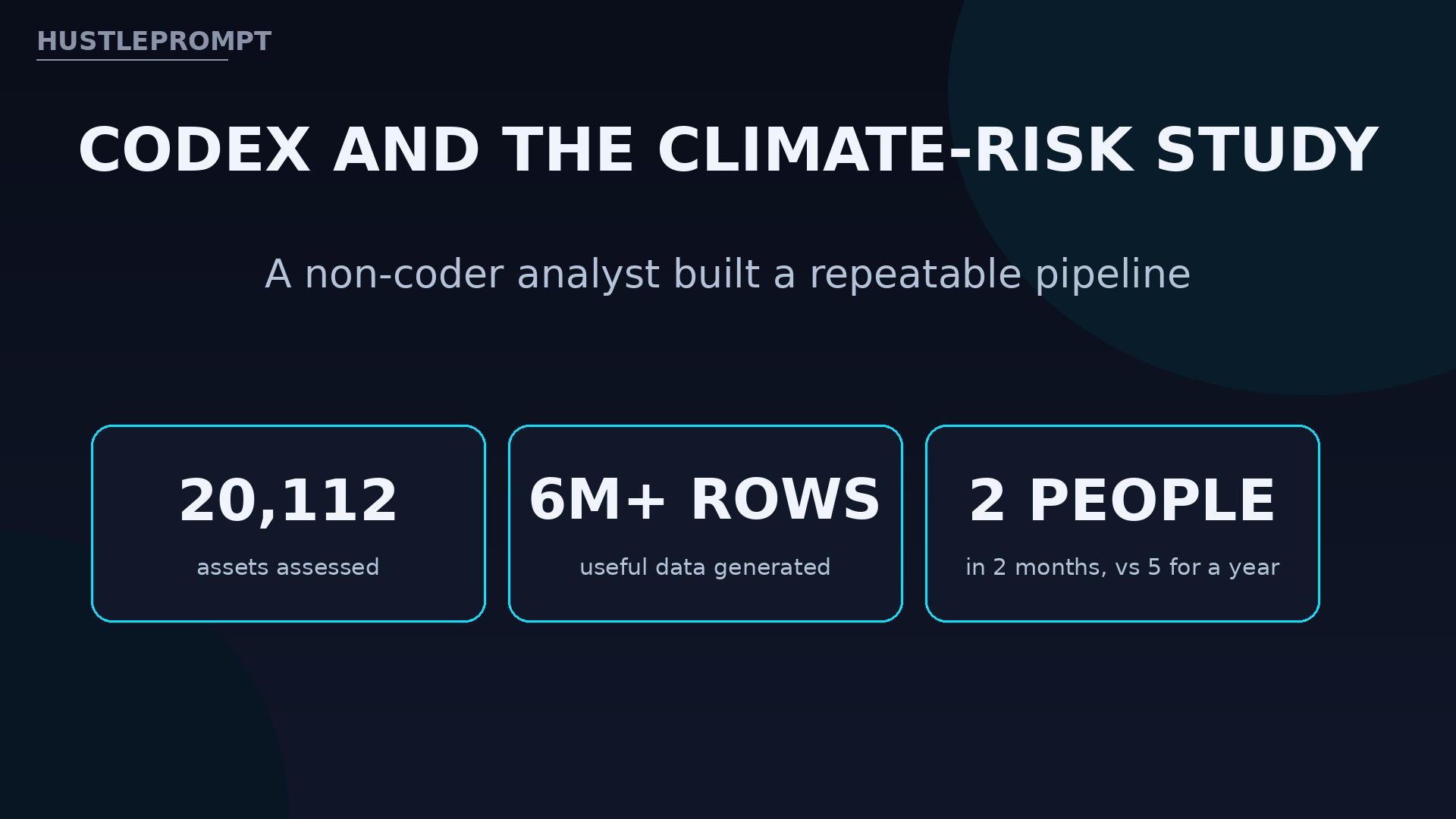
The second story is the one freelancers should study. Julia Erlandsen, an environmental sustainability analyst without a software development background, used Codex to assess environmental risk across Heimstaden’s portfolio.
The information was scattered across public sources, formats, and datasets. Codex supported discovery, cleaning, and standardisation, plus quality checking and repeatable pipelines. Erlandsen retained control of the methodology and validated the work herself.
The result, as reported by OpenAI: 20,112 assets assessed, more than six million rows of useful data, and an estimated delivery requirement cut from five people working for a year to two people working for two months. Heimstaden also avoided engaging external consultants.
What comes next: procurement and Amplio Estate
Heimstaden’s Procurement Intelligence Platform, currently being rolled out, combines workflow automation with OpenAI models through APIs across Outlook, SharePoint, and Teams, supporting contract analysis and lifecycle management, with employees retaining decisions. Longer term, Amplio Estate, a system it is co-developing, aims to support AI workflows through MCP so staff can retrieve property information and act in core systems with oversight.
How to profit from the Heimstaden playbook
- Sell virtual staging as a service. If a large landlord cut staging from about €50 to under €0.10 per image, small landlords and agents will pay for the same workflow. Price per listing, not per hour.
- Copy the process, not the tool. Heimstaden’s win came from rebuilding letting end to end — pricing, ads, review, feedback. Offer a four-step letting audit, then automate the most repetitive step first.
- Become the non-coder who builds pipelines. Erlandsen’s story is a business model: domain experts who use coding agents to clean messy data and build repeatable reports. Sell data-cleaning pipelines to property, legal, and finance firms.
- Offer AI adoption training with champions. Heimstaden used training, a transformation office, and local champions to reach 50% adoption in months. Small firms need the same at their scale.
- Keep the human-approval rule in every pitch. Heimstaden’s staff review AI content before sending and approve decisions. That rule makes the service sellable to reputation-sensitive clients.
The headline is a 99% cost cut. The business is everything around it: faster listings and cleaner data.
Frequently asked questions
What is the Heimstaden OpenAI story?
OpenAI published a November 3, 2026 case study on how European residential operator Heimstaden uses ChatGPT Enterprise and Codex across letting, environmental-risk analysis, procurement, and property operations.
How much did virtual staging costs fall?
In the Netherlands, Heimstaden reports the cost of producing a virtually staged property image fell from approximately €50 to less than €0.10 — a reduction of more than 99% — with estimated annual savings potential of €130,000 in that market alone.
What did Codex do for Heimstaden?
Environmental sustainability analyst Julia Erlandsen, who has no software development background, used Codex to build data pipelines that assessed 20,112 assets and generated more than six million rows of useful data.
How much faster was the climate-risk study?
Heimstaden estimates the delivery requirement fell from five people working for a year to two people working for two months, and it avoided engaging external consultants. These are company estimates reported by OpenAI.
What is Amplio Estate?
It is a property management system Heimstaden is co-developing to support AI-powered workflows through MCP, so employees can retrieve property information and take action in core systems with human oversight.