
Two sentences just changed the economics of AI game development. The Claude Code game clones crackdown means Anthropic’s coding assistant will no longer rebuild someone else’s game for you — even if you rename it and call it original.
Anthropic confirmed the change on October 30, and coverage surged on November 3. For indie developers, the clone shortcut is closing — and original games just became more valuable.
What Anthropic actually changed
Anthropic added two sentences to Claude Code’s system prompt on its flagship Opus 5.5 model. Addy Osmani, a member of Anthropic’s technical staff, confirmed it on X:
“We added two sentences to Claude Code’s prompt on Opus 5.5 to steer it away from recreating someone else’s specific game because using Claude to infringe IP is against our usage policy.”
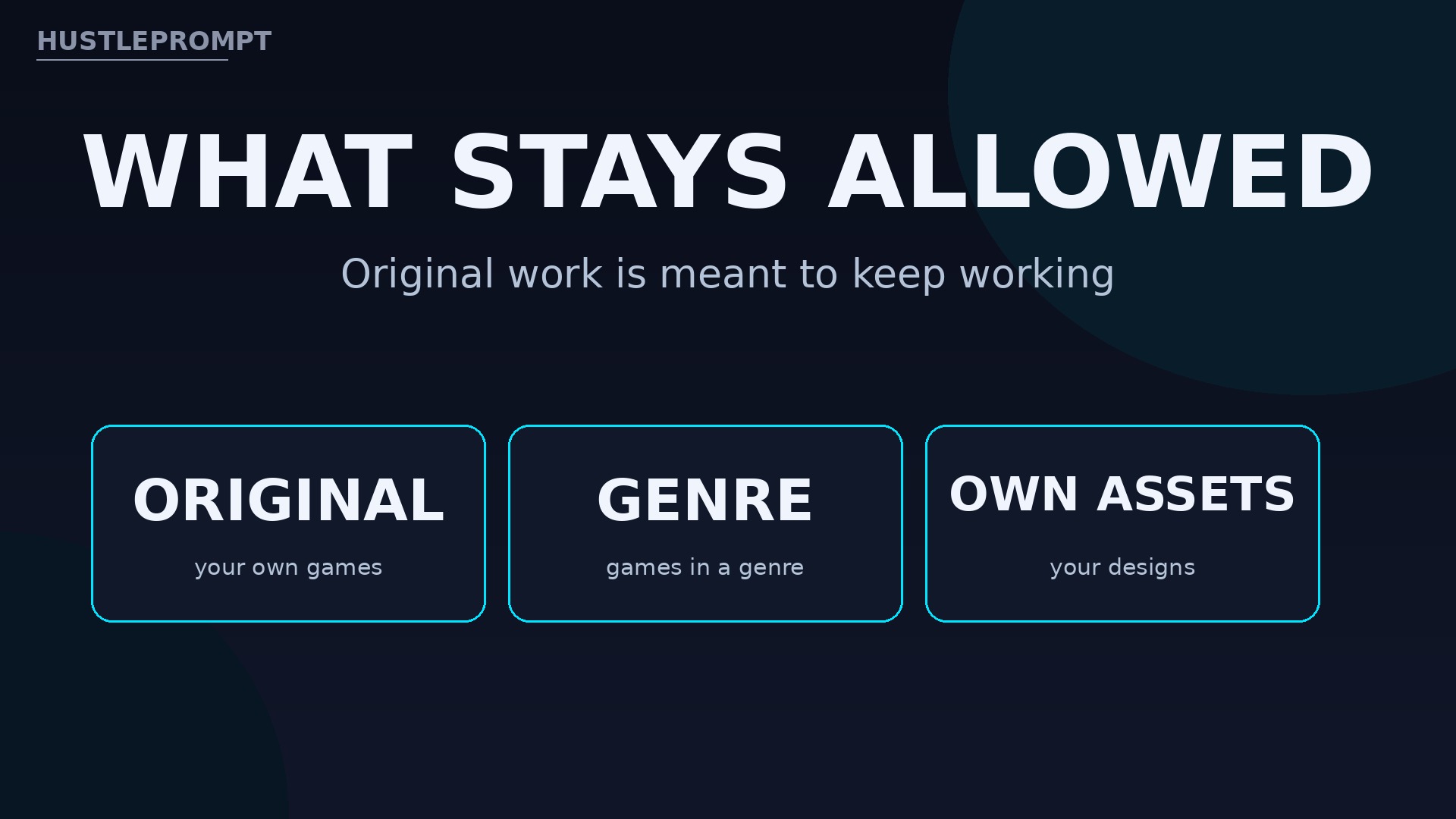
Osmani added that original games, genre games, and games from a user’s own assets are meant to keep working, and that Anthropic will keep iterating.
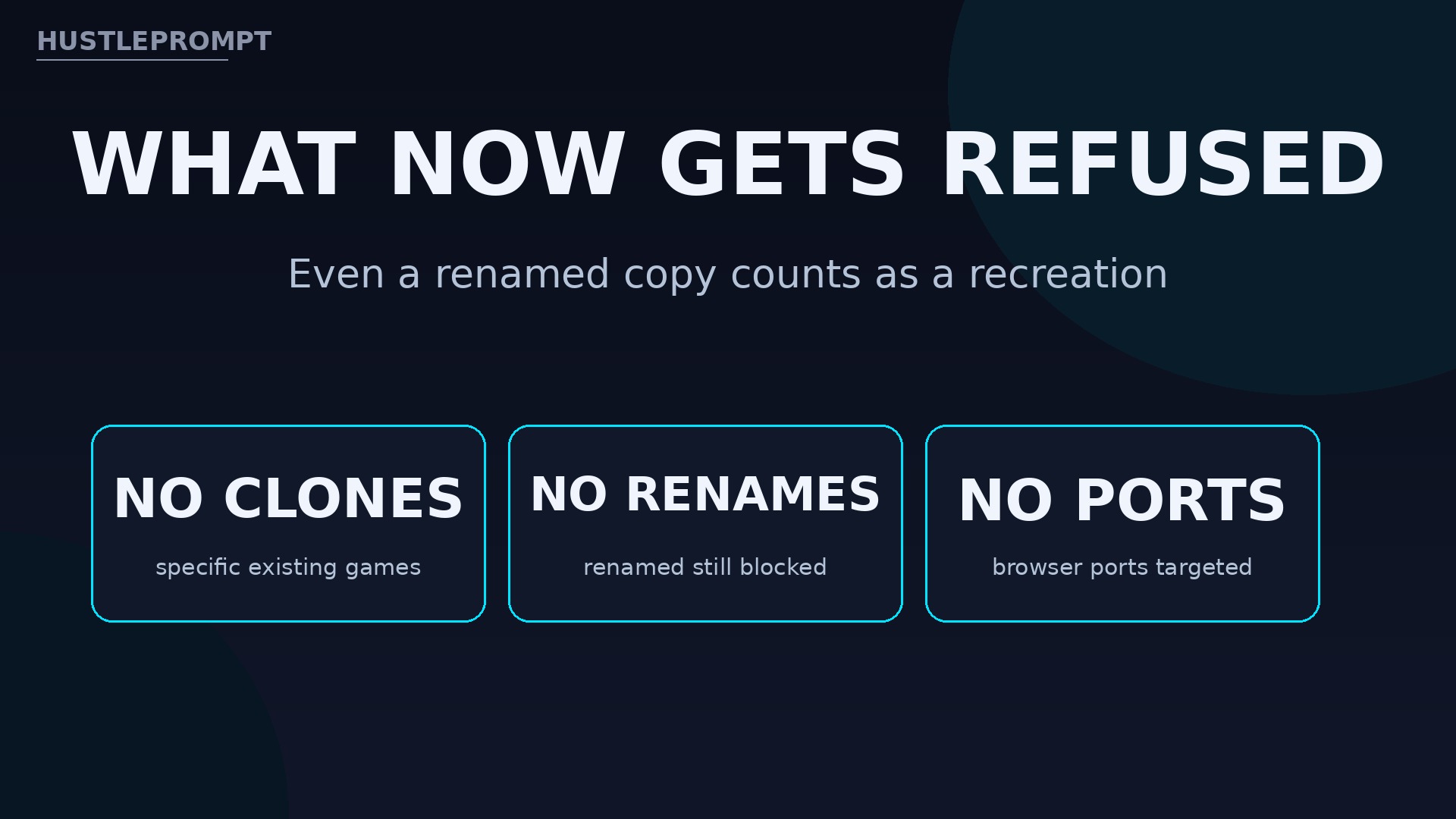
The reported instruction, first shared from a screenshot by X user Chasm, reads: “Do build original games, games in a genre, and games from the user’s own designs and assets. Don’t build a recreation of a specific existing game, even if it is renamed or called original.”
Two details matter. First, the rule is applied server-side to Claude Code on Opus 5.5, with no user setting to switch it off, according to reporting. Second, Anthropic has not said whether it will extend to other Claude models, or how it treats mods and decompilations.
How the clone wave forced the move
The rule did not arrive out of nowhere. In recent weeks, AI-built copies flooded Steam, including during Valve’s Steam Next Fest in October, where players reported feeds full of clones.
Some copies were low-effort lookalikes. Others were ambitious: reporting cites fan projects that decompiled big-budget games with AI help and made them playable in browsers, including projects based on Halo: Combat Evolved, Call of Duty: Modern Warfare 2, and Grand Theft Auto V.
Other reported examples show the spread: Mario dropped into Elden Ring, Vice City ported to a browser, and an AI-aided PlayStation 5 jailbreak that ran Halo 2 on Sony hardware.
Real developers paid for it. Digital Sun Games cancelled a public playtest of ReVamp over fears its demo could be fed into AI tools. Another team, behind Drunken Goddess Reflux, Alliance Arts, and Who You, cancelled Steam demo plans in favor of private playtests.
The timeline, in one table
| Date | What happened | Status |
|---|---|---|
| Around Oct 27 | X user Chasm spots the new instruction, listed under the internal name “tengu_heron_brook” | Reported |
| Oct 30 | Anthropic’s Addy Osmani confirms the two-sentence change on X | Confirmed |
| Nov 2–3 | Tom’s Hardware, Game Developer, Engadget, and 80.lv coverage; developer complaints surface on GitHub | Reported |
| Nov 3 | The Decoder and other outlets report the crackdown as the story trends | Coverage surge |
Source: The Decoder’s report on Anthropic’s game-cloning crackdown, corroborated by multiple outlets cited above.
Original games, genre games, your own assets
A recreation of a specific game, even renamed
Reverse engineering, mods, decompilations — unclear
The overreach problem developers are already reporting
The filter is catching more than clones, developers say. Reports on Claude Code’s GitHub tracker describe refusals during ordinary projects, including crash-dump analysis and anti-cheat work.
Tom’s Hardware reports that one of its own editors hit refusals on reverse-engineering tasks, and switching to an older Claude model got the work done. Osmani’s statement does not mention reverse engineering.
This is the hard part of the policy. A model cannot reliably tell a copycat from a rightful owner. A developer rebuilding their own game looks a lot like someone cloning someone else’s work — unless the tool knows who owns what.
How to profit from the Claude Code crackdown
- Build original games, and say so clearly. Prompt with your own characters, world, and mechanics — not “like” a famous title. Originality is now a filter-passing feature.
- Sell genre expertise, not clones. A roguelike or farming sim is a genre. A rebuilt copy of a specific hit is not. Price the system: procedural levels, economy balance, progression design.
- Document ownership before you prompt. Keep asset files, design docs, and repo history in one place. If Claude refuses your own project, that paper trail is what you send to Anthropic.
- Offer “clone-proofing” as a service. Indie teams now need help making demos that cannot be trivially copied, and private playtest setups that replace public Steam demos.
- Do not build a business on recreations. A clone channel can be wiped out by one prompt change, one takedown, or one Steam removal.
Anthropic just told the market that AI game tools will enforce intellectual property. Developers who own their IP win twice — their games work in Claude Code, and their competitors’ copies do not.
Frequently asked questions
What did Anthropic change in Claude Code?
It added two sentences to Claude Code’s prompt on Opus 5.5, steering the tool away from recreating a specific existing game, even if renamed or called original.
Can I still build games with Claude Code?
Yes. Original games, games in a genre, and games built from your own designs and assets are meant to keep working, according to Anthropic.
When did the rule appear?
It was first spotted around October 27, 2026, and confirmed by Anthropic’s Addy Osmani on October 30, 2026.
Why are some developers angry?
They report the filter also blocks legitimate work, including crash-dump analysis, anti-cheat development, and reverse-engineering tasks on their own projects.
Does the rule cover mods and decompilations?
Anthropic has not said. That treatment is the biggest open question in the policy.
What should I do if Claude refuses my own game?
Osmani has invited developers to send him examples where Claude turns down work that is genuinely theirs.