
Could you tell a real photo from an AI fake? On one new video test, humans barely beat random guessing. That is why Pangram Image 1.0, launched November 4, 2026, matters — and why it arrived with a video model beside it.
Pangram built its name on AI text detection. Now it tackles a costlier problem: pictures and video that look real, spread fast, and lose people money when they are fake.
What launched today
Full details are in Pangram’s official Image 1.0 announcement. The release includes:
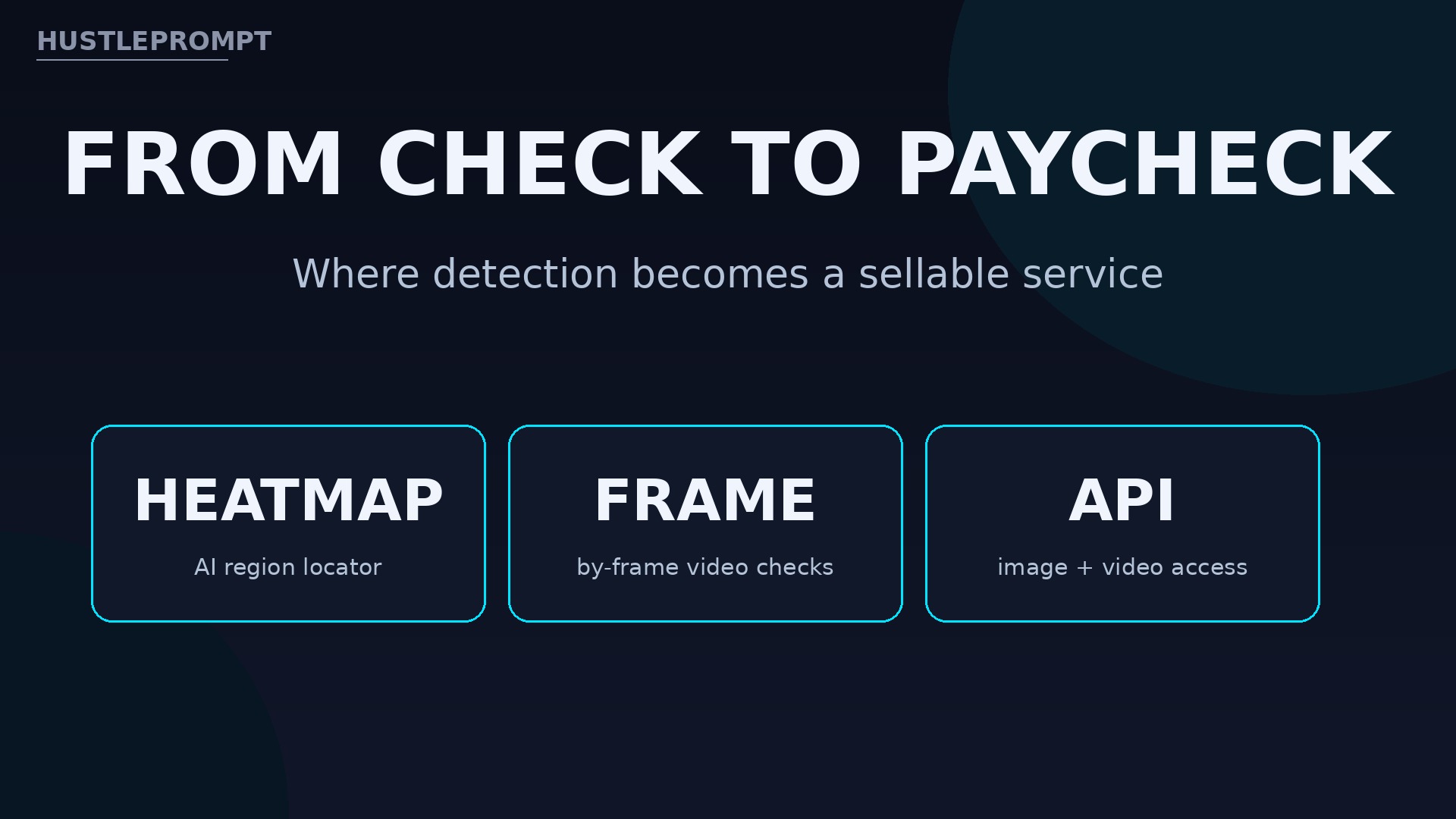
- Pangram Image 1.0 — flagship AI image detector, with a heatmap showing where AI content sits inside a picture.
- Pangram Image Flash 1.0 — a smaller, faster model that analyzes video frame by frame.
- Chrome extension — flags AI content while you scroll social media, shopping sites, and rental listings.
- API access — updated for both image and video checks.
The launch follows a July 2026 research preview. Version 1.0 is built for everyday feeds: compressed uploads, edited screenshots, and low-resolution files.
The evidence, in numbers
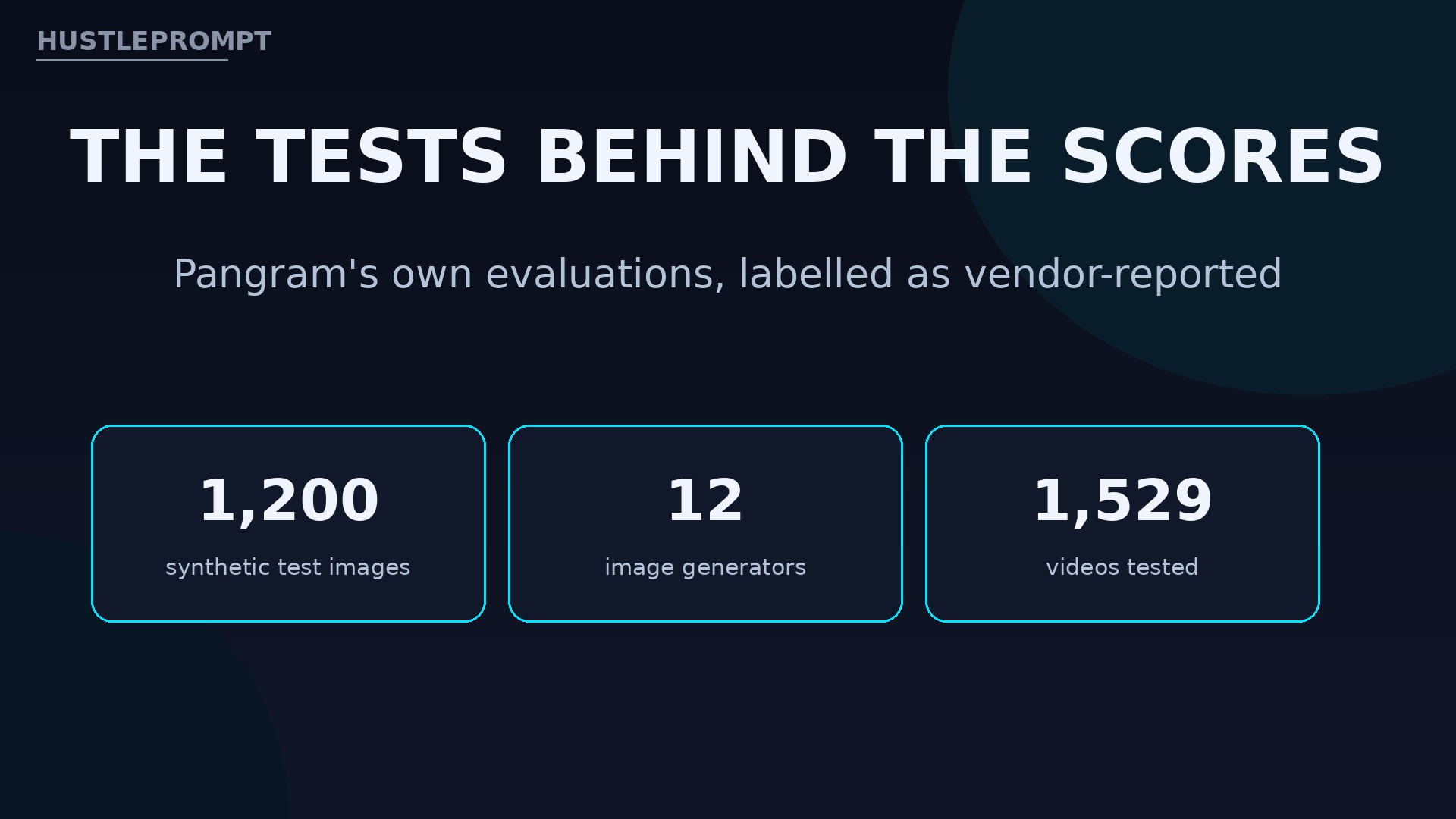
All scores below are vendor-reported. Pangram ran its own tests, so treat them as claims to verify yourself — not independent proof.
| Test | Method | Result |
|---|---|---|
| Image detection | 100 real photos mirrored with 12 frontier generators: 1,200 images | 99.96% accuracy |
| Launch-post figure | Separate figure from Pangram’s X post, via Unite.AI | 99.2% identified, 0.27% false positives |
| Small images | Minimum size cut from 512 x 512 pixels | Now 256 x 256, with reduced confidence below 512 |
Note the two image numbers come from different tests. The 99.96% figure is the synthetic-mirror evaluation; 99.2% is the launch-post headline. Neither replaces testing the tool on your own images.
What the heatmap changes
Most detectors return one verdict: real or AI. That is often useless. A listing photo can be mostly real with one AI-swapped room. A screenshot can be genuine except for an inserted face.
Pangram’s heatmap localizes where the AI material appears, so a reviewer checks the suspicious region instead of rejecting — or trusting — the whole file.
For sellers, that distinction is the product. A score starts an argument. A located region starts a fix: re-shoot it, replace it, or disclose it.
How video detection works
Video is where human judgment collapses. Pangram cites the DF26 study, which found people barely beat random guessing on real vs. AI talking-head videos — and existing detectors were not much better.
Flash 1.0 analyzes footage frame by frame instead of judging a clip from a few stills.
| Video test | Method | Result |
|---|---|---|
| DF26 benchmark | Academic talking-video benchmark | 98.7%, 29 points above next best |
| Industry comparison | 129 real social videos mirrored with 14 generators: 1,529 videos | 98.57% vs. 84.2% next best |
Again, these are different tests — DF26 is academic, 98.57% is Pangram’s industry comparison. Pangram says coverage includes GPT Image, Nano Banana, Midjourney, FLUX, and Grok Imagine for images, plus Kling, Seedance, Veo, and Wan for video.
How it works, step by step
From upload to verdict
- Upload — An image (from 256 x 256) or video on the web, or flagged content via the Chrome extension.
- Scan — Image 1.0 analyzes pictures pixel by pixel; Flash 1.0 scans video frame by frame.
- Locate — The heatmap marks regions that look AI-generated.
- Act — Re-shoot, replace, disclose, or reject — and keep the original as evidence.
Pangram says it trains for compression, blur, noise, and downscaling — the edits that normally fool detectors.
How to profit from AI detection
Detection is not the business. Trust is. Turn this launch into paid work with a simple offer:
- Pick one niche. Rental listings, marketplace sellers, real-estate photos, or UGC ads for small brands.
- Sell a verification report. Verdict, heatmap region, and a plain-English fix note per file. Report screenshots become your portfolio.
- Price per batch. A 20-photo listing audit or 10-video ad audit is easy to quote. Check Pangram’s current plan page first — this announcement states no new pricing.
- Sell prevention. Offer pre-publish checks so a fake never reaches customers, as an add-on to existing photo and video services.
What it does not prove
- Vendor tests favor the vendor. Independent testing will matter more than launch-day scores.
- Small images are weaker evidence. Below 512 pixels, Pangram itself adds a reduced-confidence disclaimer.
- Detection is not provenance. “Looks real” does not prove who took a photo or when. Pair it with originals, metadata, and content credentials.
As a fast first screen, Image 1.0 is genuinely useful. As absolute proof, any detector will eventually embarrass you.
Frequently asked questions
What is Pangram Image 1.0?
Pangram’s flagship AI image detector, launched November 4, 2026, after a research preview. It detects AI images and heatmaps where the AI content appears.
What is Image Flash 1.0?
The smaller, faster companion model for video. It analyzes uploaded video frame by frame and reports which parts look AI-generated.
How accurate is it?
Pangram reports 99.96% on its 1,200-image test and 99.2% identification (0.27% false positives) in its launch post — vendor-reported figures from different tests.
Can it check small or compressed images?
Yes, with a caveat: the minimum is now 256 x 256 pixels, but results below 512 pixels carry a reduced-confidence disclaimer.
Where can I use it?
On Pangram’s website, through its updated API, and in its Chrome extension for social media, shopping, and rental sites.
Does it prove an image is real?
No. It estimates whether content looks AI-generated. Keep the original file and its metadata alongside the result.
Keep Reading
Source: Pangram’s official Image 1.0 announcement, November 4, 2026. Scores are vendor-reported unless stated otherwise.