
Pierre Code Storage is the Git layer AI coding agents have been missing — and OpenAI just bought it. On November 4, 2026, OpenAI announced it will acquire Pierre Computer Company, whose tools already run inside Codex, to turn the coding assistant into a platform where agents build, review, and ship.
The deal landed the same day Meta bought Conductor: both giants are racing to own the same layer — not the model that writes code, but the machinery around it. No price was disclosed, and closing needs regulatory approval.
Everything in this article comes from OpenAI’s official acquisition announcement and Pierre’s own site. No third-party rumor, no guessed price.
What OpenAI is actually buying
Pierre builds low-level infrastructure for machine-driven work. OpenAI’s announcement names four pieces, and two already run inside Codex.
| What Pierre built | What it does | Status (official) |
|---|---|---|
| Trees | File navigation for large codebases | Already in the Codex app |
| Diffs | Renders changes; Edit mode fixes a line in place | Already in the Codex app |
| Highlights | Syntax highlighting that keeps up with streaming code | Recently released by Pierre |
| Code Storage | Git-based code storage and history for apps and agents | To be folded into Codex |
OpenAI puts it plainly: “If you’ve browsed files or reviewed a change in the Codex app, you’ve already used Pierre’s Trees and Diffs libraries.” The acquisition builds on integration that already exists.
Pierre’s open-source projects stay open source, and OpenAI will keep contributing to them. Existing Code Storage customers can keep using the service after the deal closes.
Code Storage by the numbers
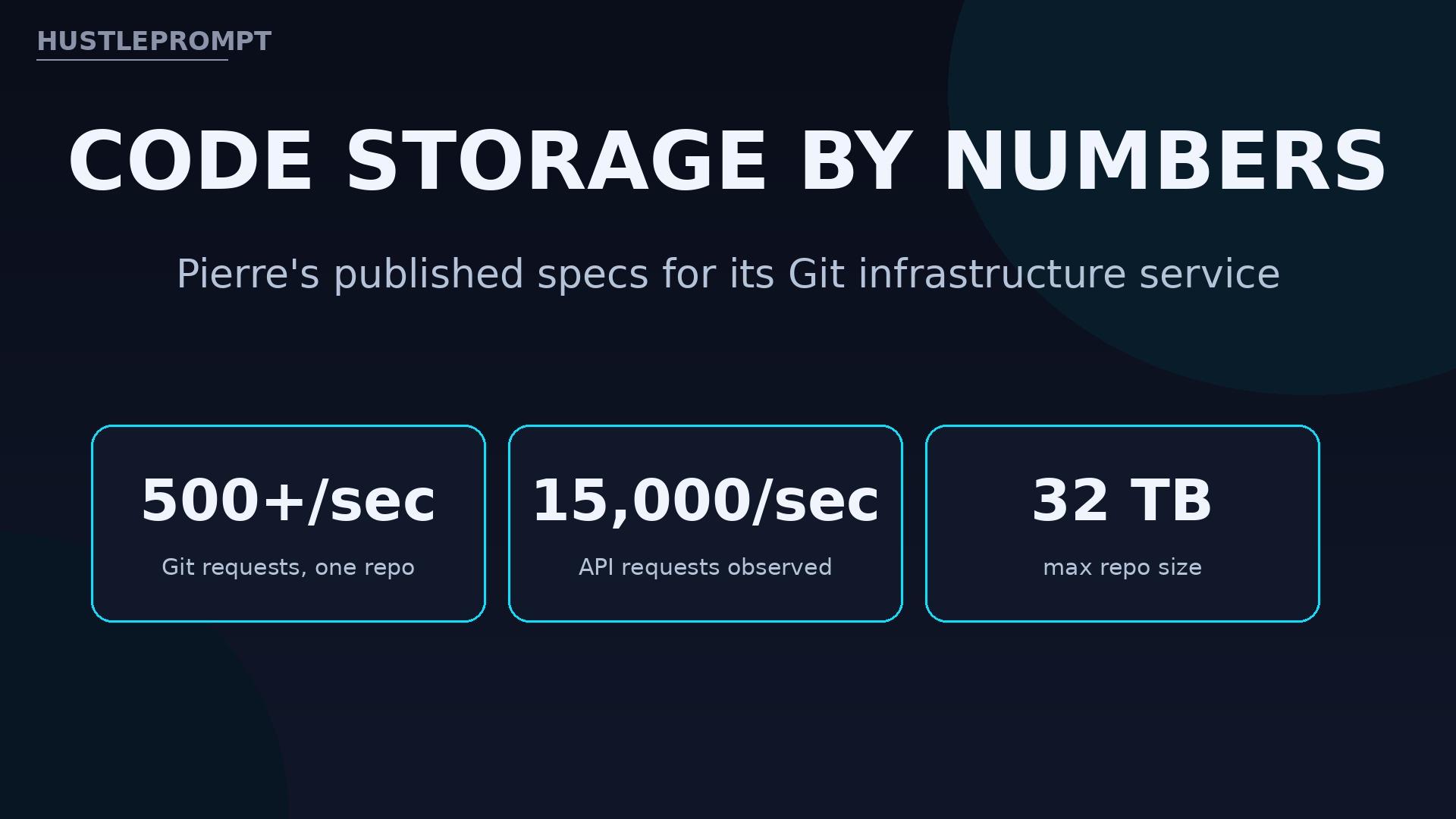
Code Storage launched in October 2025 as a Git layer other apps plug into, so their agents can create repositories and push code on demand.
| Published spec (Pierre) | Figure |
|---|---|
| Git requests, single repository | More than 500 per second observed |
| API requests | More than 15,000 per second observed |
| Maximum repository size | 32 TB |
| SDKs | TypeScript, Python, Go; Git LFS and GitHub sync |
These are Pierre’s published figures, not audited benchmarks — but the customer list is real: Lovable, Bolt, Amp, Poke, Anything, and Parahelp. Pierre, founded in 2023 by Jacob Thornton and Ian Ownbey in Y Combinator’s Winter 2023 batch, raised a $22 million Series A in November 2025 led by CRV and 01A.
Pando: why OpenAI needed Pierre now
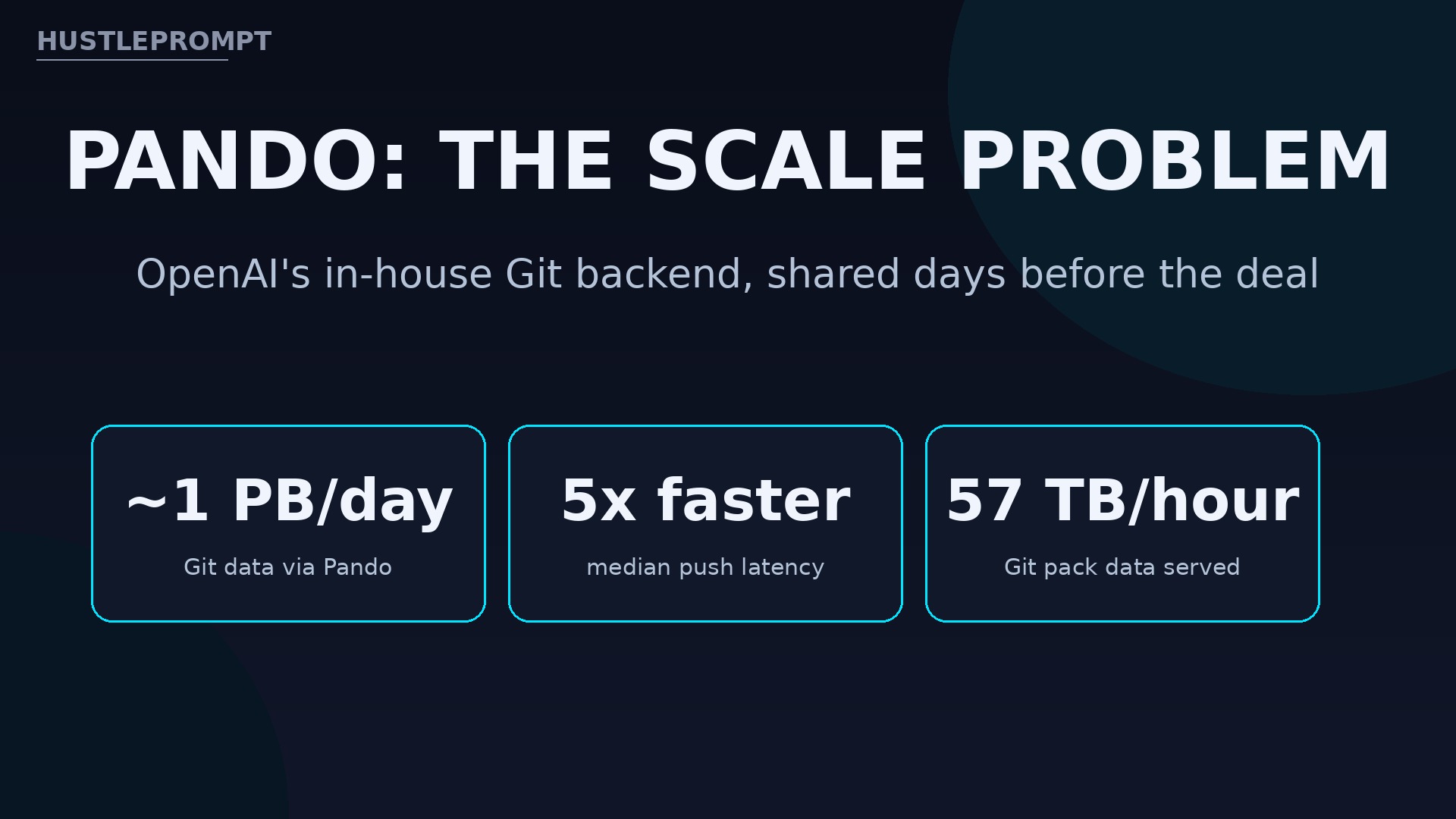
Two days before the deal, OpenAI published an engineering post about Pando, its in-house source-control backend for engineers and agents working in parallel.
The numbers: nearly 1 petabyte of Git data per day, median push latency down nearly 5x, more than 57 terabytes of Git pack data in a single hour (over 99% from local disk cache), built in 10 weeks with Codex and live since April 2026.
Pando is OpenAI’s internal system, not Pierre’s product — but the timing is the tell. OpenAI fixed Git for itself, then bought the team that fixes it for everyone else. The ambition is explicit: “We want to make Codex the place where developers and agents take on their most ambitious projects.”
The GitHub question
Axios frames the deal as a move against Microsoft-owned GitHub. GitHub owns the repository; Codex owns the agent that writes the code. Pierre gives OpenAI the storage layer between the two.
The bottleneck in agent coding is no longer writing the code — it is branching, reviewing, storing, and shipping it without losing track. Whoever owns that workflow owns the next decade of developer tools.
How to profit from the Codex platform shift
Learn Trees, Diffs, and Highlights.
Offer branch-per-feature workflows: agents build, you review and ship.
Prototype apps where agents store code via Git.
Pitch Codex setups now, before the integration lands.
Concrete services you can sell right now:
- Agent-team setup. Set up Codex so a client’s agents work in parallel branches with human review gates — setup fee plus monthly retainer.
- Code review as a service. Review agent output for startups shipping AI-written code, priced per pull request.
- Git hygiene audits. Clean up repos where agents created branch chaos, then document the workflow that prevents it.
- Code Storage prototypes. Build small apps where agents create repos and push code on demand — the pattern OpenAI just bought.
Nothing changes for Codex users on day one. That is the window: learn the workflow now, sell it before everyone else does.
What to watch next
Watch for a closing date, the first Codex feature on Code Storage, and GitHub’s response.
Frequently asked questions
What is Pierre Computer Company?
Pierre is a developer-tools startup founded in 2023 behind Code Storage, a Git code storage service for AI apps, and the open-source Trees, Diffs, and Highlights libraries.
Why is OpenAI acquiring Pierre?
To expand Codex beyond writing code into the infrastructure around it — storing code, tracking history, reviewing changes. OpenAI wants Codex to be where developers and agents take on their most ambitious projects.
Are Trees and Diffs already in Codex?
Yes — OpenAI says anyone who has browsed files or reviewed a change in Codex has already used them.
Will Pierre’s open-source projects stay open source?
Yes — they stay open source, and OpenAI will keep contributing to them.
Can Code Storage customers keep using it?
Yes — customers keep using Code Storage after the close while OpenAI folds its features into Codex.
How much did OpenAI pay for Pierre?
Neither company disclosed a price. Pierre raised a $22 million Series A in November 2025, led by CRV and 01A. The deal still needs regulatory approval, and both companies stay independent until it closes.