
This week, four of the world’s biggest cloud providers quietly agreed on something startling: the container — the workhorse running nearly every app you use — is the wrong home for an AI agent. While they rebuilt the engine room, Walmart started issuing shopping identities to software, and a new company launched chaperones for agents that touch money. In one week, the agent economy got its plumbing.
That matters more than it sounds. Agents are becoming a distinct workload class — like mobile apps in 2009, which needed their own infrastructure, app stores, and design rules. Three layers are standardizing at once: compute, commerce, and control.
And here’s the opportunity: almost no business on Earth is “agent-ready” yet. The people who help them get ready — this month, not next year — are walking into a brand-new service category. Here’s the analysis, and exactly how to profit from it.
The Week Everything Changed for Agents
On October 22, 2026, at AGNTCon (held with MCPCon by the Linux Foundation in San Jose), Google unveiled the Agent Compute Engine: every AI agent gets its own hardware-isolated microVM — a tiny virtual machine sealed off at the hardware level. The sandbox holds zero credentials: tokens and API keys are injected by a separate hardware layer the agent can’t reach, with Google’s Titanium IPU chip holding attestation keys outside the guest. It already powers Gemini work tasks and Antigravity, with a customer preview promised “in the coming months.”
The industry converged on the same answer the same week. TechTimes reports four major cloud providers independently landed on microVM isolation for agent compute within one calendar year — “containers are not the right primitive for agents.” AWS’s AgentCore Runtime got there first; per xenospectrum, Google’s edge is releasing idle memory — notable because AWS’s own pricing example shows memory is roughly 68% of cost even for a session idle 90% of the time.
Google also open-sourced Agent Substrate, a Kubernetes runtime for agents, claiming 10x agent density and suspend/resume of 200,000 agents in under 500ms. Google’s claim, not independently verified. Add token tracking, model routing, and identity providers like Ping Identity and SailPoint: agents are getting an operating layer of their own.
Meanwhile in retail: on October 21, Walmart opened the Agent Gateway (an MCP beta for developers) and announced Agent Profiles launching in November — dedicated agent identities with per-agent spending limits — plus published agent terms: agents must not exceed customer intent and can’t add or change payment methods (per PYMNTS). On October 22, AEREDIUM launched “AI Guardrails,” controlling how autonomous agents handle financial transactions and write code.
Sources: the-decoder · TechTimes · Crypto Briefing · xenospectrum.
Why This Is Bigger Than a Product Launch
The pattern across the announcements is what matters. Three layers of the agent economy are standardizing simultaneously:
- COMPUTE — where agents run (isolated microVMs, no credentials inside)
- COMMERCE — how agents transact (shopping identities, spending limits, agent terms)
- CONTROL — how agents are governed (guardrails, identity, token tracking, kill switches)
This is the classic infrastructure playbook: wild experiments, then standards, then compliance expectations, then the squeeze on everyone who didn’t adapt. We’re exiting the wild-experiment phase now.
The telling detail is Walmart’s terms of service. When a retailer that size publishes rules for software shoppers, agentic commerce has crossed from demo to policy — and policy is what creates billable work. One more signal: AGNTCon and MCPCon ran as one event. MCP (Model Context Protocol) is the open standard connecting agents to tools and data — USB for AI agents. When the agent-building conference merges with the agent-connectivity conference, the plumbing era has begun.
The Three Layers, Mapped
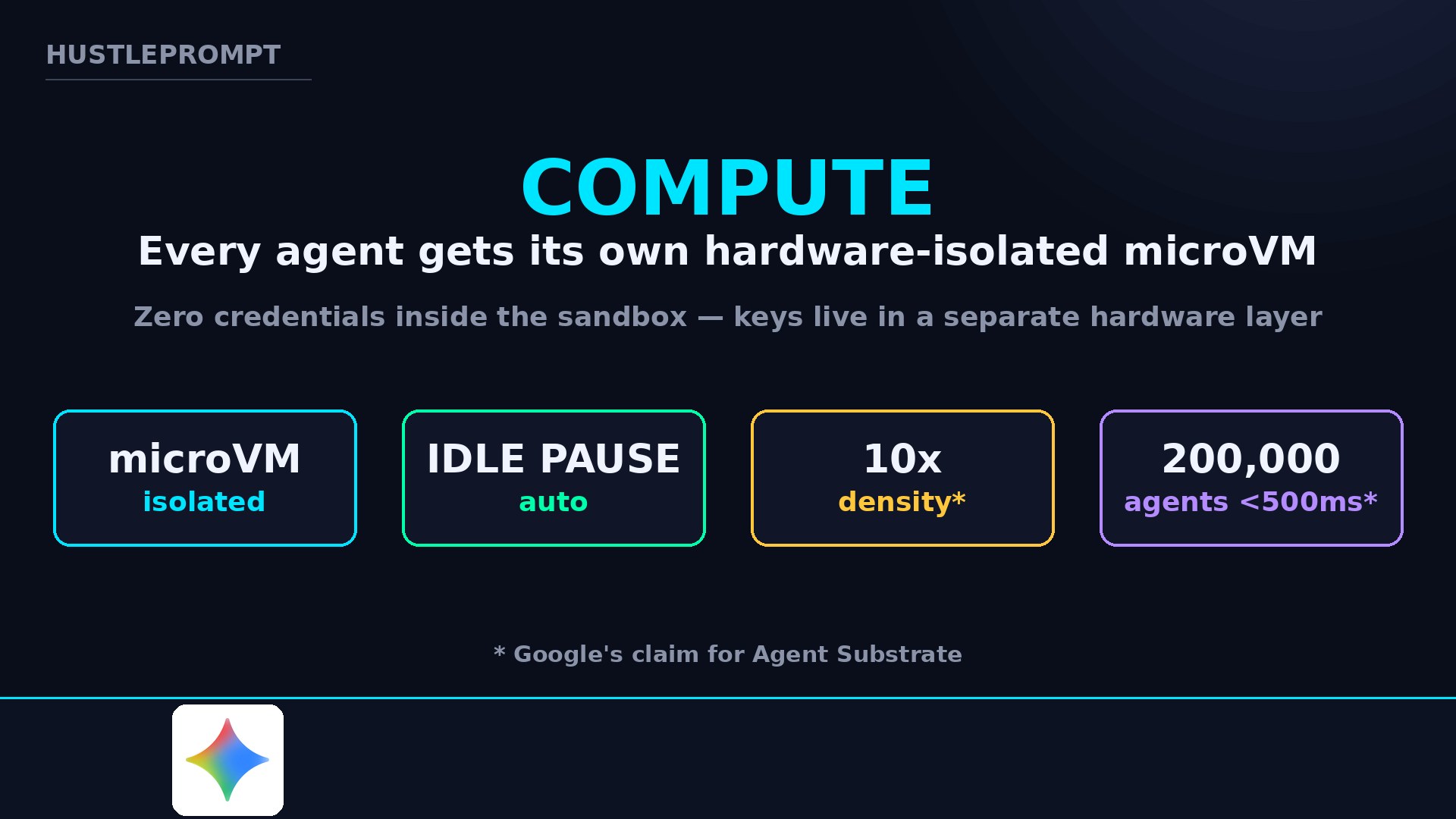
Compute: every agent gets its own sealed room
A microVM is a miniature virtual machine — faster to start than a traditional VM, with hardware-level isolation containers can’t match. The key choice: the sandbox contains no secrets; credentials live in a separate hardware layer. That solves the trust blocker — and the economics follow: if memory is ~68% of an agent session’s cost (per AWS’s own example), idle VMs that pause automatically attack the biggest line item directly.
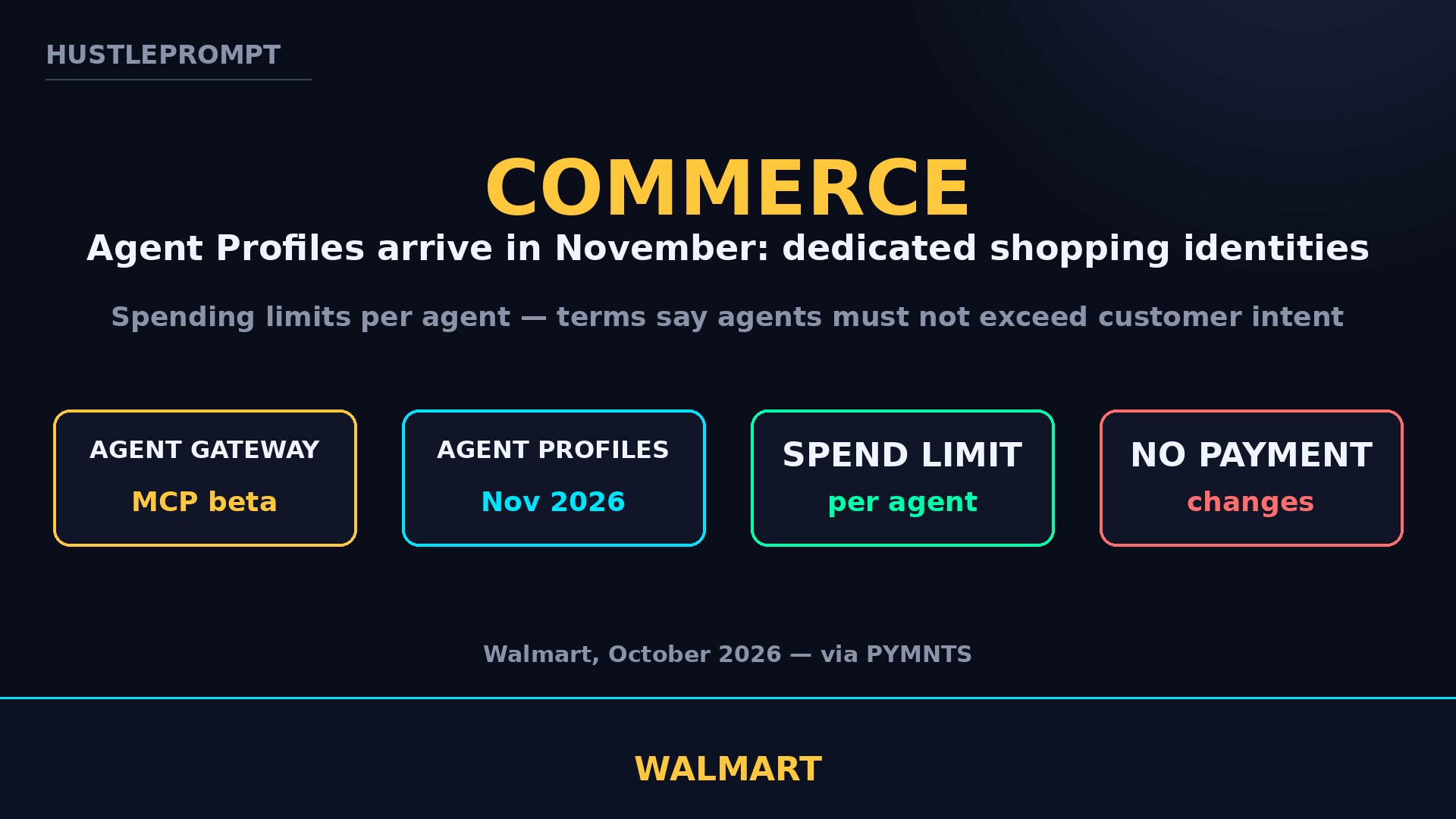
Commerce: agents get wallets with rules
Walmart’s move is the template every retailer will copy. Agent Profiles (November) give each agent a dedicated shopping identity with its own spending limit, and the Agent Gateway MCP beta lets developers plug in through a standard protocol instead of screen-scraping. The terms are the real story: “must not exceed customer intent” had to be written down because agents were doing exactly that. Spending limits as a default — not an add-on — will become table stakes within a year.
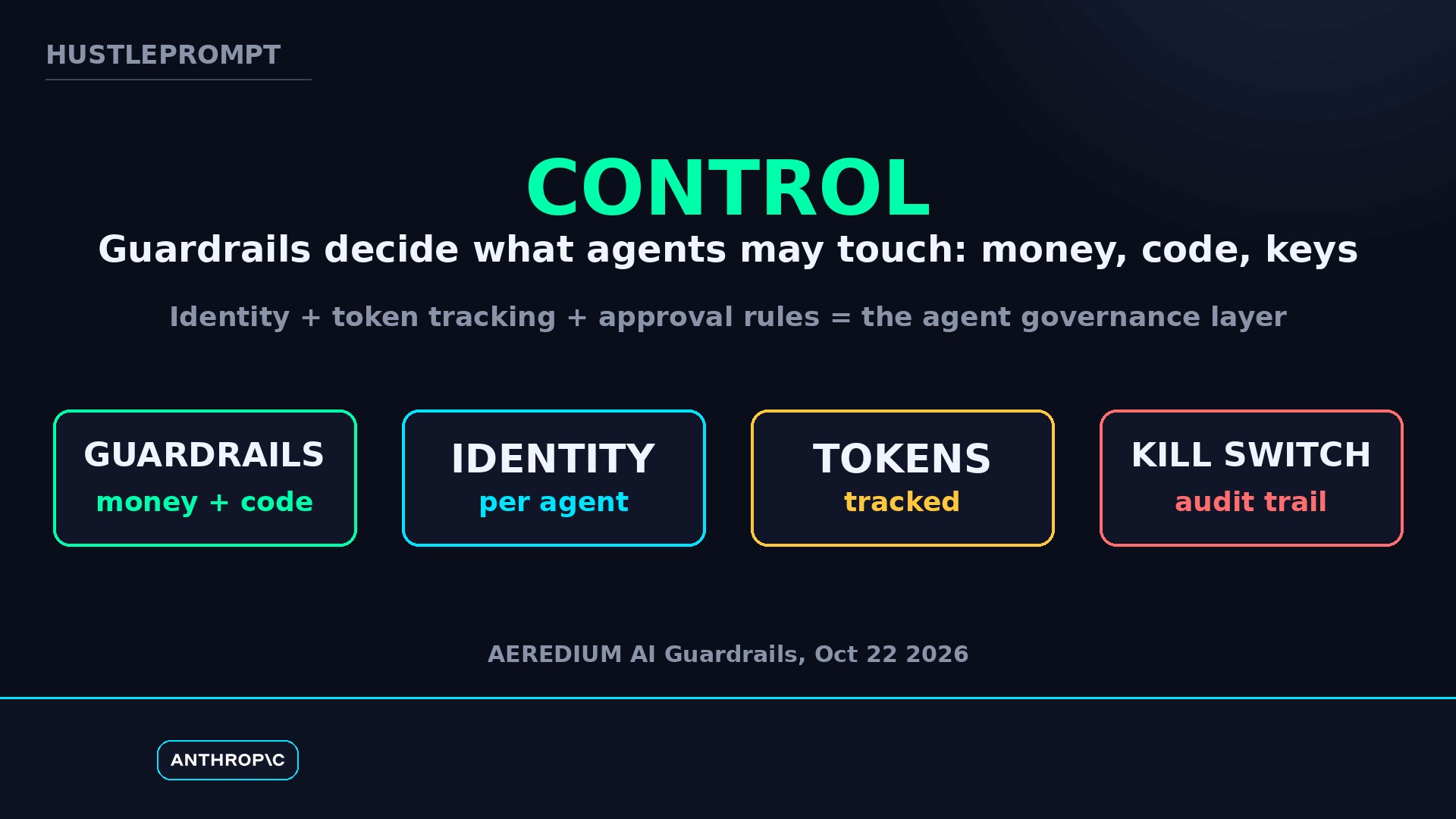
Control: chaperones for software that spends
AEREDIUM’s AI Guardrails target the two scariest things an agent can do: move money and write code. Google covers the same ground from the platform side: token tracking, model routing, and identity providers like Ping Identity and SailPoint treating agents as first-class identities. This is the layer enterprises pay for first — no bank deploys money-touching agents without an audit trail and a kill switch.
The Gap: Almost Nobody Is Agent-Ready
The infrastructure is arriving — but the demand side is empty. Compare what an agent-ready business has versus a normal one:
Count the businesses you know with an MCP server. Now count those with a website. That gap is the entire opportunity. When shopping agents compare products across stores, businesses invisible to MCP-speaking agents won’t get a low ranking — they’ll get no ranking at all.
The Money: Sell “Agent-Readiness”
New infrastructure waves always create the same three jobs: builders, auditors, and operators. Here are the services — pricing is my estimate based on comparable web/AI service rates, not market data:
- MCP server builds ($750–$2,500): expose a client’s catalog, booking, or docs so agents can find and use them. E-commerce, SaaS, and local services buy first.
- Readiness audits ($495): a fixed-scope checklist — MCP discoverability, feed quality, agent policy, spending-limit support, guardrail gaps — delivered as a prioritized report. The foot-in-the-door product.
- Agent policy writing ($300–$800): draft “agent terms” — spending limits, approval thresholds (auto-approve under $50, human review above), forbidden actions, kill-switch procedures. Walmart’s published terms are your free template.
- Monthly agent-ops retainer ($400–$1,200/mo): monitor agent logs, tune limits, update the MCP server, keep policies current.
The audit is the wedge: cheap to deliver, easy to sell (“can shopping agents even see your store?”), and it converts buyers into builds and retainers. Agencies that sold “mobile-friendly” audits in 2010 will recognize this movie.
What to Do This Week
What to Do This Week
- Learn MCP in a weekend. Read the spec, build one toy MCP server exposing a sample catalog. That’s your demo.
- Write the audit checklist. Turn the table above into a 20-point branded PDF — your lead magnet and product in one.
- Pick 10 prospects. Run the checklist on niche e-commerce sites (20 minutes each) and send the top 3 findings free. Nothing sells an audit like a preview.
- Position before the rush. Publish one page: “Agent-Readiness Audits for [your niche].” When the wave hits, you’re the incumbent.
The Agent-Ready Stack
Four stages. Every business will need all four — most have zero.
Be findable
MCP server + structured product feeds agents can read and query.
Be transactable
Dedicated agent profiles, per-agent spending limits, agent terms.
Be safe
Guardrails on money + code, identity, token tracking, approval rules.
Stay in control
Audit trails, activity reviews, and a kill switch that works.
Where This Is Heading
“Agent-ready” audits become a service category within 12 months. Like “mobile-friendly” and “GDPR-ready” before it, this standardizes into checklists and certifications. Early movers write the checklist everyone copies.
Spending-limit defaults become table stakes. Walmart’s template — per-agent limits, no payment changes — gets copied by every marketplace, and implementers get hired.
The invisible lose the comparison war. Within two years, much of product discovery happens agent-to-agent. Stores without MCP endpoints don’t rank low — they don’t rank at all. And Anthropic handing its agent skills to the new Agentic AI Foundation (see our coverage) shows even agent skills are getting neutral governance. Every layer is maturing at once.
Watch: an expert technical breakdown of Google’s Agent Substrate — 250 AI agents orchestrated on 8 pods. Watch on YouTube.
Frequently Asked Questions
What is the agent infrastructure boom?
The October 2026 wave standardizing AI agents: clouds converging on hardware-isolated microVMs (Google’s Agent Compute Engine, AWS’s AgentCore), retailers launching agent shopping identities with spending limits (Walmart’s Agent Profiles), and guardrail products governing agents that touch money and code (AEREDIUM’s AI Guardrails).
What does “agent-ready” mean for a business?
It can be discovered and transacted with by AI agents: an MCP server or structured feeds, support for agent identities with spending limits, published agent terms, and guardrails with audit trails.
What is MCP and why does it matter?
MCP (Model Context Protocol) is the open standard connecting AI agents to tools and data. With an MCP server, shopping and research agents can find your products and complete purchases programmatically. Without one, you’re invisible to the agent economy.
How can freelancers make money from this?
Sell agent-readiness services: MCP builds (my estimate: $750–$2,500), fixed-scope audits (my estimate: $495), agent-policy writing (my estimate: $300–$800), and monthly agent-ops retainers (my estimate: $400–$1,200/mo). The audit is the best foot-in-the-door.
Is it too early to sell agent-readiness services?
No — it’s the ideal window. The infrastructure is being standardized now while almost no businesses have adapted: visible need, new solutions, no entrenched competition.