
Two of China’s best-known AI labs may have taken a shortcut to the frontier, and OpenAI’s most powerful model may have paid for it. A new GPT-6 Astra distillation report says Chinese developers DeepSeek and Moonshot AI relied heavily on outputs from OpenAI’s GPT-6 Astra to train their latest models, turning one of the AI industry’s most sensitive accusations into the day’s biggest story.
The claim comes from Reuters’ report on The Information’s reporting, published October 28-29, 2026, citing people with direct knowledge. The wording matters: this is a report, not a confession, a court filing, or a company statement.
Evidence, as reported by Reuters citing The Information: DeepSeek and Moonshot AI relied heavily on outputs from OpenAI’s GPT-6 Astra to train their latest models.
Kimi K3.1 Pro (released last week) and DeepSeek V4.1-Flash 1017 (October 17) both benefited from distilling Astra, the report said. None of the three companies immediately responded to Reuters.
What the report says
Distillation means training a new model on the outputs of an existing, more powerful model. Instead of paying the full cost of discovering capabilities from scratch, a lab studies the teacher’s answers and learns to imitate them.
Frontier labs argue the practice lets rivals reproduce advanced capabilities more quickly and cheaply. Anthropic, OpenAI, and Google have all made that argument, according to Reuters, as US-China AI competition intensifies.
| Model named in the report | Lab | Launch timing given |
|---|---|---|
| Kimi K3.1 Pro | Moonshot AI | Released last week, relative to October 28 |
| DeepSeek V4.1-Flash 1017 | DeepSeek | Launched October 17, 2026 |
| GPT-6 Astra | OpenAI | The model whose outputs were reportedly distilled |
Neither lab has confirmed the report, and OpenAI has not commented on this specific claim. Treat the distillation itself as reported, not proven, until a company speaks or documents appear.
Distillation, explained in plain English
Think of learning from a tutor’s worked answers. The student gets questions and answers, not the teacher’s private data or code.
1. Teacher answers. A frontier model such as GPT-6 Astra answers thousands of prompts.
2. Outputs become training data. Those answers are collected and formatted as examples.
3. Student trains on the examples. A newer, often smaller model learns the patterns in those answers.
4. The student looks frontier-class. It performs far better than its own training budget would normally allow.
Distillation is not always wrongdoing: labs openly distill their own models. The flashpoint is a rival’s model.
The July campaign that came first
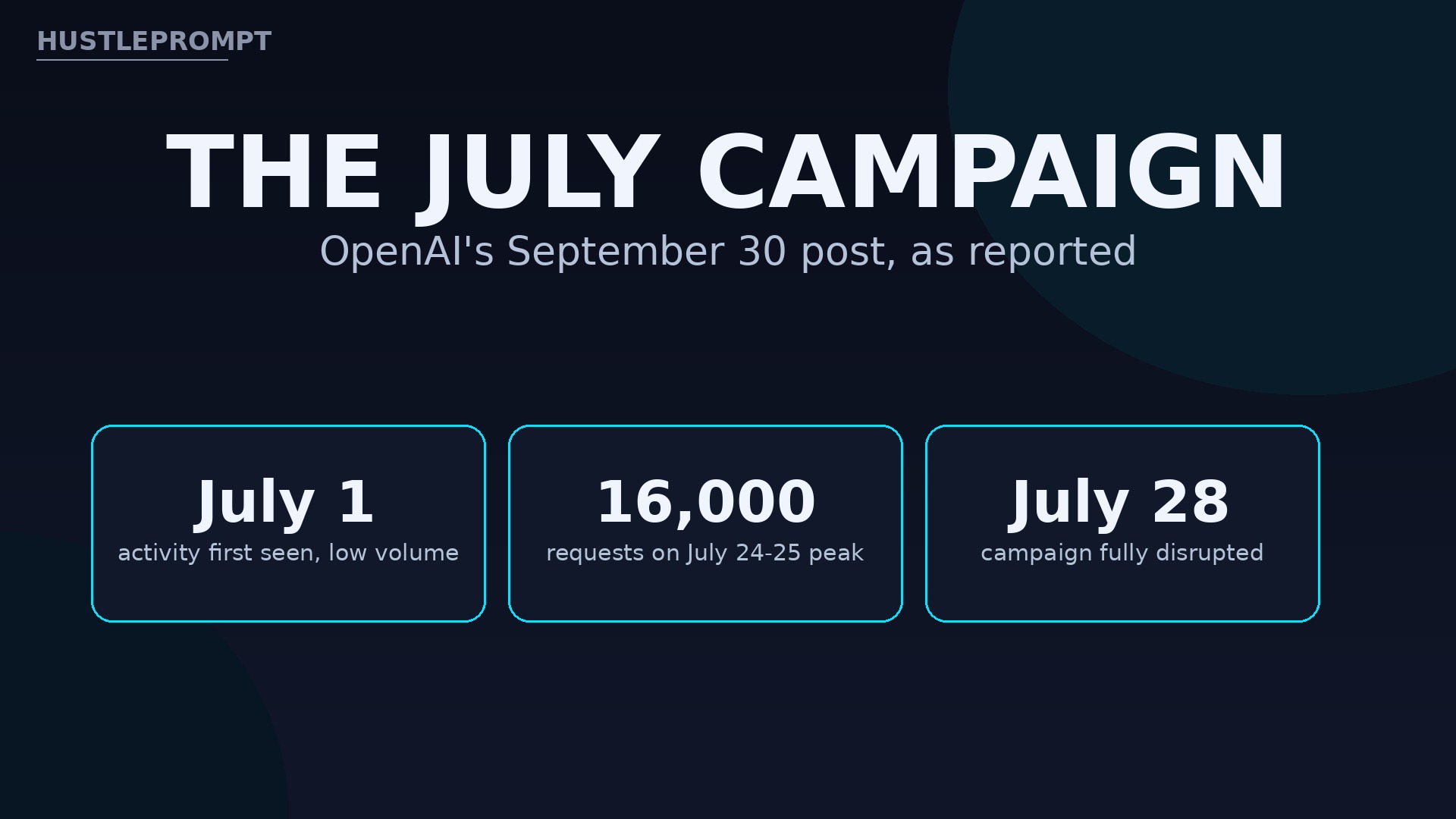
This report does not arrive out of nowhere. In a September 30 blog post, OpenAI said it had linked a core part of a distillation campaign that began in July to individuals associated with Moonshot AI, according to Reuters.
Coverage adds numbers: first seen July 1 at low volume, spiking July 24-25 with 16,000 matching requests from over 4,000 users. The wider cluster was put at over 15,000 users; OpenAI considered it fully disrupted by July 28.
The prompts reportedly sought a readable version of hidden reasoning. OpenAI said encryption was not breached, and it linked a core cluster, not necessarily every account, to individuals associated with Moonshot AI.
Why the big labs are fighting back
For a frontier lab, distillation is an economics problem first. Training a frontier model costs enormous compute, data, and talent. If a rival can capture much of the result by querying the finished model, its bill is a fraction of the original.
Anthropic has now put a number on its defenses. Earlier in October, it said new measures against copying Claude’s capabilities had reduced data harvested in distillation attacks by about 90% to 99%, according to Reuters.
Expect tighter controls and harder buyer questions.
How to profit from the GPT-6 Astra distillation row
This story changes what clients should ask before they buy AI services. Use it, but do not overclaim: the central allegation is reported, not confirmed.
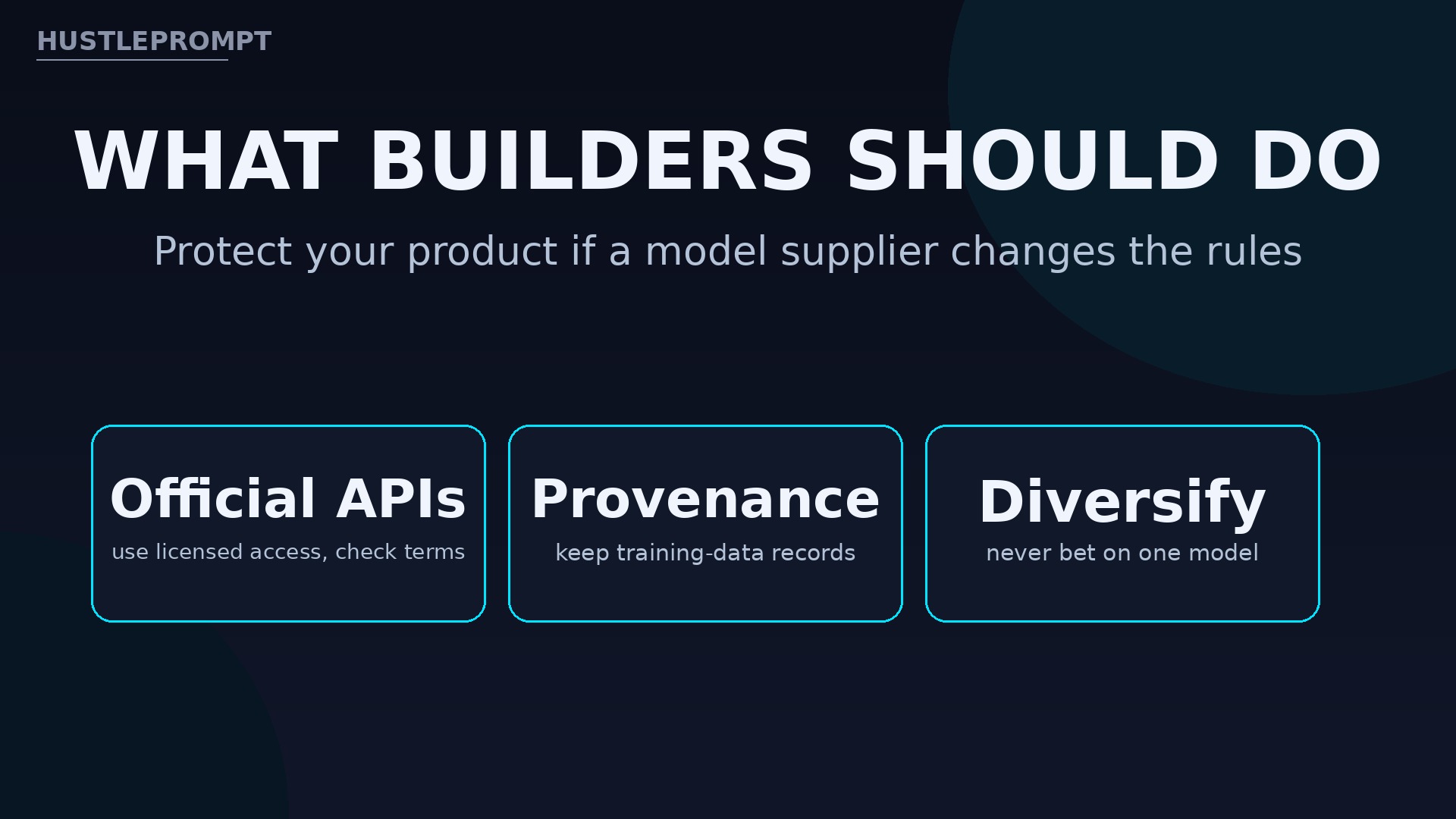
- Sell a model-provenance audit. List every model and provider in a client’s stack, and flag where outputs are used to train anything else.
- Offer terms-of-service reviews. A fixed-price review answering one question, “may we train on these outputs?”, is cheap to deliver and easy to sell.
- Build on official APIs, and say so. Clients worried by this story will prefer vendors who use licensed access and can show it.
- Diversify every critical workflow. Keep a tested fallback model for each core workflow, so one disputed or repriced provider cannot stall you.
- Teach the story. A short client briefing on distillation, the July campaign, and Anthropic’s 90% to 99% figure positions you as the careful expert.
What is still unproven
- Whether it happened as reported: The report cites people with direct knowledge, but no company has confirmed it and no documents have been published.
- How much came from Astra: “Relied heavily” does not say what share of training, or which capabilities, came from Astra outputs.
- What happens next: No lawsuit, ban, or enforcement action tied to this claim has been reported.
Frequently asked questions
What is GPT-6 Astra distillation?
As reported, using outputs from OpenAI’s GPT-6 Astra to train newer DeepSeek and Moonshot models, gaining capabilities more quickly and cheaply than training from scratch.
Which models are named in the report?
Kimi K3.1 Pro, released last week relative to October 28, and DeepSeek V4.1-Flash 1017, launched October 17, 2026.
Did DeepSeek, Moonshot, or OpenAI confirm the report?
No. Reuters reported that OpenAI, DeepSeek, and Moonshot AI did not immediately respond to its requests for comment.
What did OpenAI say on September 30?
It linked a core part of a July distillation campaign to individuals associated with Moonshot AI. Coverage says it peaked with 16,000 matching requests across July 24 and 25 and was fully disrupted by July 28.
How much did Anthropic cut distillation harvesting?
About 90% to 99%, according to Reuters, after new measures earlier in October.