
Amazon’s Ring just brought back its flying security camera — and this time it has a robot sibling. The Ring Drone Cam flies around your home to check alarms, and the Ring Rover Cam patrols businesses on its own wheels. Both are steered by a new AI system called AI Pilot, and both go on sale within weeks.
Ring announced the two devices on November 10, 2026, under a new product line called Ring Robotics. The Drone Cam costs $249.99 and ships January 27, 2027. The Rover Cam costs $999.99, is available to preorder now, and ships December 16, 2026. One catch up front: the drone has not yet received its required FCC authorization, and the best features need a Ring Protect subscription.
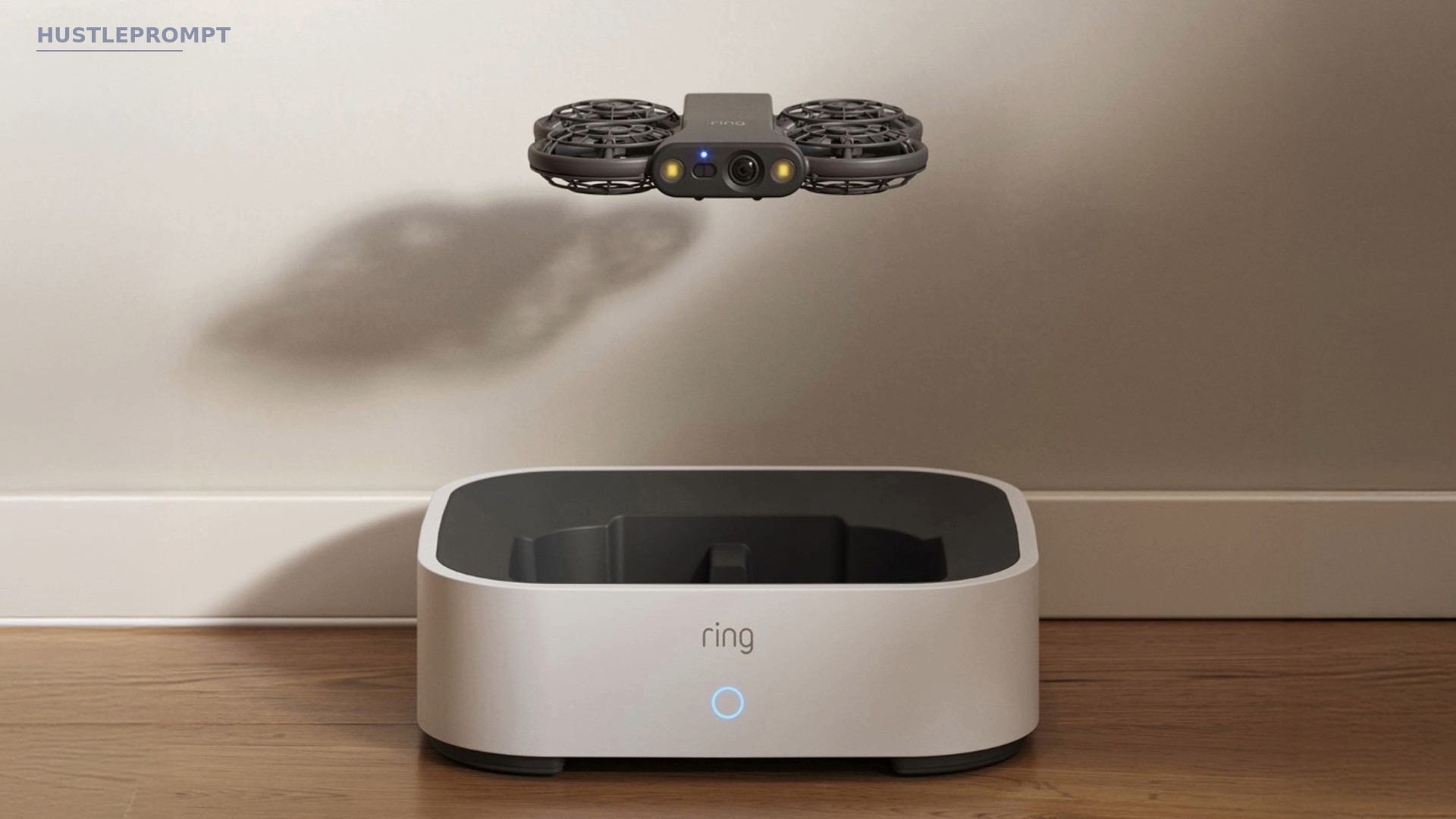
Ring Drone Cam in flight above its dock. Official press image: Amazon.
Two Robots, One AI Pilot
Ring Robotics is a new category of what Amazon calls “autonomous, mobile security” — devices that patrol, investigate, and respond automatically instead of sitting fixed on a wall. The two launch products split the job: one flies through homes, the other rolls through businesses.
Source: Amazon, “Ring announces Ring Robotics, ushering in a new era of security,” November 10, 2026; Reuters, November 10, 2026.
How AI Pilot Flies the Drone
The difference from a remote-controlled drone is the pilot. AI Pilot is Ring’s custom-built system that combines the devices’ cameras, specialized vision models, on-device sensors, and cloud processing to see, think, and navigate on its own. It maps the space, suggests patrol points worth checking, and finds its own way around obstacles such as furniture and shelving. It uses the Alexa Home Map built from existing Echo devices to navigate.
From alarm to aerial check
1. Trigger
A Ring Alarm sensor, motion sensor, or leak sensor goes off — or the schedule says patrol.
2. Launch
The drone leaves its dock, where its camera stays physically blocked while idle.
3. Navigate
AI Pilot charts a flight path around obstacles using vision models and cloud processing.
4. Report
It streams video to your phone and returns to the dock — landing itself if it loses internet.
The cloud does the heavy thinking. Ring founder Jamie Siminoff told reporters the earlier drone attempts failed because adding sensors and computing to the aircraft raised weight and power needs beyond what a small drone could carry. This time the intelligence sits in the cloud: an AI Pilot agent directs the flight from Ring’s servers, while the 165-gram drone carries only cameras and sensors. It runs a motor health check before every takeoff.
What the Drone Cam Actually Does
The Drone Cam is a flying indoor security camera that covers a whole home without a fixed camera in every room. You set custom flight routes in the Ring app, and it flies them on a schedule, on demand, or automatically when another Ring device is triggered. It records video by day or night, and it can fly upstairs to reach rooms a wall camera never sees.
The limits are real. Five to eight minutes of flight per charge means short patrols, not continuous coverage — the drone checks a spot and comes home. It needs Wi-Fi, and it uses the Alexa Home Map from Echo devices you already own. And it cannot legally be sold until the FCC authorizes it, so the January 27 ship date depends on that approval landing first.
Watch: Ring Drone Cam | Indoor Flying Security Camera (Ring).
The Rover Cam: A Guard That Never Sleeps
The Rover Cam is the business half of the launch: a wheeled security robot that patrols offices, warehouses, and retail spaces on its own, on schedule or when needed. It streams video in up to 4K, investigates disturbances, and carries a built-in siren and two-way audio — so you can confront an intruder through the robot itself.
It will look familiar to Amazon watchers: the Rover is a rebuilt version of Astro, the home robot Amazon launched in 2021 and barely updated since. This time the pitch is commercial, not domestic — a patrol unit for small and medium businesses that cannot justify a night guard.
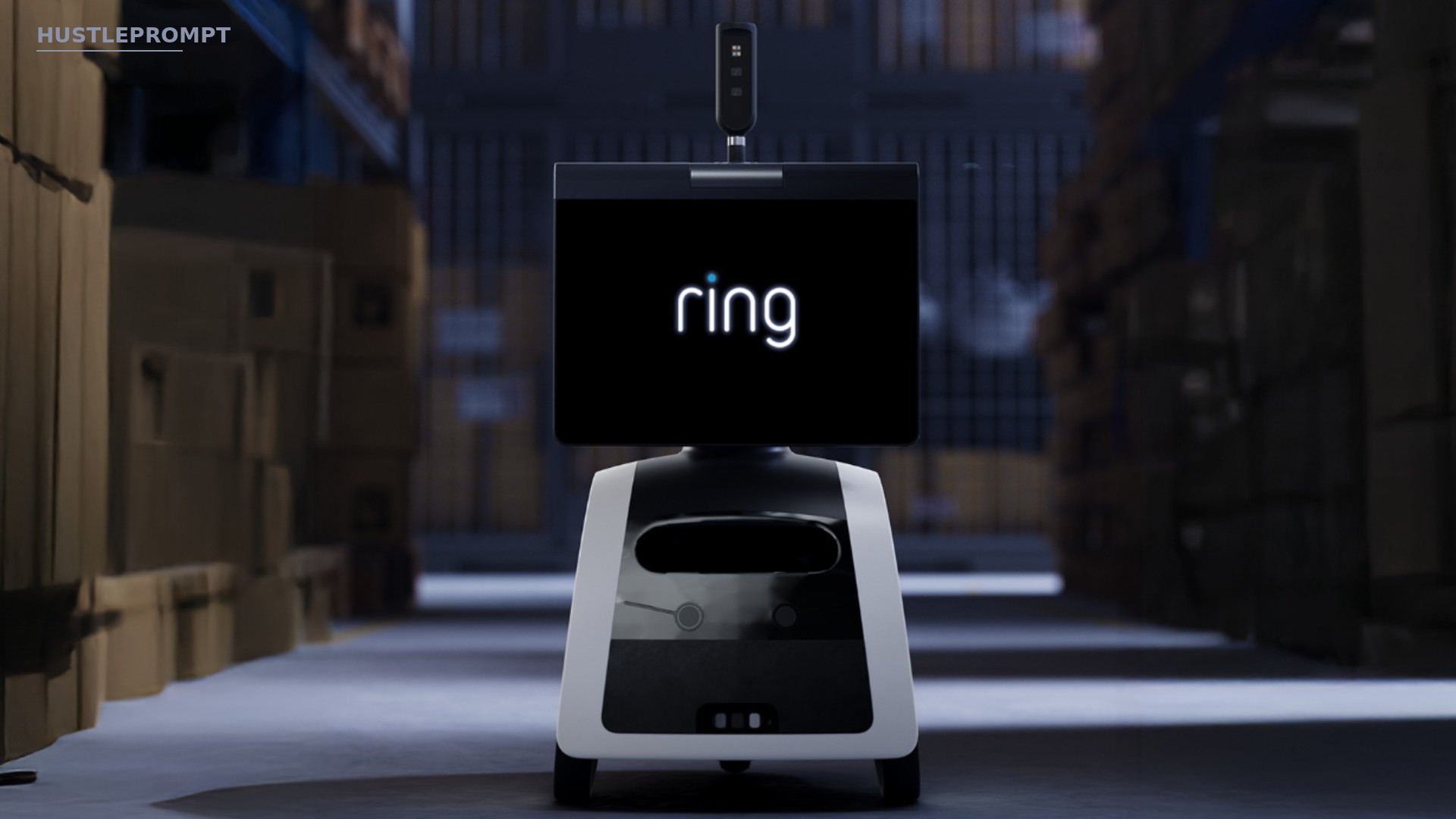
Ring Rover Cam patrolling a warehouse. Official press image: Amazon.
Watch: Ring Rover Cam | Business Security That Moves (Ring).
The Catch: Subscription and FCC Approval
Two costs sit behind the sticker prices. Scheduled flights and patrols, and reviewing the Rover’s recorded video, require a compatible Ring Protect subscription — the headline features do not work on the hardware price alone. Ring has not published the subscription tier the robots need, so the true monthly cost is still unknown.
The second catch is regulatory. The Drone Cam “has not been authorized as required by the rules of the Federal Communications Commission,” in Amazon’s own words, and cannot be offered for sale until it is. The January 27, 2027 ship date is a plan, not a guarantee — and Ring is only taking email sign-ups for the drone, not preorders, while the Rover is already selling.
On privacy, Ring says video from both devices is protected by TAKE (Throw Away the Key Encryption), its strongest default encryption yet, and that the drone’s camera is physically blocked while it sits in its dock. That matters: a flying camera that roams your home is a harder privacy sell than a doorbell, and Ring still carries the reputation hit from its earlier privacy criticism.
Is It Worth It? The Money Math
For a home, the Drone Cam’s pitch is simple arithmetic: one $249.99 drone replaces several fixed cameras in rooms you rarely watch, and it checks an alarm instead of making you drive home to look. For a small business, the Rover’s $999.99 plus subscription competes with a security guard’s hourly rate — a robot that patrols every night costs less than one month of overnight staffing.
Three things to weigh before buying:
- Wait for the FCC green light. Do not plan around the January 27 drone date until authorization lands; the Rover, shipping December 16, carries no such risk.
- Price the subscription first. The robots’ best features need Ring Protect. Add the monthly plan to the hardware price before comparing with fixed cameras.
- Mind the flight time. Five to eight minutes per charge makes the drone a spot-checker, not a patrol. If you need continuous coverage, fixed cameras still win.
FAQ
What is Ring Drone Cam?
A flying indoor security camera from Amazon’s Ring. It launches from a dock, flies preset routes around your home on a schedule or when an alarm triggers, and streams 2K video to your phone. It costs $249.99 and ships in the US on January 27, 2027, pending FCC authorization.
What is Ring Rover Cam?
A wheeled autonomous security robot for businesses. It patrols offices, warehouses, and stores on its own, streams up to 4K video, and has a siren and two-way audio. It costs $999.99, is available to preorder now, and ships in the US on December 16, 2026.
What is AI Pilot?
Ring’s system that steers both robots. It combines cameras, vision models, on-device sensors, and cloud processing to map a space, suggest patrol points, and navigate around obstacles without a human driving.
Do I need a subscription?
Yes, for the best features. Scheduled flights and patrols, and reviewing the Rover’s recorded video, require a compatible Ring Protect subscription plan. Ring has not yet published which tier the robots need.
Is the Drone Cam available to buy now?
No. Ring is only taking email sign-ups for the Drone Cam while it awaits required FCC authorization. The Rover Cam is available to preorder now on Amazon.
Why did Ring try a flying camera before?
Ring showed a similar drone, the Always Home Cam, in 2020, but it stalled at invitation-only sales. Founder Jamie Siminoff said earlier versions failed because onboard sensors and computing made the drone too heavy — this time the intelligence lives in the cloud instead.
Sources: Amazon: Ring announces Ring Robotics, ushering in a new era of security (November 10, 2026); Reuters: Amazon’s Ring launches flying camera, autonomous security robot (November 10, 2026); Ring: Ring Drone Cam | Indoor Flying Security Camera.
Keep Reading
- NVIDIA GR00T 2 Teaches Robots From Human Video — the other robot that learned to move this week.
- Who Watches the AI Agents? Oversight Is the New Gold Rush — when agents act on their own, someone has to watch them.
- Meta Muse Spaces Turns Chat Into Mini-Apps You Build — AI agents are moving into the physical world and the chat window alike.