
Together Compiler is the reason a brand-new open model can get faster overnight instead of in weeks. Together AI announced it on November 4, 2026, and the timing matters: 80% of OpenRouter traffic already goes to models released in the last three months.
When models change that fast, hand-tuning each one is a losing race. Together AI’s answer is to let AI agents do the tuning, continuously, while customers change nothing.
What launched today
Together Compiler uses teams of AI agents to rewrite the GPU code behind the models Together AI serves. It is the first project in a larger initiative called Polymorphic Inference, which Together AI describes as recursive self-improvement for inference workflows.
In plain terms, inference is running a trained model to answer prompts. It must be tuned for each model, traffic pattern, and chip, and Together AI says each of the ten most popular open models on OpenRouter uses a different architecture.
It already runs across many popular serverless endpoints, serving trillions of tokens per day, with no extra customer work there.
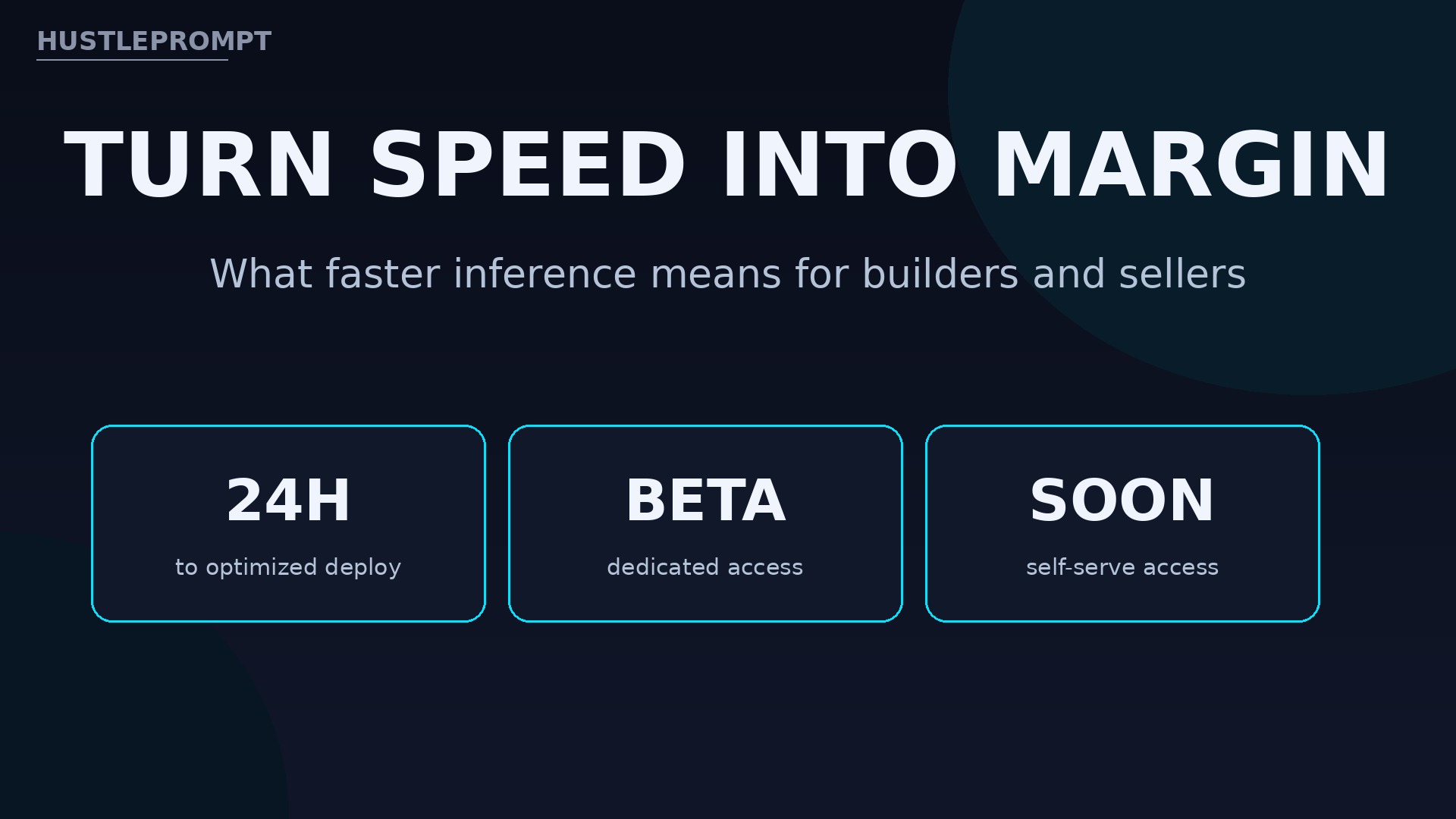
For dedicated deployments, access is different: a limited beta, with self-serve access coming soon and no price change announced.
The evidence: real numbers behind the launch
All figures below are vendor-reported, from Together AI’s own announcement. They are specific, testable claims, not vague promises, but they have not been independently reproduced.
| Model and chip | Result reported | Versus baseline |
|---|---|---|
| Kimi K3 | Higher peak throughput | 1.5x the best SemiAnalysis InferenceX result |
| GLM 5.3 | Higher peak throughput | 1.4x the best SemiAnalysis InferenceX result |
| Llama 1B (H100 and B200) | Over 2,100 tokens per second | Up to 1.7x hand-written megakernels, fastest at every output length tested |
| MiniMax M3.1 Flash (B200) | 1,111 tokens per second | 1.8x the baseline |
| DeepSeek v4.1 Flash (GB300) | 1,205 tokens per second | 1.3x the baseline |
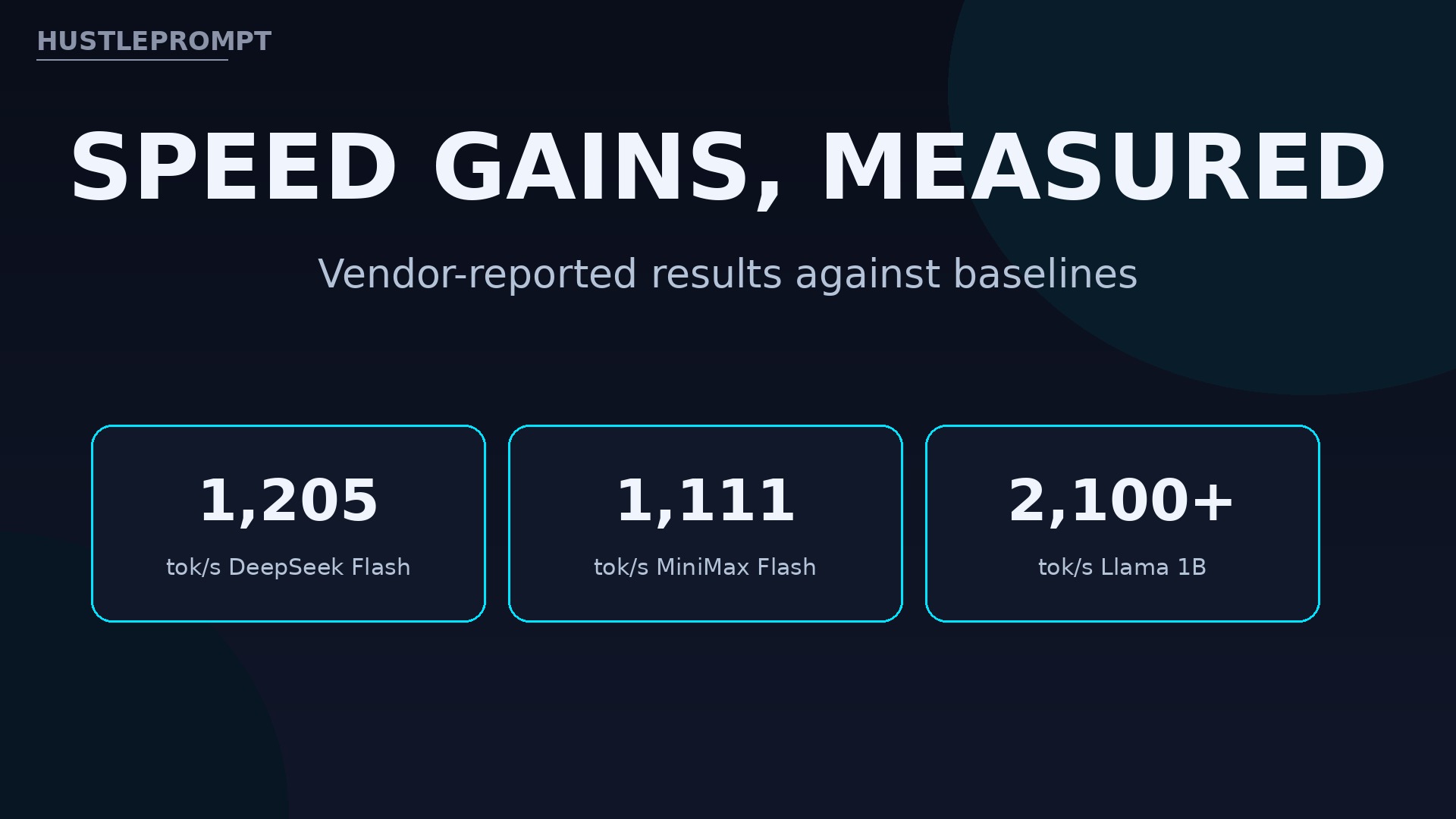
The speed claim rests on iteration volume. Traditionally, one agent edit can take up to 15 minutes to validate. Together AI says its design runs 252 times more experiments than existing agent-based systems, keeping GPUs fully utilized.
That volume turns weeks into a day: Together AI says it reaches state-of-the-art optimizations in 24 hours and deploys them immediately.
One customer result is on the record. Phonic co-founder Moin Nadeem said it cut the company’s median time to first speech by nearly 50%, overnight. Phonic says it has been a Together AI customer for over two years.
How it works
New model lands → agents retune it → faster serving, overnight
- Step 1 — Watch: a new open model, traffic shape, or chip arrives.
- Step 2 — Generate: agents propose GPU code optimizations for the inference engine.
- Step 3 — Verify: winning candidates pass checks for output quality before serving.
- Step 4 — Deploy: the optimized setup goes to production, then tuning continues.
Verification is the hard part: a bad edit can corrupt results. Together AI’s paper describes checks for KV-cache contamination and output quality before a candidate can serve.
Dan Fu, Together AI’s founding senior vice president of research, put it simply. Most inference uses only a fraction of what a GPU can do, and that gap reopens with every new model or chip. Only inference that adapts just as quickly can close it for good.
How to profit from faster inference
Speed is not abstract here. For anyone selling an AI product, inference cost is the margin. Concrete steps:
- Pick an open model that fits the job. Start on Together AI’s serverless endpoints, where Compiler tuning is already live, so you benefit without joining a beta.
- Measure cost per 1,000 finished tasks, not per token. Faster tokens only help if quality holds. Track completed jobs, errors, and latency together for a week.
- Ship the speed as a feature. Voice products can sell lower first-speech latency, as Phonic did. Chat and agent products can sell faster first answers.
- Re-price only once the numbers are real. If a 1.3x to 1.8x throughput gain holds on your workload, serve more users on the same spend, or cut price to win volume. Never re-price on vendor benchmarks alone.
- Apply for the dedicated beta only if you need it. It fits steady, high-volume workloads. For variable traffic, stay on serverless until self-serve access arrives.
What is still limited
Three limits deserve honest labeling. First, dedicated access is a limited beta, not general availability, and self-serve access has no date yet. Second, the benchmarks are Together AI’s own, against baselines it chose, and independent reproduction is pending.
| Access route | Status on November 4, 2026 |
|---|---|
| Popular serverless endpoints | Compiler running today, no customer work needed |
| Dedicated deployments | Limited beta, apply to join |
| Self-serve dedicated access | Coming soon, no date announced |
The edge may shrink fast, since every major inference provider is cutting cost per token. The durable advantage, if it holds, is the self-retuning loop.
Read the full official announcement from Together AI: Together AI launches Together Compiler for continual optimization of open source AI models.
Frequently asked questions
What is Together Compiler?
A system that uses AI agents to rewrite GPU code for inference, so open models run faster without extra customer tuning.
When was Together Compiler announced?
November 4, 2026, at 13:00 UTC (14:00 CET), as the first project under Polymorphic Inference.
How much faster is it?
Vendor-reported: 1.5x on Kimi K3, 1.4x on GLM 5.3, up to 1.7x on Llama 1B, 1.8x on MiniMax M3.1 Flash, 1.3x on DeepSeek v4.1 Flash.
Is Together Compiler available now?
Yes, on many popular serverless endpoints. Dedicated deployments need the limited beta; self-serve access is coming soon.
Does it lower my AI bill?
Not automatically. Higher throughput can cut cost per task, but no price change was announced, so measure your own workload first.
What is Polymorphic Inference?
Together AI’s agenda for inference that adapts on its own, with agents continuously improving the systems that run AI.