
Your next assistant doesn’t live in your phone — it rides on your wrist. Amazon just launched the Amazon Bee Frontier, a $74.99 AI wearable that listens to your conversations all day and turns them into summaries, to-dos, and reminders. Alongside it comes the Bee Eclipse, a $99.99 magnetic phone attachment that does the same job from the back of your smartphone.
The announcement, published October 15 on Amazon’s official newsroom, marks the first new Bee hardware since Amazon acquired the startup last year — and it undercuts every rival in the AI note-taker market by a wide margin. If you’ve been watching the ambient AI race, this is the moment the price floor just collapsed.
What Amazon just launched
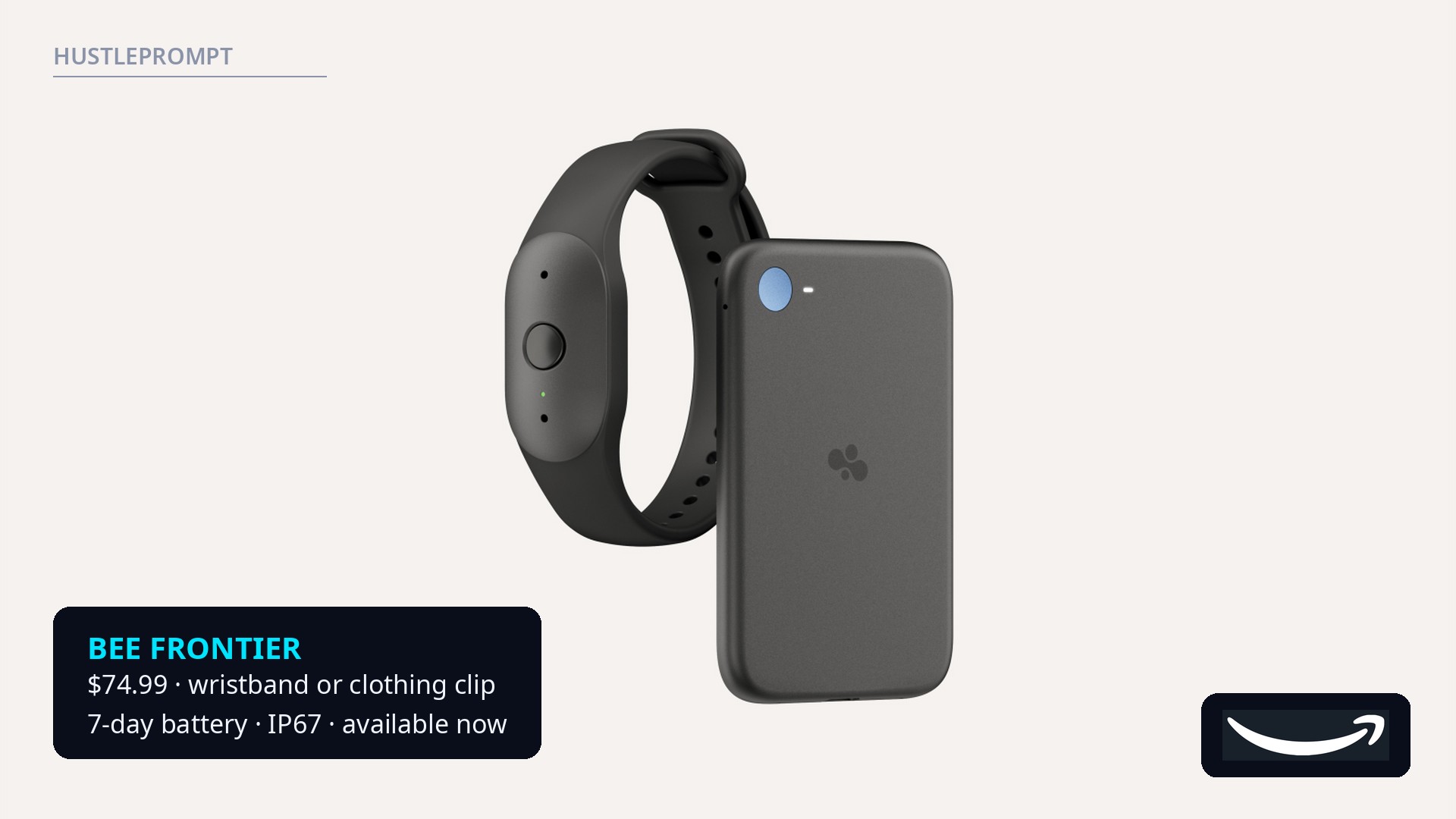
Bee Frontier is a next-generation AI wearable you can wear on your wrist or clip onto your clothing. It comes in three nature-inspired colors — Lavender, Sage, and Onyx — with an ultra-soft silicone wristband built for all-day comfort. Under the hood: dual microphones with advanced noise filtering that can pick out what matters in a crowded restaurant or open office, IP67 water resistance, up to seven days of battery life, and USB-C charging.
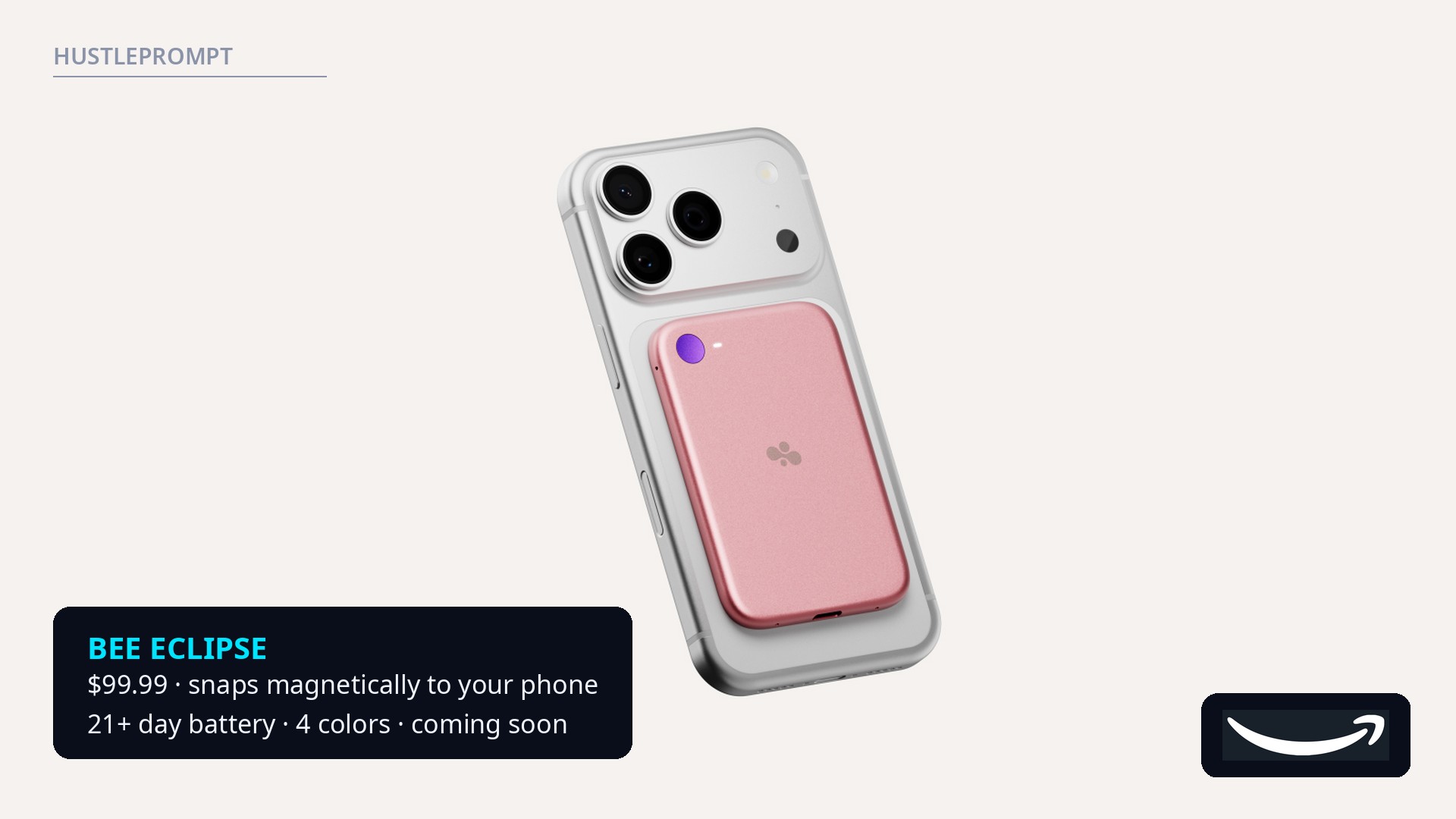
Bee Eclipse takes a different approach: a slim, lightweight device about the size of a credit card that attaches magnetically to the back of your phone. Nothing extra to wear — just attach it and go. Its headline spec is battery life: more than 21 days on a single charge. It ships in Silver, Midnight, Honey, and Blush.
| Spec | Bee Frontier | Bee Eclipse |
|---|---|---|
| Price | $74.99 | $99.99 |
| Form factor | Wristband or clothing clip | Credit-card-size magnetic phone attachment |
| Battery life | Up to 7 days | More than 21 days |
| Microphones | Dual mics, advanced noise filtering | Multi-mic array for calls and in-person chats |
| Water resistance | IP67 | Not specified |
| Colors | Onyx, Lavender, Sage | Silver, Midnight, Honey, Blush |
| Availability | Available now at Amazon.com | Available soon |
The price that breaks the market
Here’s the number that matters for the whole category: $74.99. The AI note-taker market has been a $129–$189 game. TechCrunch’s launch coverage puts the comparison bluntly — the Plaud Note sells for $159 (the Note Pro for $189) and the Pocket AI device for $129. Bee Frontier undercuts the cheapest credible rival by more than 40%.
| Device | Price | vs. Bee Frontier |
|---|---|---|
| Bee Frontier (Amazon) | $74.99 | — |
| Bee Eclipse (Amazon) | $99.99 | +$25.00 |
| Pocket AI device | $129 | +$54.01 |
| Plaud Note | $159 | +$84.01 |
| Plaud Note Pro | $189 | +$114.01 |
Competitor prices via TechCrunch’s launch coverage, October 15, 2026.
Amazon is pricing the entry point as an impulse buy — then monetizing through Bee Pro at $11.99 per month. Every Bee includes conversation summaries, recaps, and 14-day memory free, forever. Bee Pro adds unlimited recent conversation summaries, integrations with Amazon.com, Alexa+, and third-party apps, suggested to-dos, daily memories, a personal chat assistant, conversation templates, and the new desktop app. All new customers get 30 days of Bee Pro free.
Key numbers at a glance
- $74.99 / $99.99 — device prices, roughly half the cost of Plaud’s lineup
- 21+ days — Eclipse battery life; Frontier lasts up to 7 days
- 14 days — free conversation memory included with every device
- $11.99/mo — Bee Pro subscription, with 30 days free for new customers
- IP67 — Frontier’s dust and water resistance rating
How Bee turns talk into action
When Bee is on, it gathers context from your conversations and connected apps, then serves insights back in the Bee mobile app or an all-new desktop app — with templates tailored to specific situations like lectures, care plans, or brainstorms. Review memories from the past few days, and Bee spots recurring themes and recommends personalized goals and actions.
The integrations are where it becomes a money tool, not a gadget:
- Gmail, Google Calendar, Microsoft Outlook — after a call or meeting, Bee surfaces action items, drafts follow-up emails, or creates calendar invites from what was discussed
- Apple HealthKit and Photos — a fuller wellness picture and a visual layer on daily memories
- Alexa+ — hands-free access to summaries, insights, and to-dos (“ask Alexa for a meeting summary”)
- Amazon.com — personalized shopping recommendations; mention a product in conversation and it surfaces on your Amazon homepage before you remember to look for it
Amazon devices chief Panos Panay, unveiling the devices at TechCrunch Disrupt in San Francisco, put the pitch simply: “They listen to your whole day. It reminds you of the conversations you had, it reminds you of to-dos that you may have had, it tells you that you have some action items that you committed to other people.” (as reported by Reuters). Panay also argued the next generation of users won’t open apps at all — devices will “just understand what I need” and get things done.
The privacy architecture
An always-listening device lives or dies on trust, and Amazon’s pitch is procedural: both devices run on Bee Private Compute, a security architecture that processes conversations inside an isolated environment. No audio is ever stored — it’s processed into insights in real time and deleted. Transcripts are encrypted with keys only your device creates and controls, and Amazon says even it can’t access your data unless you choose to share it.
Control is physical and explicit: a single press turns each device on or off, an LED signals when it’s on, you can configure auto-off after a period of silence (5 or 15 minutes, for example), and users are prompted to get permission from call participants each time a recording starts. You can delete transcripts and summaries at any time.
The honest caveat: Reuters’ launch coverage notes Amazon faced criticism in 2019 over human review of Alexa conversations — a practice tied to a class-action lawsuit the company has denied wrongdoing over. If you plan to use Bee for business, check your state’s recording-consent laws first — several US states require all parties to consent, and “the AI was listening” won’t be a defense you want to test.
How to profit from the Bee launch
This launch is hours old. That timing is the opportunity. Here’s a concrete playbook:
- Sell “AI memory” setups to sales-heavy businesses. Realtors, contractors, consultants, and agencies lose deals to forgotten follow-ups. Offer a done-for-you package: Bee Frontier ($74.99) + configured Gmail/Calendar integrations + a 30-minute workflow training. Charge a setup fee plus a monthly retainer for template and integration maintenance. The hardware cost is low enough to bundle into the first invoice.
- Publish the first serious Bee vs. Plaud vs. Pocket comparison. Search demand for “Bee Frontier review” and “Bee vs Plaud” is about to spike from zero. A thorough, honest comparison — with real battery and accuracy testing over two weeks — can rank fast because almost nobody has published one yet. Monetize with display ads and affiliate links once programs open up.
- Build content around the Eclipse’s phone-call superpower. The Eclipse captures both sides of phone calls — the exact feature salespeople, podcasters, and journalists pay for. Niche tutorials (“How I log every sales call with Bee Eclipse”) will outperform generic unboxings.
- Pitch Amazon sellers on the Alexa+ / Amazon.com angle. Bee surfaces products you mention as recommendations on the Amazon homepage. Sellers who understand this early can think about how conversational commerce changes product discovery — and consultants who explain it get hired.
- Productize the privacy conversation. Businesses adopting always-listening hardware need consent workflows, disclosure scripts, and data policies. A simple compliance checklist + staff training deck for small firms is a sellable digital product riding this exact news cycle.
Frequently asked questions
What is the Amazon Bee Frontier?
The Bee Frontier is Amazon’s new AI wearable — a wristband or clothing clip that listens to your conversations and turns them into summaries, to-dos, reminders, and insights. It costs $74.99, offers up to 7 days of battery life, IP67 water resistance, and is available now at Amazon.com in Onyx, Lavender, and Sage.
How much does the Bee Eclipse cost, and when is it available?
The Bee Eclipse starts at $99.99. It’s a credit-card-sized device that attaches magnetically to the back of your phone, with more than 21 days of battery life. Amazon says it will be available soon in Silver, Midnight, Honey, and Blush.
Is there a subscription? What’s free?
Every Bee includes conversation summaries, recaps, and 14-day memory free. Bee Pro costs $11.99 per month and adds unlimited summaries, Alexa+ and Amazon.com integrations, third-party app connections, suggested to-dos, daily memories, a personal chat assistant, templates, and the desktop app. New customers get 30 days of Bee Pro free.
Does Bee store my audio recordings?
No. Amazon says audio is processed in real time into insights and then deleted — never stored. Transcripts are encrypted with keys that only your device creates and controls, and even Amazon can’t access them unless you choose to share.
How is Bee different from the Plaud Note?
Price is the headline difference: Bee Frontier costs $74.99 versus $159 for the Plaud Note. Bee also leans on ecosystem integrations — Alexa+, Amazon.com shopping, Gmail, Outlook, and HealthKit — while Plaud focuses on dedicated recording hardware with its own transcription plans.
Where can I buy the Bee Frontier?
The Bee Frontier is available now at Amazon.com for $74.99. The Bee Eclipse ($99.99) has been announced but Amazon hasn’t given a specific on-sale date yet — it says “available soon.”
Sources
- Amazon’s official Bee Frontier and Bee Eclipse announcement — specs, pricing, availability, and privacy details
- Reuters’ report on the Bee launch — Panos Panay’s TechCrunch Disrupt remarks and pricing confirmation
- Bee’s official product site — device details and Bee Pro plan information