
A patient with a drug-resistant bacterial infection just received a virus designed by AI. Omnii-1, launched October 20, 2026 by Radical Numerics, is the largest multimodal genome language model ever built — and its first AI-designed bacteriophage has already been administered to a human patient under physician compassionate use.
This isn’t another chatbot. Omnii-1 is biological AI: a genome language model built on the same technology as large language models, but trained on biology instead of human language. Here’s what it does, what actually happened with the patient, and what it means for investors and builders.
What Omnii-1 is
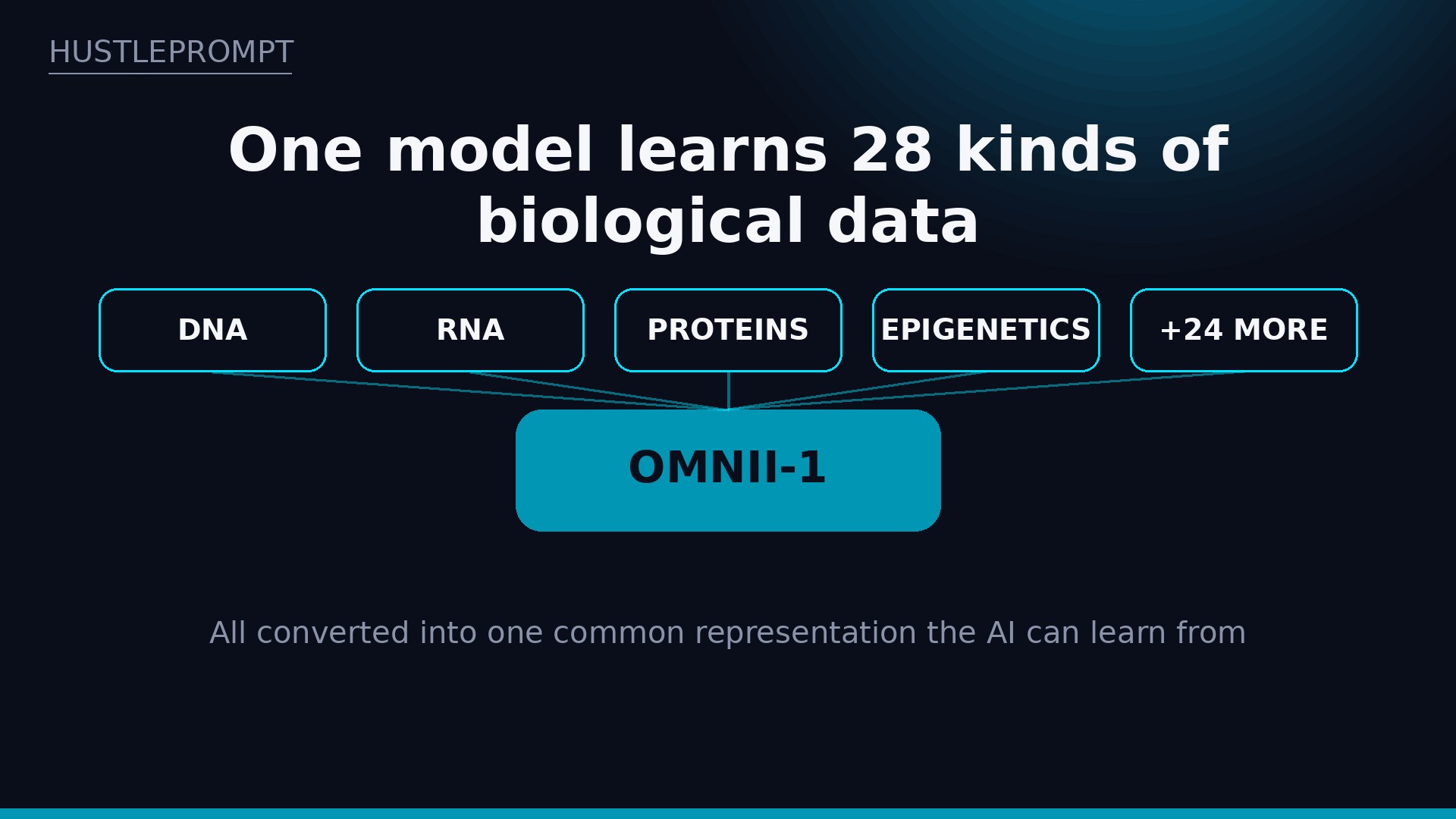
Radical Numerics describes Omnii-1 as a general-purpose biological AI — one model that can understand, predict and design across the molecular systems of life. The key technical move: the company developed a way to convert 28 types of biological data — DNA, RNA, proteins, epigenetic signals and more — into a single common representation that AI can learn from.
The team behind it matters. Radical Numerics was founded by members of the team behind Evo and Evo 2, the models used to design the first bacteriophage genomes created entirely by AI (research first reported in August 2026). Omnii-1 is that lineage scaled up to general biological intelligence.
The patient milestone: what actually happened
According to the official announcement, researchers used Omnii to design bacteriophages targeting a patient’s persistent drug-resistant infection within weeks. A cocktail containing an AI-designed phage killed the patient’s bacterial isolate in laboratory testing — and was then administered at a clinical site under a physician compassionate use access.
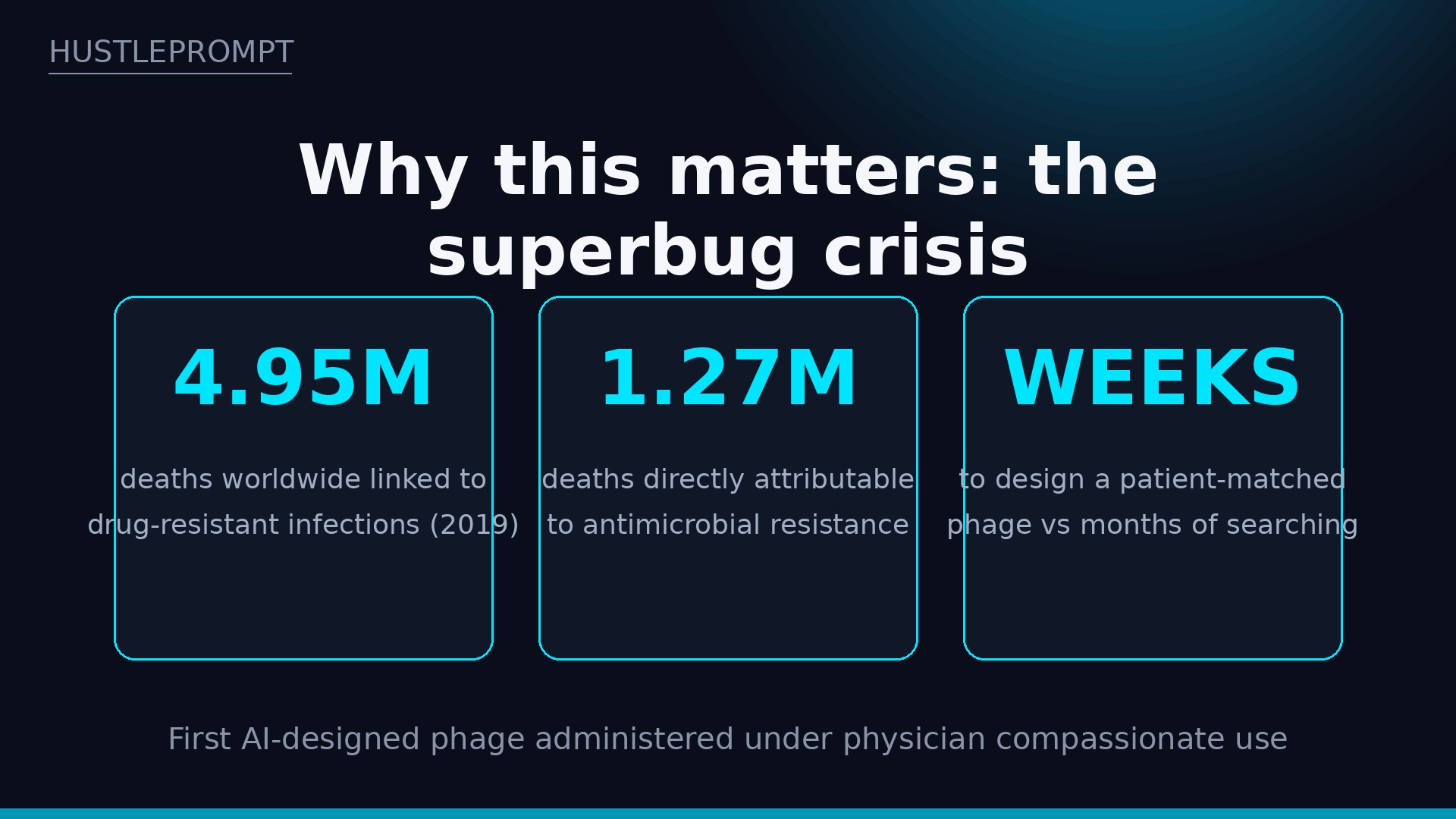
Context on why this is a big deal: drug-resistant infections were linked to an estimated 4.95 million deaths worldwide in 2019, including 1.27 million directly attributable to antimicrobial resistance. For patients whose infections no longer respond to antibiotics, few options remain. Bacteriophages — viruses that kill bacteria — are one alternative, but finding a phage that works against a particular patient’s infection can take months and often fails.
Search vs. design: the paradigm shift
Finding a phage for a patient’s infection takes months of screening thousands of candidates — and often fails. “You’d screen thousands of candidates and mostly learn which ones don’t work.”
Point Omnii-1 at the resistant strain and get back designs built to match it — in weeks, not months, with safety measures built in.
Source: Dr. Marisa Azad, infectious diseases physician-scientist at The Ottawa Hospital, in the official announcement.
“For most of medicine’s history, we’ve searched for drugs that might work against a disease. We’re entering a future where we can design medicines for the exact biology of a patient.”
— Eric Nguyen, co-founder and CEO of Radical Numerics — official launch announcement
“The hardest part of phage therapy is the blind search, not the biology… Omnii changes what we’re searching with: instead of guessing and testing, we can point it at a resistant strain and get back designs built to match it. That’s the difference between hoping you find a phage and actually designing one, with safety measures built in.”
— Dr. Marisa Azad, infectious diseases physician-scientist at The Ottawa Hospital — official launch announcement
The eight launch applications
At launch, Radical Numerics is demonstrating Omnii across eight applications, including:
- Personalized cancer vaccine design — tailoring vaccines to a patient’s biology
- Rare disease genetics — identifying the genetic causes of rare diseases
- Emerging biological threat detection — spotting new pathogens fast
- Biodefense — see below
The biodefense angle (and the money in it)
Because the same advances that let you design medicines can also be used to engineer pathogens that existing detection methods miss, Radical Numerics is building Omnii for biodefense too. In testing, the model identified AI-generated pathogen sequences that conventional screening tools missed. It analyzes DNA sequencing data as it arrives and returns results within minutes — near real-time pathogen detection from a laptop and a portable DNA sequencer, potentially deployable to battlefields and emergency rooms.
The company is collaborating with Lawrence Livermore National Laboratory, and its biodefense advisors include Andrew C. Weber (former assistant secretary of defense for nuclear, chemical and biological defense programs), retired Maj. Gen. Paul Friedrichs (inaugural director of the White House Office of Pandemic Preparedness and Response Policy), Jill Hruby (former NNSA administrator) and Eric Horvitz (chief scientific officer at Microsoft).
“Biological threats are a defense problem, not just a public health one,” said advisor Hon. Andrew Weber in the announcement. “It is imperative that we use the tools that are at the frontier of biological design and actively use them to defend against biological threats.”
Source: Radical Numerics official launch announcement (Business Wire, Oct 20, 2026).
What this means for investors and builders
Practical takeaways:
- Watch the bio-AI funding wave. General biological intelligence is the new frontier-lab category. Track who’s raising in AI drug design — pharma partnerships and government biodefense contracts are the revenue paths.
- AMR is the wedge market. With 1.27M deaths directly attributable to antimicrobial resistance, designed phage therapy has a clear, desperate customer base. Companies that compress “months of searching” into “weeks of designing” own the economics.
- Skills arbitrage. The intersection of ML engineering and molecular biology is tiny. If you’re technical, bio-AI literacy is one of the highest-leverage skill bets of the next five years — read the Radical Numerics blog post on how Omnii designed the patient’s phage.
- Biodefense is a real budget line. Near real-time pathogen detection with commodity hardware is exactly what defense and public-health agencies buy. LLNL collaboration signals where the contracts flow.
- Stay grounded on timelines. One compassionate-use case is a milestone, not a product. Clinical validation, regulation and manufacturing are the long road — invest in the platform trend, not a single headline.
FAQ
What is Omnii-1?
Omnii-1 is a biological AI model from Radical Numerics (launched Oct 20, 2026) — described as the largest multimodal genome language model ever built. It’s a genome language model trained on biological data (DNA, RNA, proteins, epigenetic signals) instead of human language, designed to understand, predict and design across molecular biology.
Did an AI-designed phage really reach a human patient?
Yes, per the official announcement: researchers used Omnii to design phages targeting a patient’s persistent drug-resistant infection within weeks. A cocktail containing an AI-designed phage killed the patient’s bacterial isolate in lab testing and was administered at a clinical site under physician compassionate use — the first AI-designed phage given to a human patient.
Who is behind Radical Numerics?
Radical Numerics is a San Francisco AI research lab founded by members of the team behind Evo and Evo 2 — the models used to design the first bacteriophage genomes created entirely by AI. CEO and co-founder is Eric Nguyen.
What can Omnii-1 be used for?
Eight launch applications are demonstrated, including personalized cancer vaccine design, identifying genetic causes of rare diseases, detecting emerging biological threats, and biodefense — where it identified AI-generated pathogen sequences that conventional screening tools missed.
How does Omnii-1 help with drug-resistant infections?
Instead of the traditional “blind search” — screening thousands of phage candidates over months, often unsuccessfully — Omnii designs phages built to match the patient’s specific resistant strain, compressing the process to weeks with safety measures built in.
Is Omnii-1 available to use?
The announcement doesn’t describe public API access. Radical Numerics is hiring (jobs listed via Ashby), collaborating with Lawrence Livermore National Laboratory, and published a technical blog post at radicalnumerics.ai/blog/omnii-1 detailing how the patient’s phage was designed.
Keep reading
Sources: Radical Numerics official launch announcement (Business Wire, Oct 20, 2026); radicalnumerics.ai/blog/omnii-1.