
On November 1, 2026, CNBC reported a split that will decide who sells anything online in the next five years: five of America’s biggest companies now block outside AI agents from acting for their customers, while their rivals are building doors for those same agents to walk through.
The five named blockers are JPMorgan Chase, Charles Schwab, Amazon, Kohl’s, and Neiman Marcus. Their target is the new class of personal agent — Meta’s Muse above all — that shops, compares prices, cancels subscriptions, and moves money without its owner ever opening an app. The blockers say security. The evidence says something more specific: control of the customer, and of the money made from the customer’s attention.
For sellers, this is a storefront story: the stores that let agents in will get the agent’s orders first.
What Is Actually Trending
An AI shopping agent is software that acts for a person: it searches products, compares prices, adds items to a cart, and completes a purchase, or logs into a bank account to find a better rate or cancel a subscription. Meta’s Muse, launched in the United States and Canada on September 8, 2026, is the highest-profile example — it quickly became the most downloaded free app in Apple’s US App Store, ahead of ChatGPT, and Meta later reported more than 10 million users, with shopping among its top activities.
Agents change who the customer is. A human shopper browses, sees sponsored listings, and can be persuaded at the shelf. An agent compares on price and specification, buys the winner, and never sees the ad. That is why the same technology gets two opposite welcomes: stores that earn their money at the register love the robot customer, and stores that earn it from the browsing hate it.
The CNBC report, published November 1, is the moment the split became a public standoff rather than a quiet settings change. JPMorgan chief executive Jamie Dimon said the bank will not let outside agents operate on behalf of retail customers, and Amazon asked Meta to remove Amazon from Muse. Walmart and Shopify moved the other way.
The Evidence: 51 Retailers, Zero Verified Checkouts
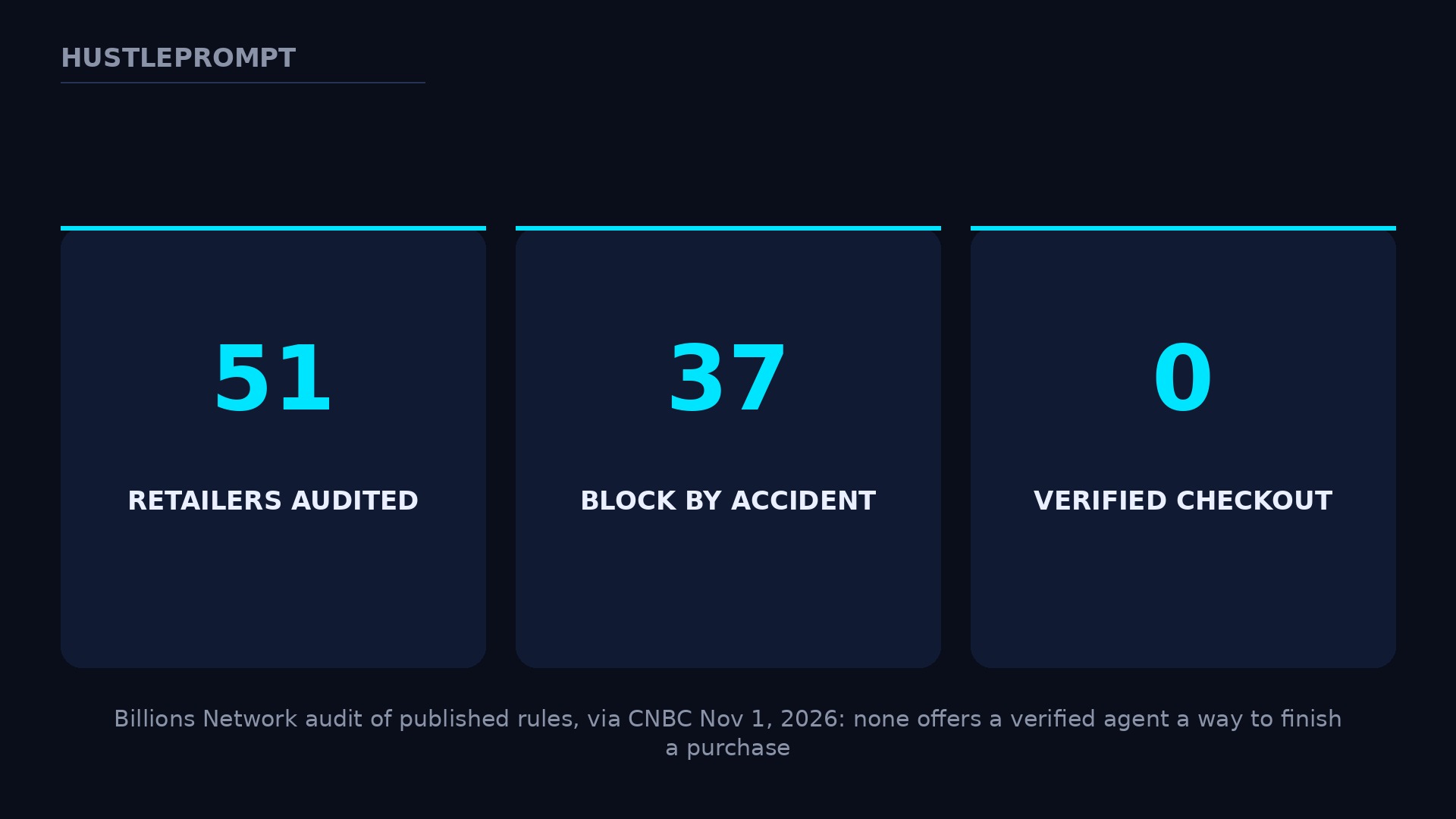
The most useful number in this story comes not from a single company but from an audit. Identity-verification firm Billions Network examined the published access rules of 51 large US retailers. Only 11 had taken a deliberate position on AI agents at all.
Sources: Daily Agentic, “JPMorgan, Amazon and 3 more block AI agents like Meta’s Muse” (Nov 2, 2026, reporting CNBC Nov 1) · Kaupr, “Online stores are shutting the door on Meta’s shopping agent” (Oct 28, 2026) · CHEQ, “The AI Agent Split” (2026) · CXM, “Agentic Commerce: Why Blocking AI Agents Is a CX Risk” (Oct 28, 2026).
One caveat: the audit read published rules, not live enforcement. Target’s bot checks have stopped Muse one day and let it through the next — but on policy, the industry has barely decided: 40 of 51 retailers have no deliberate agent position, and none offers a verified agent a checkout.
Why the Split Follows the Money
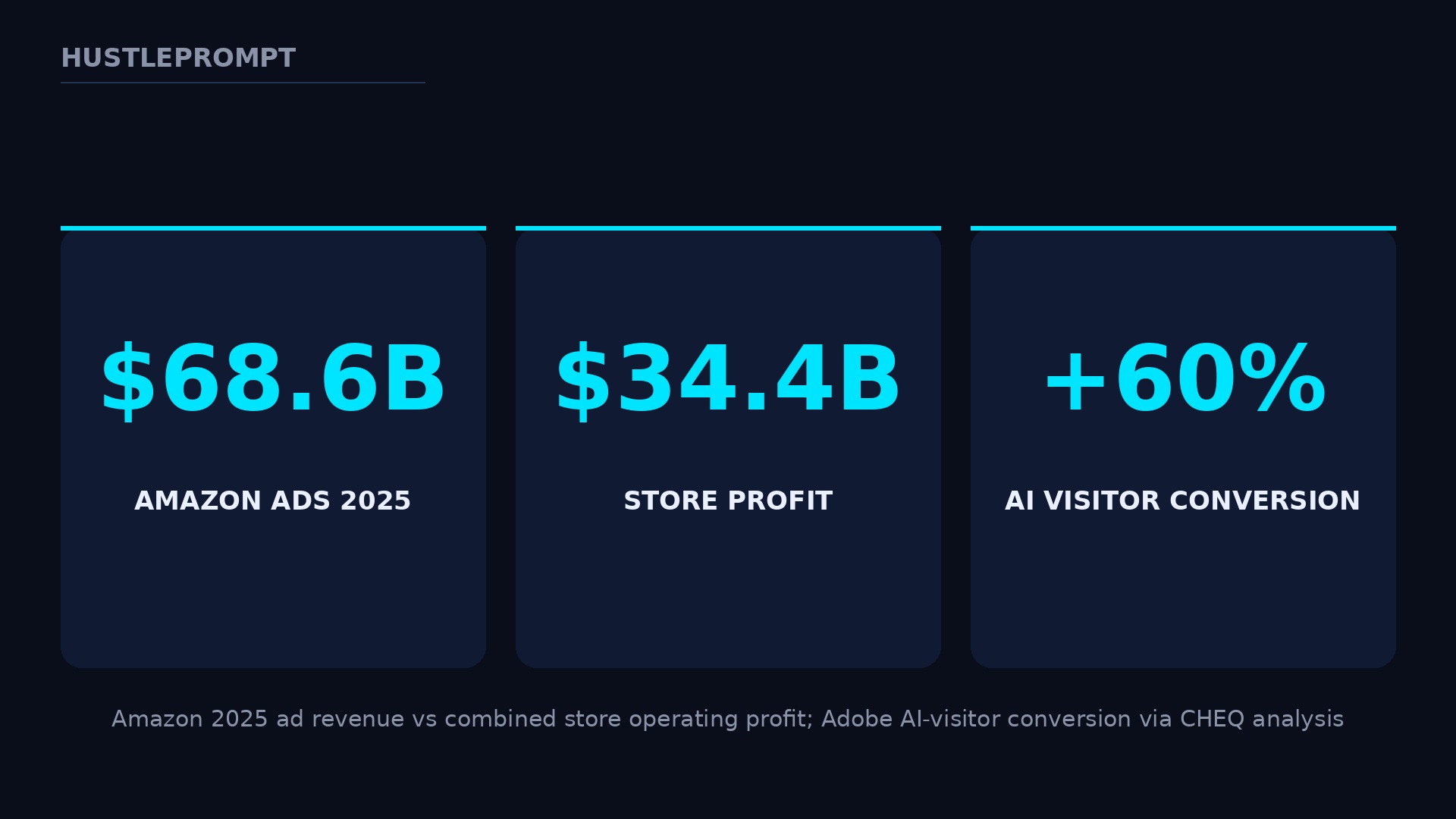
Amazon is the clearest case, because its numbers are public. In 2025, Amazon booked $68.6 billion in advertising revenue, while its two store segments together reported about $34.4 billion of operating profit. Advertising brought in roughly twice what the stores earned. An agent that buys directly skips the sponsored listings that produce the bigger number — and it arrives carrying the brand of Meta, the world’s second-largest ad seller, which has said it plans to take a fee on purchases Muse makes.
Amazon’s stated reasons differ: Meta never warned it Muse would shop the store, Muse does not identify itself as an agent, and it may store customer credentials. Meta disputes parts of that, saying Muse never sees passwords or card numbers. Both can be true — and the commercial logic still explains the timing, twelve days from launch to block.
The blockers also have real operational complaints. The RealReal told The Verge it is tightening defenses after agents exploited its 20-minute cart hold, holding items for hours and blocking human buyers. Tapestry lets agents browse but not buy, citing fraud and inventory hoarding. These are genuine problems — with a technical fix, which is why they will not stay as excuses for long.
On the other side, CHEQ cites Adobe research finding AI retail visitors convert at a 60% higher rate than non-AI traffic: an agent for a real buyer arrives ready to purchase. Shopify earns on the transaction regardless of buyer, so it opened checkout to agents. Walmart, which gains by pulling shoppers from Amazon, built an Agent Gateway and will offer dedicated agent profiles from November.
Accenture’s Michael Abbott, quoted by CNBC, warned that companies blocking agents may struggle over time and should build secure ways for authorized agents to interact with them. Blocking turns away the customer behind the agent — and by the conversion data, that customer is the one most ready to buy.
The Four Doors: Block, Rent, Open, Wait
Every store will end up at one of these doors. Sellers should build for the open ones first.
Keep agents out
Amazon, Kohl’s, JPMorgan: protect the visit, the ad, and the direct relationship — at the cost of agent orders.
Approved agents only
Target’s list, Yelp’s paid data program: the agent pays or partners to enter, and the store keeps control.
Build the agent checkout
Walmart agent profiles, Shopify agent checkout: verified agents buy cleanly, with approvals and limits.
Blocked by accident
37 of 51 retailers: old scraper rules stop agents nobody decided to stop — the largest, most fixable group.
How to Profit From This Trend
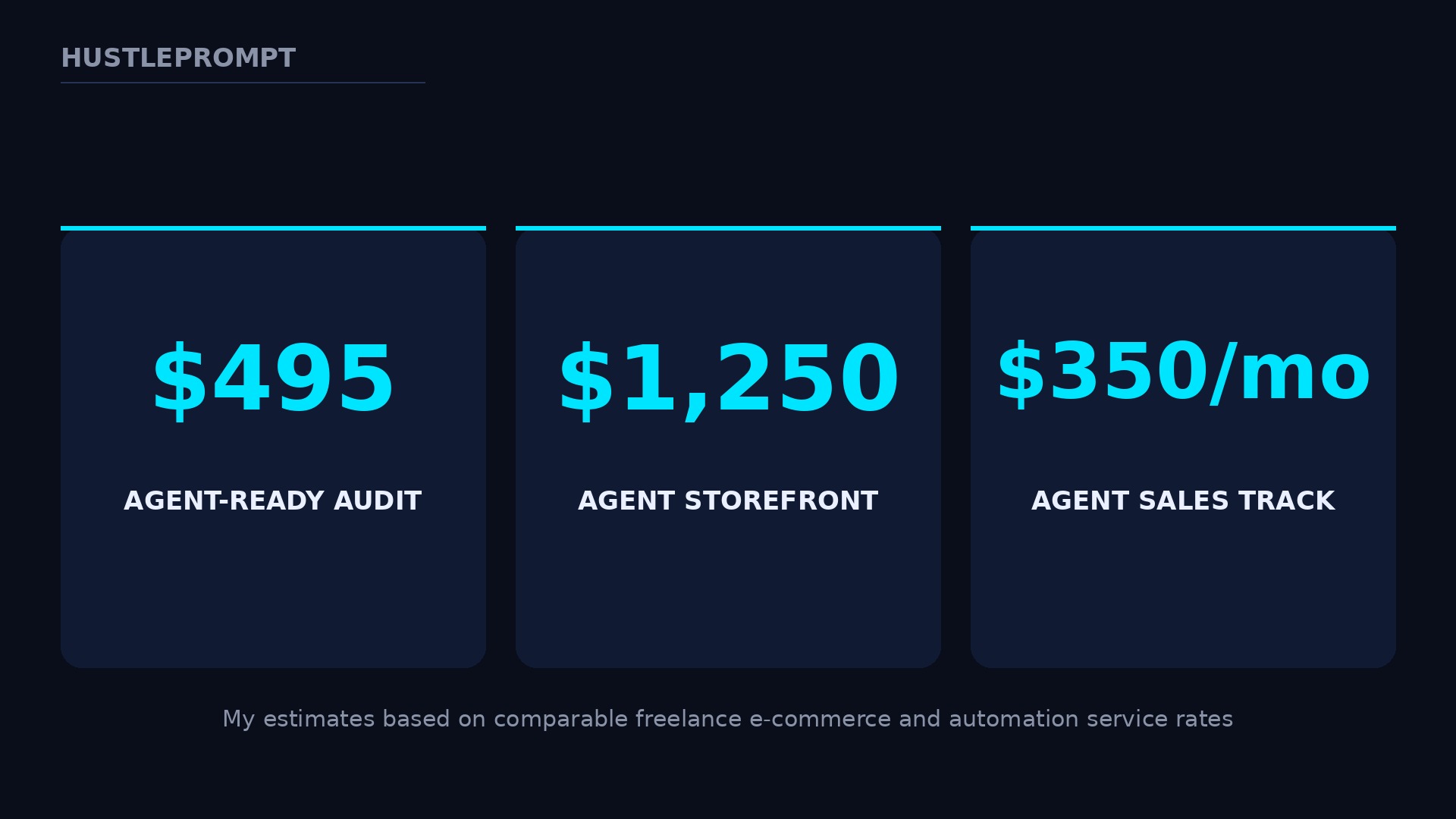
Do not sell “AI shopping” in the abstract. Sell the agent-ready storefront: a service that takes a small brand or Shopify seller and makes its products buyable by agents on the platforms that already allow it, while keeping the human storefront intact. Most small sellers have never checked whether an agent can even read their catalog, complete their checkout, or tell their products apart from a competitor’s — and the audit that answers those three questions is the entry product.
The rebuild is the larger sale: structured product data agents can trust, a checkout that works for a verified agent without tripping bot checks, and a monthly agent-sales report showing which assistants sell and at what conversion rate.
Prices below are my estimates based on comparable freelance e-commerce and automation service rates, not market data:
Lead with the audit number. “None of the 51 biggest US retailers offers a verified agent a checkout — but Walmart and Shopify already do. Is your store one agents can buy from, or one they bounce off?” Then show the seller’s own test: one agent, one product, one failed checkout, and the order that went to a competitor.
What to Do This Week
- Test your own store as an agent. Ask ChatGPT, Gemini, and Muse to find and buy one of your products. Note exactly where each one stops — catalog, cart, checkout, or bot check.
- Fix the catalog first. Agents buy on structured facts: price, stock, shipping time, returns. If that data is vague or missing, the agent picks the competitor whose data is clean.
- Open one agent channel. Shopify agent checkout or a Walmart listing is the fastest route to real agent orders; Amazon’s door is closed for now, so do not build your plan around it.
- Pitch the audit to one seller losing comparison traffic. A brand whose products appear in AI answers but whose checkout agents cannot complete is the warmest lead in this market.
Watch: how Amazon cut Muse off twelve days after launch, and why the standoff echoes Walmart’s old fight against Apple Pay. Watch on YouTube.
Where This Is Heading
Verified agent identity becomes the standard. Agents blocked by rules written for scrapers will end when agents can prove who they are, who they work for, and what they may spend. Walmart’s agent profiles and Shopify’s checkout are early versions of that standard.
The accidental blockers decide first. The 37 retailers blocking agents by accident are the swing group. Each one that publishes a real agent policy opens a new sales channel or confirms a closed one — and sellers watching that list will know where to list next.
Blocking becomes a luxury only the biggest can afford. Amazon can refuse agent orders because it owns the traffic; a mid-size brand cannot. The winners are stores that let a verified agent buy cleanly, because the agent brings a customer who has already decided.
Frequently Asked Questions
Which companies block outside AI agents?
CNBC reported on November 1, 2026 that JPMorgan Chase, Charles Schwab, Amazon, Kohl’s, and Neiman Marcus block outside agents such as Meta’s Muse from acting for customers. Amazon asked Meta to remove Amazon from Muse, and JPMorgan does not let outside agents log in for retail customers, though agents can read some data such as balances.
Why do Amazon and JPMorgan block agents?
Both cite security and control. Amazon says Muse did not ask permission, does not identify itself as an agent, and may store customer credentials; Meta disputes parts of that. JPMorgan’s Jamie Dimon said outside agents are too risky for clients. Underneath, Amazon’s $68.6 billion ad business depends on shoppers browsing — and an agent that buys directly skips the sponsored listings.
How many retailers actually block agents?
Billions Network audited the published rules of 51 large US retailers: 5 explicitly restrict agents, 37 block them largely by accident through old bot rules, and only 11 had taken any deliberate position. None of the 51 offers a verified agent a way to complete a purchase. The audit measures published rules, not live technical enforcement.
Which stores let agents shop?
Walmart (Agent Gateway and dedicated agent profiles), Shopify (agent checkout and catalog distribution to assistants), QVC/HSN, Best Buy, Sephora, and Wayfair are among those letting agents in. Target allows approved agents only, and Tapestry lets agents browse but not buy while it rebuilds checkout.
Do AI shoppers actually buy more?
CHEQ cites Adobe research finding AI retail visitors convert at a 60% higher rate than non-AI traffic. An agent working for a real buyer arrives with the decision largely made, which is why blocking one means turning away a high-intent customer, not just a bot.
How do I make my store agent-ready?
Test your store as an agent on ChatGPT, Gemini, and Muse; fix structured product data (price, stock, shipping, returns); open one agent channel such as Shopify agent checkout or Walmart; and sell the audit to sellers whose products appear in AI answers but whose checkouts agents cannot complete.