
Claude linked billing ends the most awkward handoff in AI software: pasting your Anthropic API key into someone else’s app. Anthropic launched linked billing in beta on November 17, and 19 platforms — including Linear, Asana, Ramp, Warp and Railway — can now charge Claude API usage straight to your own Claude organization. Your key never leaves your account. The bill still gets paid. Here is how it works, what it costs, and the catch.
The old way was a security headache. An API key works like a password: anyone holding it can run requests billed to you. So every coding agent and workflow tool that wanted to run Claude for you had to ask for your key — then store it, encrypt it and rotate it. Anthropic’s fix removes the key from the exchange entirely. Customers link their Claude Platform organization instead, and usage is billed directly to it.
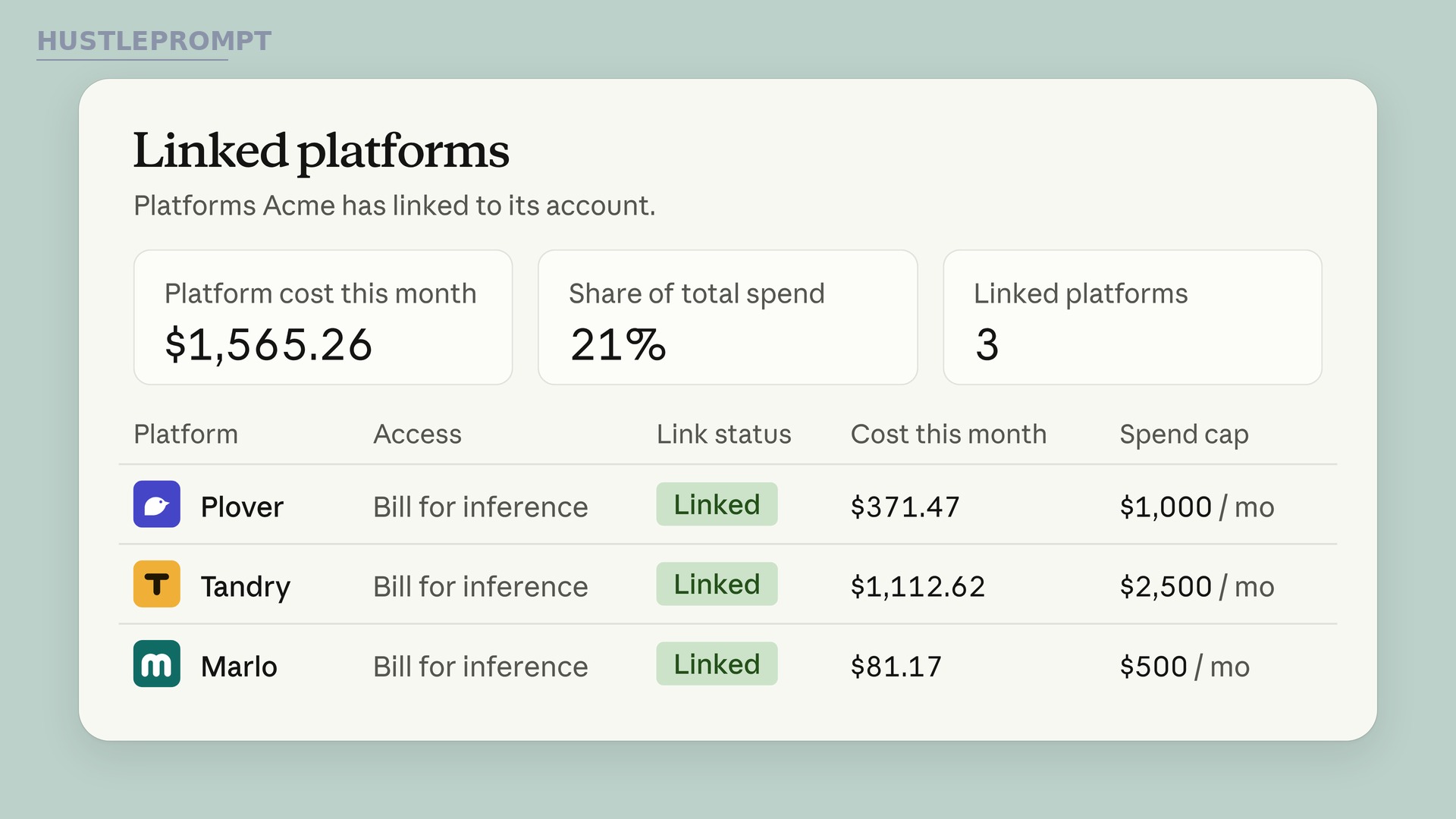
How linked billing works
The flow has four steps, and no key changes hands at any of them:
From API key to approved link
1. Link once — A Console user with an Owner, Admin or Billing role approves the connection in Anthropic’s hosted flow. One approval covers the whole organization.
2. Platform sends the request — The app calls /v1/messages or /v1/chat/completions and sets billing_policy on each request to choose who pays: the platform or the end customer.
3. Anthropic bills the customer — Usage is charged directly to the linked Claude organization, drawn from its existing commitment or paid as you go.
4. Everyone sees the spend — Platforms see each linked customer’s request count, token usage and models in Console, or via the Usage and Cost Analytics API (beta). Customers see spend per platform and can unlink at any time.
Developers add support by creating an app in the Claude Console and following Anthropic’s docs, using the user-profiles-billing-2026-10-01 beta header. Customers find participating platforms on the Claude Marketplace. The feature is live today in beta, according to Anthropic’s official announcement and the Claude Platform release notes for November 17, 2026.
What it costs: the numbers behind the bill
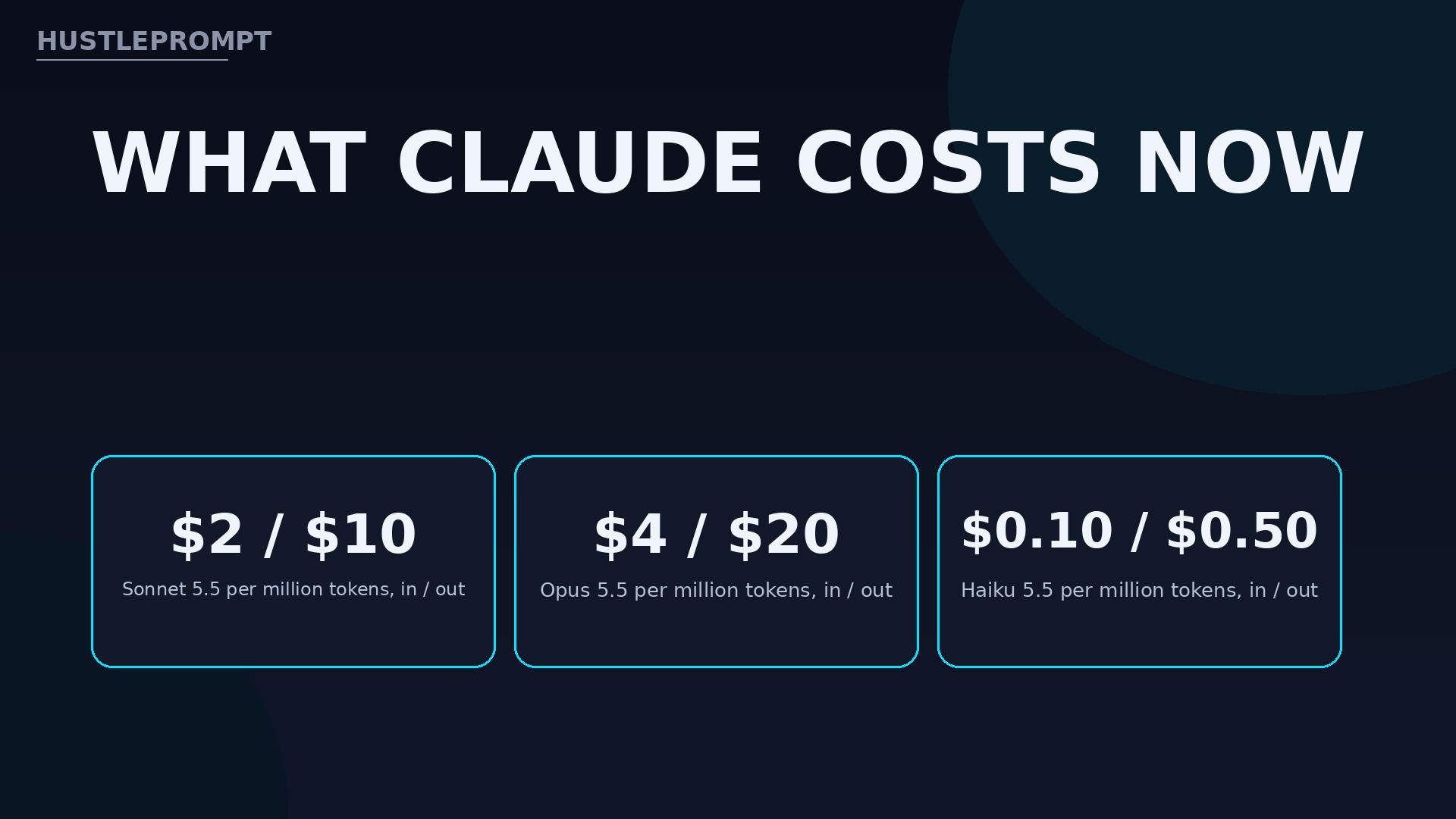
Linked billing changes who pays, not what Claude costs. Usage is billed at Anthropic’s standard API rates, from the official Claude Platform pricing page:
| Model | Input per 1M tokens | Output per 1M tokens | Best for |
|---|---|---|---|
| Claude Sonnet 5.5 | $2 | $10 | Speed + intelligence balance |
| Claude Opus 5.5 | $4 | $20 | Long-running agentic coding |
| Claude Fable 5.2 | $8 | $40 | Demanding reasoning, long-horizon agents |
| Claude Haiku 5.5 | $0.10* | $0.50 | High-volume, latency-sensitive tasks |
*Haiku 5.5 pricing shown for prompts up to 100,000 tokens; longer prompts cost more. The Batch API cuts input and output prices by 50% for asynchronous work. Launch coverage notes that the monthly API credits bundled with Claude Max ($100), Ultra ($200) and Team (up to $500 pooled) plans cannot pay for linked-billing requests — those are charged to the organization’s direct billing instead.
The 19 platforms at launch
Anthropic lists 19 platforms supporting linked billing today. Coding and developer tools lead the list, which makes sense: coding agents burn the most tokens.
- Coding and dev tools: Factory, Kilo Code, Warp, Harness, Niteshift, Railway, Mintlify.
- Workflow and business: Asana, Linear, Ramp, Tines, ClickHouse, Gumloop.
- AI products and agents: Higgsfield AI, Major, Omni, OpenArt, Runlayer, Tessera.
The catch: what linked billing does not do
The feature moves the bill, not the execution. That distinction matters, and Anthropic states it plainly:
- Requests run in the platform’s organization. Your settings — IP allowlists, encryption keys, data retention — do not apply to requests made through a linked platform. Only the billing is linked.
- Two endpoints only. Linked billing covers /v1/messages and /v1/chat/completions. The Message Batches API and Claude Managed Agents are not covered yet.
- Direct billing only. It works for organizations that pay Anthropic directly (prepaid credits or invoiced billing). Organizations billed through the AWS, Google Cloud or Azure marketplaces cannot use it, and neither can organizations with only a Claude subscription plan.
- Regulated workloads stay out. Anthropic tells developers not to link customers whose usage needs HIPAA, FERPA or customer-managed encryption coverage.
That first point is the one to check before linking anything sensitive. You keep control of the spend — a monthly cap per platform, or a default cap, and unlink at any time — but the platform’s environment, not yours, processes the request.
Watch: Anthropic’s 30-minute tour of Claude Code — one of the coding agents in the linked-billing launch group — on Anthropic’s official YouTube channel.
How to profit from it
Linked billing removes the two costs that stopped small builders from selling Claude-powered tools: eating the API bill and handling customer keys. Four moves:
- Ship the feature, not the invoice system. Create an app in the Claude Console, add linked billing, and set bill_to per request. Anthropic hosts the approval flow and the billing, so there is no metering or invoicing to build.
- Choose who pays per request. Pass the cost to the customer for heavy usage, and cover lightweight features yourself — for example, free-tier summaries on your bill, deep analysis on theirs.
- Price on top of pass-through. Your margin is your subscription or per-seat price. The API cost flows to the customer’s own commitment, so your unit economics no longer depend on guessing token usage.
- Use it as a buyer, too. Link your organization once, set a monthly cap per platform, and draw down your existing Anthropic commitment instead of paying each tool separately. Unlink any platform that stops earning its cap.
Frequently asked questions
What is Claude linked billing?
Linked billing is a beta feature on the Claude Platform, launched November 17, 2026. It lets third-party platforms bill Claude API usage to a customer’s own Claude organization, so the customer pays Anthropic directly and never shares an API key with the platform.
Which platforms support linked billing?
19 platforms at launch: Asana, ClickHouse, Factory, Gumloop, Harness, Higgsfield AI, Kilo Code, Linear, Major, Mintlify, Omni, OpenArt, Niteshift, Railway, Ramp, Runlayer, Tessera, Tines and Warp. More can join by creating an app in the Claude Console.
Do I still have to share my API key?
No. The customer links their Claude Platform organization through Anthropic’s hosted approval flow. No API key changes hands, so platforms have no customer keys to store, encrypt or rotate, and the customer’s keys never leave their organization.
Who pays for the usage?
The platform decides on each request, using billing_policy: the platform or the end customer. When the customer pays, Anthropic bills their linked organization directly, drawn from their existing commitment or pay-as-you-go. Customers set a monthly spend limit per platform and can unlink at any time.
What are the limits?
It covers the /v1/messages and /v1/chat/completions endpoints only — not the Message Batches API or Claude Managed Agents. Only organizations billed directly by Anthropic qualify, and Anthropic excludes customers needing HIPAA, FERPA or customer-managed encryption coverage. Requests run in the platform’s organization, so the customer’s own security settings do not apply.
Is linked billing free?
The feature itself adds no fee, but usage is billed at standard Claude API rates: Sonnet 5.5 at $2 input / $10 output per million tokens, Opus 5.5 at $4 / $20, and Haiku 5.5 at $0.10 / $0.50. The Batch API offers a 50% discount for asynchronous work.
Keep Reading
Sources: Anthropic, “Linked billing on the Claude Platform” (November 17, 2026); Claude Platform release notes, November 17, 2026; Anthropic Claude Platform pricing page; Anthropic API credits documentation. All prices are Anthropic’s own, in USD per million tokens.