
Databricks Genie just stopped waiting to be asked. Databricks announced on November 11, 2026 that Genie, its AI coworker for business teams, is now an always-on autonomous agent that takes ownership of work, runs scheduled jobs, delegates to sub-agents and follows up when information is missing — and in Databricks’ own benchmark it passed 91% of task runs, against 58% for the stronger of two anonymized frontier agents.
The timing matters for anyone who sells AI services. Genie One is free for users through January 31, 2027, according to Databricks, which turns the next eleven weeks into a zero-cost window to learn the tool, prove it inside a real company and sell the setup before pricing kicks in.
What Databricks just announced
Databricks unveiled the new Genie at DATA + AI LIVE on November 11, 2026, in a session with co-founder and CEO Ali Ghodsi and OpenAI co-founder and president Greg Brockman. Genie One, first introduced in June 2026, becomes what Databricks calls “the enterprise home for AI cowork,” where every conversation, artifact and workflow draws on business context from Genie Ontology and is governed through Unity Gateway.
The shift is from assistant to coworker. The old Genie answered questions when prompted. The new Genie takes an assignment and owns it: it runs scheduled or event-triggered jobs, tracks progress, chases missing inputs, delegates parts of the work to sub-agents and only reaches out when a person needs to make a decision. Users choose which actions require approval, and admins decide which tools Genie may touch.
“Genie has made me a 10x more productive CEO, and now it doesn’t wait for me to ask.” — Ali Ghodsi, Co-founder and CEO of Databricks, November 11, 2026
Databricks Genie: the launch facts
| Announced | November 11, 2026, at DATA + AI LIVE, with Ali Ghodsi and OpenAI’s Greg Brockman |
| What changed | Genie becomes an always-on autonomous coworker: scheduled jobs, sub-agents, follow-ups, approvals |
| Genie Ontology | Now generally available; the live context layer that grounds every answer |
| Genie Search | Generally available for Google Drive, Jira, Confluence and Workday; SharePoint in beta; 100+ MCP connectors |
| Benchmark | 91% of task runs passed vs 58% for the stronger anonymized frontier agent; 431,829 tokens and 100.3 seconds per run on average (Databricks with Turing) |
| Proof at scale | General Motors runs more than 1,000 Genie agents across sales, engineering, supply chain and HR |
| Price | Genie One is free for users through January 31, 2027; detailed cost controls arrive before then |
| Where it works | Web, iOS and Android apps, Chrome extension, desktop apps for macOS and Windows, Slack and Microsoft Teams |
Sources: Databricks: Genie One — The AI cowork home for everyone, Unite.AI: Databricks Turns Genie Into an Autonomous Enterprise AI Coworker.
Genie Search and Genie Ontology: the context layer
The launch is really about context. An agent that works alone is only as good as its understanding of the business, and Databricks built Genie Ontology to be that understanding: a live layer that combines governed definitions and metrics with knowledge the system keeps learning from dashboards, queries, notebooks, files, tickets, chats and meetings.
Genie Search is the new front door to that context. It indexes knowledge that lives outside Databricks — documents in Google Drive, tickets in Jira, pages in Confluence, records in Workday and, in beta, SharePoint — and answers from the index with fewer tool calls and fewer tokens, according to Databricks. It also powers asset search, so the same chat bar finds the latest all-hands deck or the ticket for a bug you are tracking, next to Databricks dashboards, tables and Genie Agents.
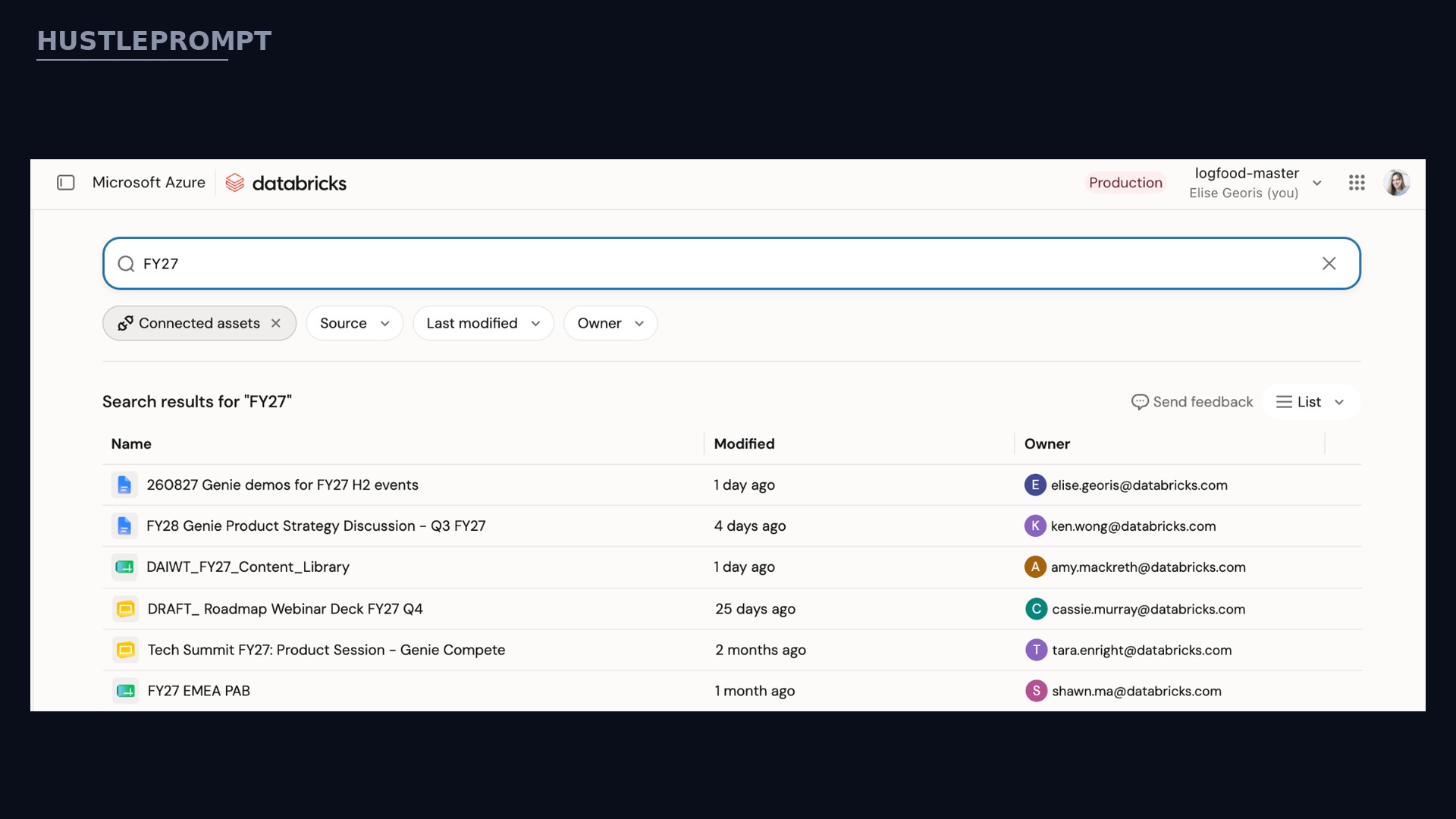
Two details decide whether the answers are trustworthy. First, OntoRank — Databricks’ method for weighing which sources to trust — scores authority, certification, relevance, popularity and recency, so conflicting definitions get resolved instead of averaged. Second, Genie Search enforces each source system’s permissions before returning results, and Genie acts under each user’s own identity, so people only see data they are authorized to access.
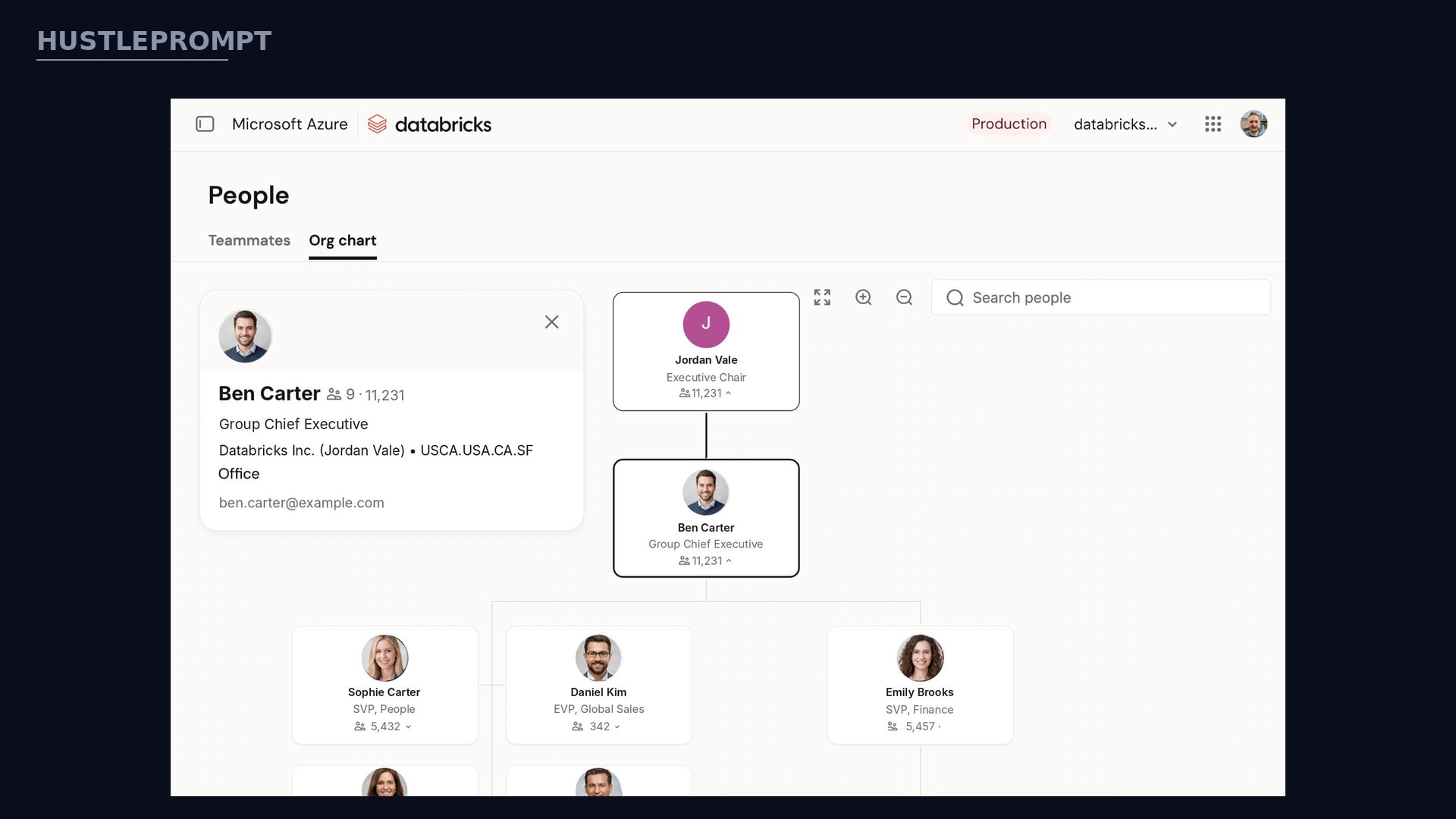
Organizational directories, also generally available and starting with Workday, add reporting relationships and collaboration signals to the same picture. Genie can browse team structures and find the right colleague — which is how it knows whose approval to ask for when a job needs a human decision.
Genie now lives inside ChatGPT, Claude, Copilot and Grok
The second half of the announcement reaches outside Databricks entirely. New native Genie plugins bring the same governed business context into ChatGPT, Claude, Microsoft Copilot Cowork and Grok Bot, with the same Unity Catalog permissions. A ChatGPT Dot can monitor feature adoption against a certified definition and post a summary to Slack; Copilot Cowork can pull account trends from Azure Databricks into a client presentation, then wait for approval before sending it.
Databricks had already connected Genie to outside assistants through an MCP server in September 2026. The plugins add native interfaces inside the four named products. One deadline matters: the older beta MCP endpoint reaches end of life on November 30, 2026.
Genie Agents got stronger at the same time. They can now analyze PDFs, slide decks and other documents alongside governed tables in public preview, returning page-level citations, and native MCP connectors are generally available, so agents can create tickets, update records and post messages. OpenSharing and Genie Clean Rooms, which let partners ask questions without seeing the underlying data, are in beta.
Old Genie vs. always-on Genie
| How work starts | Old: you ask a question, Genie answers. New: you assign a goal, Genie owns the job. |
| When it works | Old: only while you are in the chat. New: scheduled or event-triggered jobs run in the background. |
| Output | Old: an answer in chat. New: finished artifacts — slide decks, dashboards, interactive pages — with scheduled refreshes. |
| Reach | Old: inside Databricks. New: Jira, Asana, Slack, Teams, plus ChatGPT, Claude, Copilot Cowork and Grok Bot. |
| Context | Old: Unity Catalog tables. New: Genie Ontology plus Genie Search across Drive, Jira, Confluence, Workday and SharePoint. |
| Governance | Old: permissions on data. New: Unity Gateway traces every action, with MCP policies, budgets and approval rules. |
How to profit from the always-on shift
Databricks is not a consumer product you can flip. The money is in the work around it, and the free window until January 31, 2027 is the opening. Four moves are concrete right now:
- Sell Genie readiness audits. Genie’s own benchmark caveat is the sales pitch: it performs best in a deployment with accumulated business knowledge and clean, governed definitions. Offer a fixed-price audit that cleans metric definitions, certifies the right dashboards and removes the outdated and duplicated assets that confuse agents.
- Package the free window. Genie One costs nothing for users until January 31, 2027. Sell a 30-day pilot: pick one workflow (weekly pipeline review, month-end variance summary, Jira escalation triage), build it as a Genie skill, and hand the client a working system with a before-and-after time log. The client pays for the build, not the license.
- Build and sell reusable skills. Skills capture a workflow once and share it across a team through Unity Catalog. The same skill — “summarize last quarter’s open escalations in Jira and post the themes to Slack” is Databricks’ own example — can be sold to many clients in the same industry with small changes.
- Use GM as the door-opener. General Motors runs more than 1,000 Genie agents across sales, engineering, supply chain and HR. When a prospect asks whether this works outside a demo, that number is the answer. Lead with it in outreach to operations and finance teams, not just data teams.
Give Genie a goal in plain language, with the deadline and the approval rules. Genie plans the work and picks the tools.
It runs SQL, searches documents, delegates to sub-agents and builds artifacts — decks, dashboards, pages — on its own schedule.
Actions you flagged need a human yes. Everything else proceeds, and every step is traced in Unity Gateway.
The result arrives where people already work: Slack, Teams, Jira, Asana, or inside ChatGPT and Claude through the plugins.
What to watch before you hand Genie the keys
Three caveats keep this honest. First, the benchmark is Databricks’ own test, built with Turing: Genie passed 91% of task runs against 58% for the stronger of two anonymized frontier agents, averaging 431,829 tokens and 100.3 seconds per run, in a fictional UK energy supplier workspace where each agent ran every task five times. Databricks itself cautions that the test reflects an established deployment with accumulated business knowledge, and that differences may be smaller in new deployments. The 91% number is a claim about mature setups, not a promise for day one.
Second, not everything is generally available. SharePoint search is in beta, external BI knowledge sources are in beta starting with Power BI, Ontology Manager for reviewing and curating the ontology is coming soon in beta, and OpenSharing and Genie Clean Rooms are in beta. If you sell a pilot, sell the generally available core and label the rest as preview.
Third, governance is the product as much as autonomy is. Unity Gateway traces capture the question, answer, cited objects, response time and actions for every request, and admins can restrict MCP tools, require approvals, set budgets and spending caps, and review usage. That audit trail is what lets a company scale an agent that acts on its own — and it is what a consultant should set up first, before any workflow goes live.
Frequently asked questions
What is Databricks Genie?
Genie is Databricks’ AI coworker for business teams. You ask questions in plain language, it writes and runs SQL on governed data, and it returns tables, charts and citations. With the November 11, 2026 update it also works autonomously: scheduled jobs, sub-agents, follow-ups and finished artifacts such as slide decks and dashboards.
Is Databricks Genie free?
Genie One is free for users through January 31, 2027, according to Databricks, and more detailed cost controls will be available before then. At the June 2026 launch Databricks also said Genie has no seat-based pricing and organizations get up to $10 free for every user every month, so organizations pay only for the AI actually used.
What is Genie Ontology?
Genie Ontology is the live context layer behind Genie. It combines governed metric definitions with knowledge it continuously learns from dashboards, queries, notebooks, files, tickets, chats and meetings, and it is now generally available. OntoRank weighs source authority, certification, relevance, popularity and recency to decide which definitions to trust.
Which tools does Genie connect to?
Genie Search covers Google Drive, Jira, Confluence and Workday, with SharePoint in beta, and supports more than 100 MCP connectors. Genie One can read and update systems such as Jira and Asana, and native plugins bring Genie into ChatGPT, Claude, Microsoft Copilot Cowork and Grok Bot.
How good is Genie, really?
In a Databricks benchmark built with Turing, Genie passed 91% of task runs versus 58% for the stronger of two anonymized frontier agents, averaging 431,829 tokens and 100.3 seconds per run. Databricks cautions that the test reflects an established deployment with accumulated business knowledge, so results may be weaker in a brand-new workspace.
Can Genie act without a human approving?
Yes, within limits you set. Users choose which actions require approval, and admins use Unity Gateway to control which MCP tools Genie may use, require approvals, set budgets and spending caps, and trace everything Genie does. Genie acts under each user’s identity, so it can only touch data that person is authorized to access.