
A 4K product photo edit for less than a cent sounds like a typo. It is not. Ideogram 4.6, released on November 19, 2026, starts at $0.008 per image through the API — and it just took first place on Rapidata’s Multi-step Image Edit benchmark with a score of 1,892.
For creators and small businesses, that combination changes the math. Product photos, ad creatives, and thumbnails can now be edited at print-ready resolution without a designer, a reshoot, or an upscaler smoothing away the detail.
Here is what Ideogram 4.6 does, what it costs at every quality level, how it compares with Midjourney and Leonardo, and how to turn the editing itself into a paid service.
What Ideogram 4.6 actually does
Ideogram 4.6 is an image generation and editing model built for precise creative control, with output up to 4K. You make one focused change, review the result, and keep refining the same image across multiple turns — instead of re-rolling the whole picture every time something is slightly off.
The headline feature is native 4K. Images are generated from scratch at up to 4096 by 4096 pixels, with no upscaling step. Ideogram says that removes the airbrushed, plastic look upscalers leave behind, keeping visible pores, fine lines, and fabric texture intact.
The editing toolkit covers the jobs sellers actually need:
- Precise Edit with an optional mask — change only the painted area and leave the rest of the photo untouched.
- Multi-turn editing — build on every edit, so a color change, a label fix, and a background swap stack on the same image.
- Up to five reference images — feed the Generate endpoint your product shots and it edits with them in context.
- Exact brand colors — recolor an object to a specific hex code instead of hoping the model guesses your shade.
- Text and layouts — revise wording inside an image and refine the surrounding design in separate steps.
The model ships in the Ideogram app and through two v2 API endpoints: Generate for new images or edits with reference images, and Precise Edit for focused changes to an existing image. Four quality modes — Very low, Low, Medium, and High — let you trade detail for price. One catch: Very low tops out at 2K, so real 4K starts at Low.
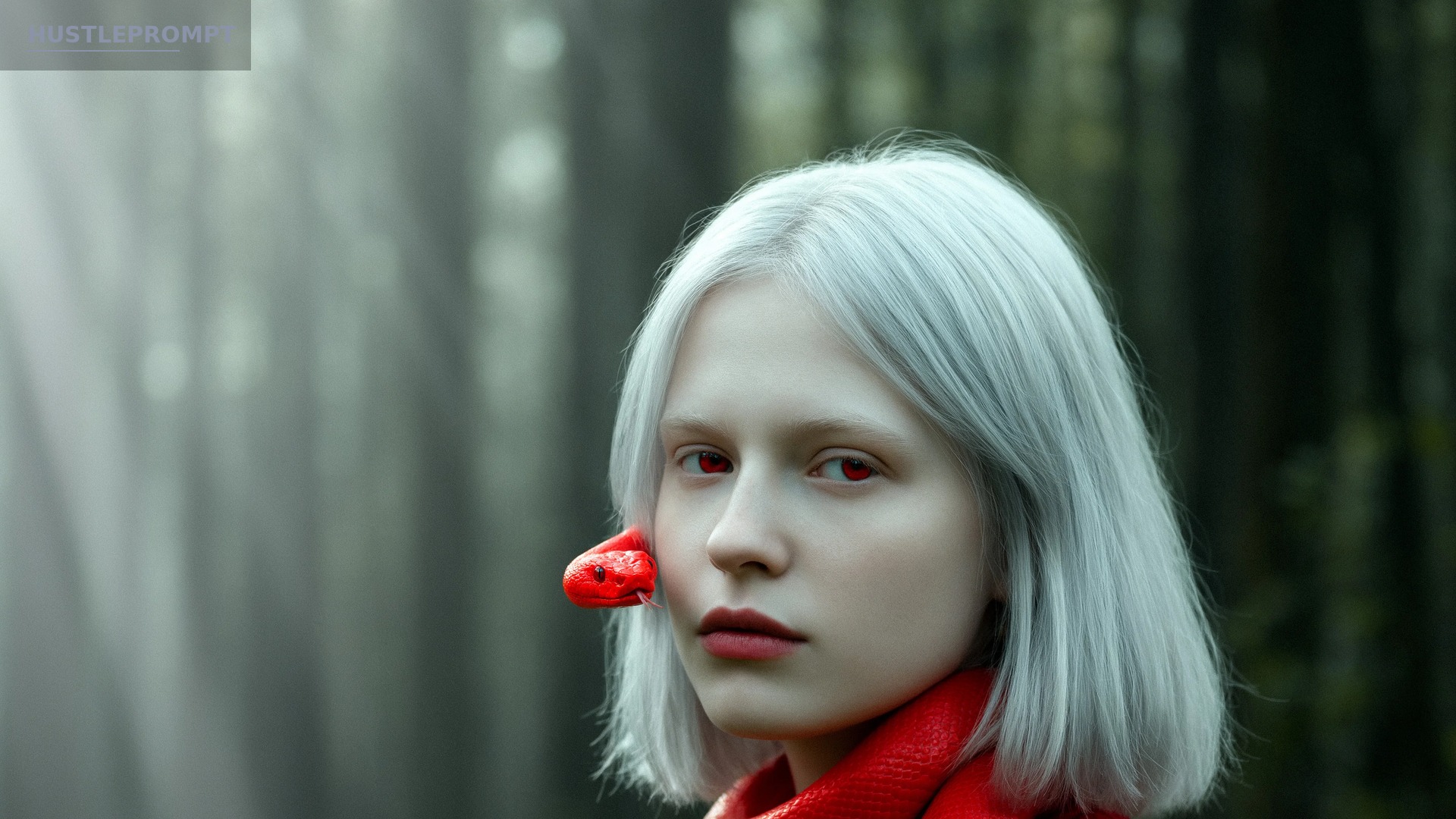
What it costs: the full price table
Pricing is per image, in US dollars, and it varies by quality, resolution, and whether you generate or edit. The cheapest possible image — a 2K generation or edit at Very low quality — costs $0.008. The most expensive — a High-quality 4K precise edit — costs $0.60.
| Quality | Generate 2K | Generate 4K | Edit 2K | Edit 4K |
|---|---|---|---|---|
| Very low | $0.008 | — | $0.008 | — |
| Low | $0.03 | $0.06 | $0.03 | $0.06 |
| Medium | $0.06 | $0.12 | $0.06 | $0.20 |
| High | $0.10 | $0.20 | $0.22 | $0.60 |
Source: Ideogram 4.6 model page — prices in USD. Very low quality supports up to 2K; 4K covers outputs up to 4096 by 4096 pixels.
The app works differently: it runs on credits, not dollars. A Plus plan costs $20 a month ($15 on yearly billing) and includes 2,400 priority credits, while pay-as-you-go credits cost 1 cent each. A 4K image at High quality costs 20 credits in the app — 20 cents at pay-as-you-go rates — or 60 credits with source images. Free accounts still get weekly credits, so you can test the model before paying anything.
How it stacks up: first on the editing benchmark
Ideogram 4.6 ranks first on Rapidata’s Multi-step Image Edit leaderboard with a score of 1,892. The benchmark runs models through sequences of edits and scores how well each step holds up — exactly the workflow a product-photo editor lives in.
| Rank | Model | Rapidata score |
|---|---|---|
| 1 | Ideogram 4.6 | 1,892 ±32 |
| 2 | Ideogram 4.5 | 1,866 ±30 |
| 3 | Seedream 5.5 | 1,805 ±29 |
| 4 | FLUX 3 Image | 1,697 ±27 |
| 5 | Muse Image | 1,406 ±22 |
| 6 | MAI-Image-2.6 | 1,299 ±22 |
| 7 | Qwen-Image-2.1-Pro (Thinking) | 1,291 ±21 |
Source: Ideogram 4.6 model page, reproducing the Rapidata overall leaderboard snapshot from November 17, 2026. Evaluated configuration: Ideogram 4.6 Precise Edit at High quality.
Read the gap honestly. Ideogram 4.5 scores 1,866, only 26 points behind, and the error bars overlap — plus or minus 32 for 4.6 and plus or minus 30 for 4.5. The lead over Seedream 5.5 (1,805) and FLUX 3 Image (1,697) is clearer. The bigger story for sellers is not the ranking. It is that the top-ranked editing model now costs less than a cent at its cheapest tier.
Ideogram 4.6 vs Midjourney and Leonardo
Midjourney and Leonardo are the two tools most creators already pay for, so here is the honest comparison. Both start at $10 a month — Midjourney Basic, and Leonardo Essential at $10 a month on yearly billing, or $12 month to month. Ideogram’s Plus plan starts higher, at $20 a month, or $15 on yearly billing.
| Tool | Entry price | Free plan | Precise editing | API |
|---|---|---|---|---|
| Ideogram 4.6 | Plus $20/mo ($15 yearly); API from $0.008/image | Weekly credits | Precise Edit + mask, native 4K | Yes, v2 REST API |
| Midjourney | Basic $10/mo | No free plan | Variations and remix; lighter built-in editor | No public API |
| Leonardo.Ai | Essential $10/mo yearly ($12 monthly) | 150 fast tokens/day | Prompt editing + inpainting on select models | Yes, public API |
| FLUX 3 Image Klein | Free, self-hosted on your GPU | Free (open weights) | Editing via local workflows | Run locally |
Sources: Ideogram pricing; Leonardo.Ai vs Midjourney comparison (August 11, 2026); FLUX 3 Image Klein on HustlePrompt.
The takeaway is simple. If you need stylized art, Midjourney still wins on look. If you need to edit a specific product photo, at a specific color, at 4K, Ideogram 4.6 is the cheapest precise option on this list — and the only one with a per-image API price under a cent.
How to profit: sell the editing as a service
The money angle is not using Ideogram 4.6 for your own store. It is selling the edit. Small sellers on Etsy, Shopify, and Amazon constantly need the same five jobs done: background swaps, color changes, label fixes, seasonal restyles, and defect repairs. Each one is a single Precise Edit call.
Here is the workflow, start to finish:
- Pick one niche. Etsy jewelry sellers, Shopify skincare brands, or Amazon private-label sellers — one niche, one offer, one price list.
- Build a five-image before-and-after portfolio. Take a dull supplier photo, run it through 4.6, and show the two versions side by side. That portfolio is your sales page.
- Price per image, not per hour. Charge $3 to $5 per edited photo, with a 10-image minimum. Clients understand per-image pricing instantly.
- Run batches through the API. One Precise Edit call per change, one change at a time, reviewing each result before the next step.
- Deliver and invoice the same day. Same-day turnaround is the reason clients pay a premium instead of doing it themselves.
The 4.6 editing service workflow
Client sends the photo and one change per image.
Paint the area to change; everything else stays locked.
One Precise Edit call per change, at the right quality mode.
Check text, faces, and product details at full zoom.
Send the 4K file, save the original, invoice per image.
Run the numbers at Medium-quality 4K edits, which cost $0.20 per image through the API. Fifty product photos cost $10 in API fees. Sell the batch at $3 per image and you bill $150 — a $140 gross margin before your time. At High quality, the same batch costs $30 in fees and still leaves $120 at $3 per image, or $220 if you charge $5.
Keep the workflow honest: review text, faces, and product details after every edit, exactly as Ideogram recommends, and save the original plus your prompts so a client can trace every change. Outputs are cleared for commercial use under Ideogram’s Terms of Service, so what you sell is yours to sell.

What to watch before you switch
Three limits matter. First, the benchmark lead over 4.5 is narrow and the error bars overlap, so do not migrate a working 4.5 workflow on the ranking alone — test 4.6 on your own images first. Second, top-tier 4K edits are not cheap at volume: High-quality 4K precise edits cost $0.60 each, 75 times the cheapest tier, so batch pricing needs the right quality mode. Third, multi-turn edits can drift: Ideogram itself tells users to review text, faces, and product details after each edit, especially across longer sequences.
None of that changes the headline. A top-ranked editing model that starts at $0.008 an image and generates natively at 4K is a new floor for what product-photo work should cost — whether you are editing your own listings or charging clients for the privilege.
Frequently asked questions
What is Ideogram 4.6?
Ideogram 4.6 is an image generation and editing model focused on precise, multi-turn edits, with output up to 4K. It was released on November 19, 2026, and is available in the Ideogram app and through the v2 API, with Generate and Precise Edit endpoints.
How much does Ideogram 4.6 cost?
Through the API, prices run from $0.008 per image at Very low quality (2K) to $0.60 for a High-quality 4K precise edit. In the app, generations cost credits: a 4K image at High quality costs 20 credits, or 60 credits with source images, and pay-as-you-go credits cost 1 cent each.
Is Ideogram 4.6 better than Ideogram 4.5?
On Rapidata’s Multi-step Image Edit leaderboard, 4.6 scores 1,892 against 1,866 for 4.5 — first place, but a narrow lead with overlapping error bars. Ideogram says 4.6 delivers more usable results across the five editing tasks it evaluated at High quality. Test both on your own images before migrating a working 4.5 workflow.
Can I use Ideogram 4.6 images commercially?
Yes. Ideogram’s Terms of Service permit commercial use of outputs, which covers client work and products you sell. You are still responsible for the rights to any source image you edit.
Does Ideogram 4.6 replace Photoshop for product photos?
For targeted jobs — color changes, label fixes, background swaps, and defect repairs — it can replace most of the round trip. For complex compositing, layered files, and pixel-perfect retouching, it is a complement to Photoshop, not a replacement.
Do I need the API, or is the app enough?
The app is enough for manual, one-off edits. The API is the right choice for batches and automation: per-image pricing, no subscription required, and a dry-run flag that quotes the exact cost before you run a job.
What resolutions does Ideogram 4.6 support?
It supports 2K and 4K output, up to 4096 by 4096 pixels. Very low quality supports up to 2K only. Precise Edit preserves the source image’s dimensions.
Video: Ideogram’s official introduction to its precise editing model. Note this video covers Ideogram 4.5, the previous model — Ideogram has not published a dedicated 4.6 video yet — but the Precise Edit workflow it shows is the same one 4.6 builds on.
Keep Reading
- Leonardo AI Review 2026: Worth $10/Month for Images?
- Midjourney Review 2026: Still the Best AI Image Generator?
- FLUX 3 Image Klein: Free 4K AI Images on Your GPU
Sources
- Ideogram 4.6 model page (Ideogram) — release date, native 4K, Rapidata benchmark table, API price table, endpoints, FAQ.
- Ideogram pricing (Ideogram) — Plus, Pro, and Team plans, priority credits, pay-as-you-go credits, app credit costs for 4.6.
- Midjourney vs Leonardo.Ai (Leonardo.Ai) — Midjourney Basic $10/month and Leonardo Essential $10/month billed yearly ($12 monthly), free-plan details.
- Introducing Ideogram 4.5: The Most Precise Edit Model (Ideogram, YouTube) — official video of the Precise Edit workflow.