
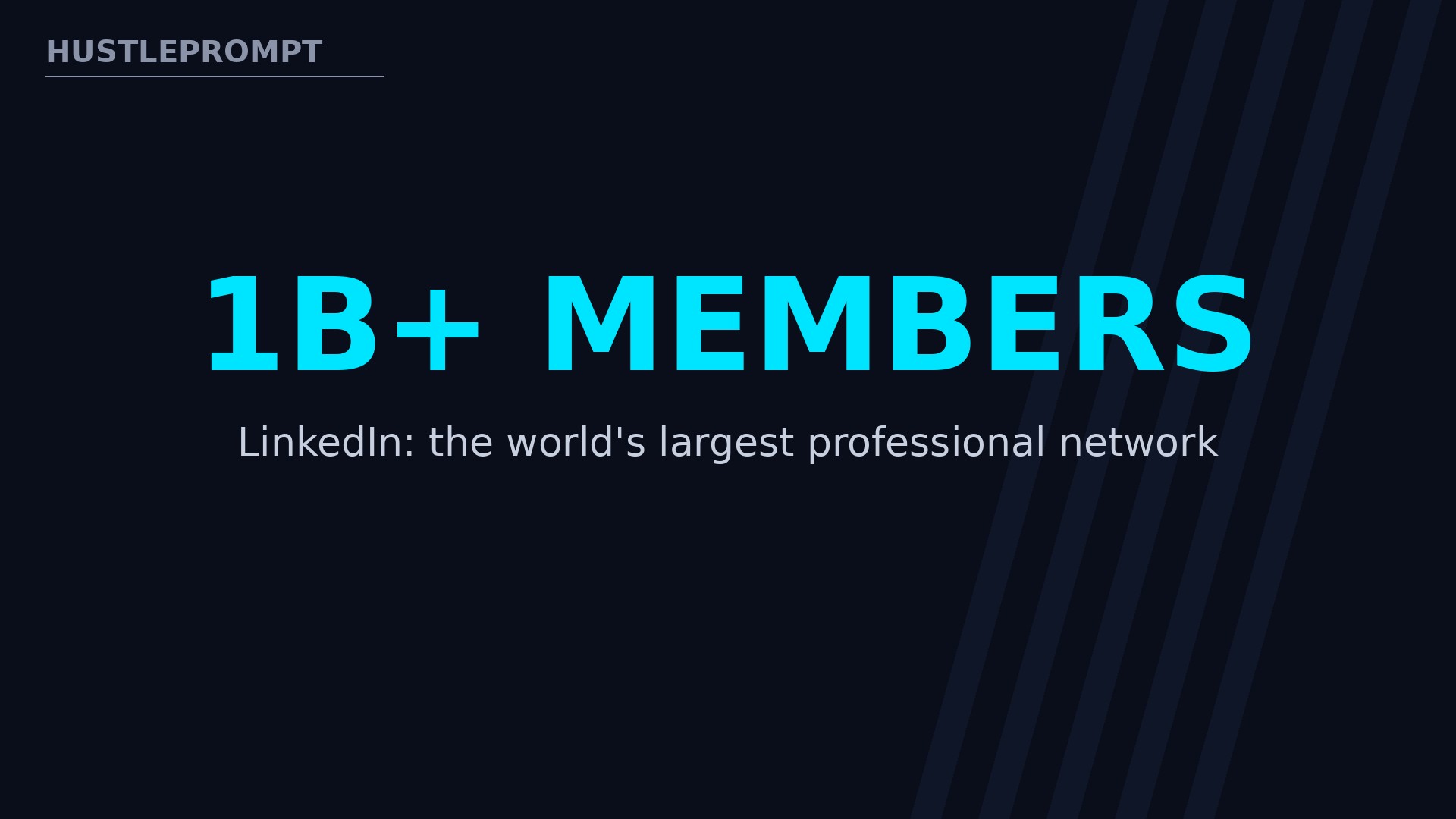
LinkedIn describes itself as the world’s largest professional network, with more than 1 billion members worldwide, including executives from every Fortune 500 company. Yet most of those executives rarely post. That gap is your business: LinkedIn ghostwriting turns a founder’s real ideas into polished thought-leadership posts they never had time to write.
A ghostwriter is not a social media manager. You do not run ads, design graphics, or manage a company page.
You write in one person’s voice, under their name, about their expertise. AI speeds up your drafting, but the client’s ideas, approval, and reputation stay at the center.
Video: How to Build Your Personal Brand on LinkedIn | Branding Room Only — Paula Edgar’s personal-branding tutorial covers profile positioning, content creation, and a commenting strategy – the exact client-facing skills this ghostwriting service sells, taught from the founder’s own voice. (ThePaulaEdgar)
What you are actually selling
Clients buy visibility and trust, not words. A founder posting sharp, consistent insights looks like the obvious expert in their niche.
Your service has four parts:
- Voice capture: a short interview that records how the client actually talks.
- Content pillars: three to five topics they can credibly own.
- Drafting with AI: fast first drafts, rewritten by you in the client’s voice.
- Approval and posting: a simple routine the client can approve in minutes.
The market in three numbers
1 billion+ — LinkedIn members worldwide, per LinkedIn’s own company profile (LinkedIn).
$50–$500 — reported per-post range for LinkedIn ghostwriting in 2026 pricing roundups (Postiv).
$2,000–$5,000 — the most common monthly range for founder and executive engagements in the same roundups (Postiv).
Who buys this service
Start with people whose reputation wins business: founders, agency owners, consultants, and sales leaders.
Look for these signals:
- A strong resume but a silent or sporadic LinkedIn feed.
- A recent funding round, book, product launch, or promotion to talk about.
- Competitors posting weekly while your prospect posts quarterly.
- A team that already creates content, but never from the founder’s voice.
Avoid one group at the start: anyone who wants you to invent results, exaggerate a title, or post opinions they do not hold. That client will cost you your reputation. Say no early.
The 6-step delivery workflow
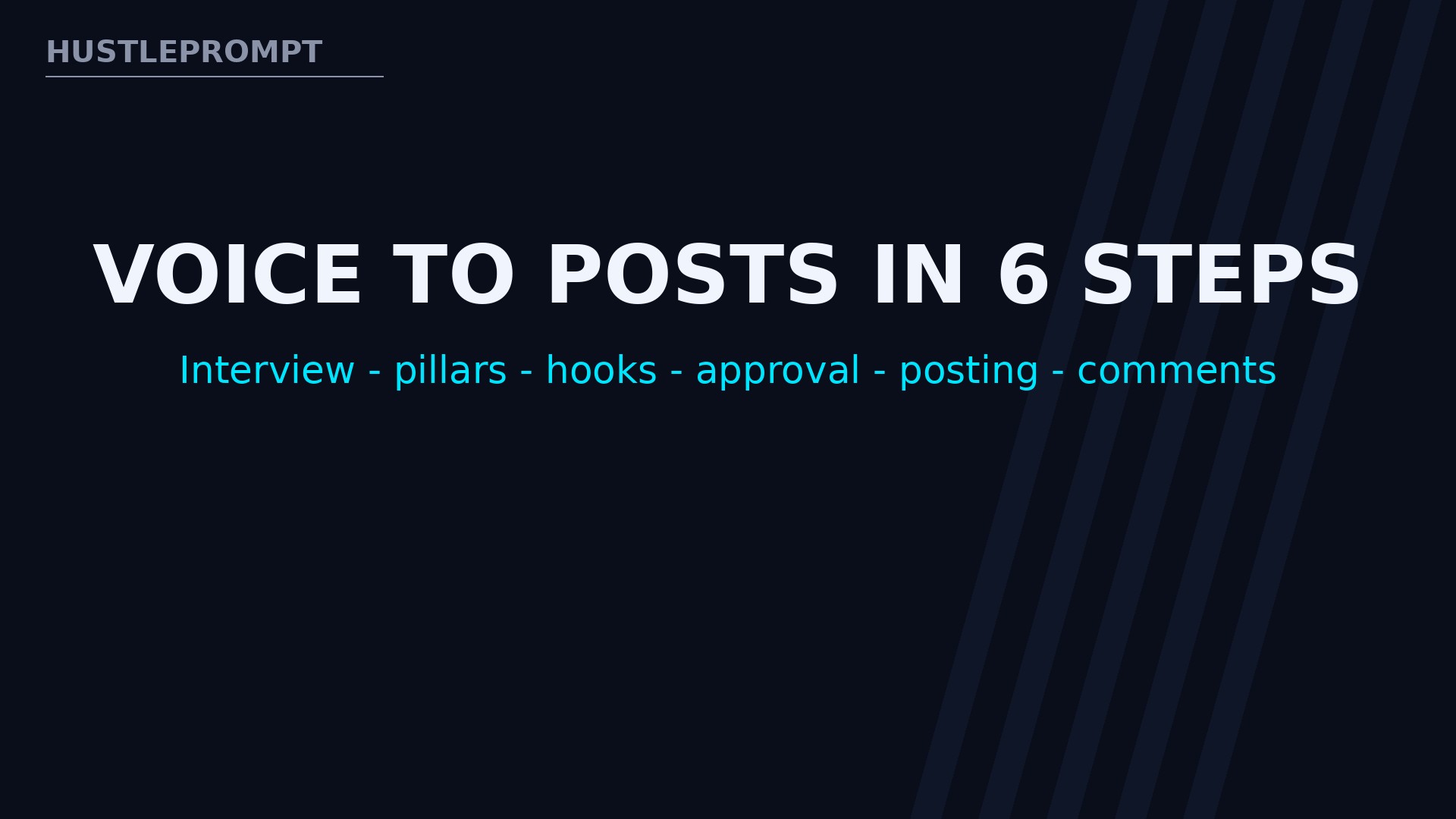
Every client runs through the same six steps. A repeatable workflow keeps each client’s voice separate.
Voice to posts: the weekly loop
1. Voice capture → 2. Content pillars → 3. Hook drafting with AI
4. Client approval → 5. Posting cadence → 6. Comment strategy
Then repeat: each week’s comments and replies become next week’s post ideas.
Step 1: Voice capture (30 minutes)
Record a 30-minute call. Ask about their last three client wins, their most common advice, and one opinion most peers disagree with. Transcribe it with your AI tool.
Build a one-page voice sheet: phrases they use and hate, sentence length, and tone. It is your quality control for every draft.
Step 2: Content pillars (3 to 5 topics)
Pick three to five content pillars, meaning recurring themes the client can credibly discuss for months. One SaaS founder’s pillars might be pricing, hiring, churn, and founder lessons.
Each week, mix two pillar posts, one personal lesson, and one reply-driven post.
Step 3: Hook drafting with AI
A hook is the opening line that makes a reader click “see more.” Draft ten hooks per post with AI, then keep the three that sound like the client.
Write the body from the interview transcript, not generic AI filler. Every claim must trace back to something the client said or approved.
Step 4: Client approval (under 10 minutes)
Send drafts in one document, once a week, with a clear deadline. Offer two revision rounds per post, then stop. Endless revisions are how ghostwriting retainers lose money.
Never post without written approval. An approved draft beats a verbal “looks fine.”
Step 5: Posting cadence (3 times a week)
Start at three posts a week: Monday, Wednesday, and Friday mornings work for most US business audiences. Consistency beats daily posting that collapses after two weeks.
Track three metrics at first: profile views, connection requests, and inbound messages.
Step 6: Comment strategy (20 minutes a day)
Comments are half the service. Each weekday, leave thoughtful replies on ten posts from the client’s ideal buyers and peers, written in the client’s voice and approved in batches.
Never use engagement pods, meaning groups that trade fake likes and comments. They put the client’s account at risk.
Tools: what you actually need
You need one AI writing tool, one document app, and the client’s LinkedIn account. Skip the all-in-one suites until you have paying clients.
| Tool | Price | Best use |
|---|---|---|
| ChatGPT Plus | $20/month | Hook options, transcripts, first drafts |
| Claude Pro | $20/month | Long voice documents, careful rewrites |
| ChatGPT Free / Claude Free | $0 | Starting out, one client at a time |
OpenAI lists ChatGPT Plus at $20 per month, and Anthropic lists Claude Pro at $20 per month. Confirm at checkout, since prices change. Sources: OpenAI and Claude pricing summary.
Pricing ladder: per-post vs. monthly retainer
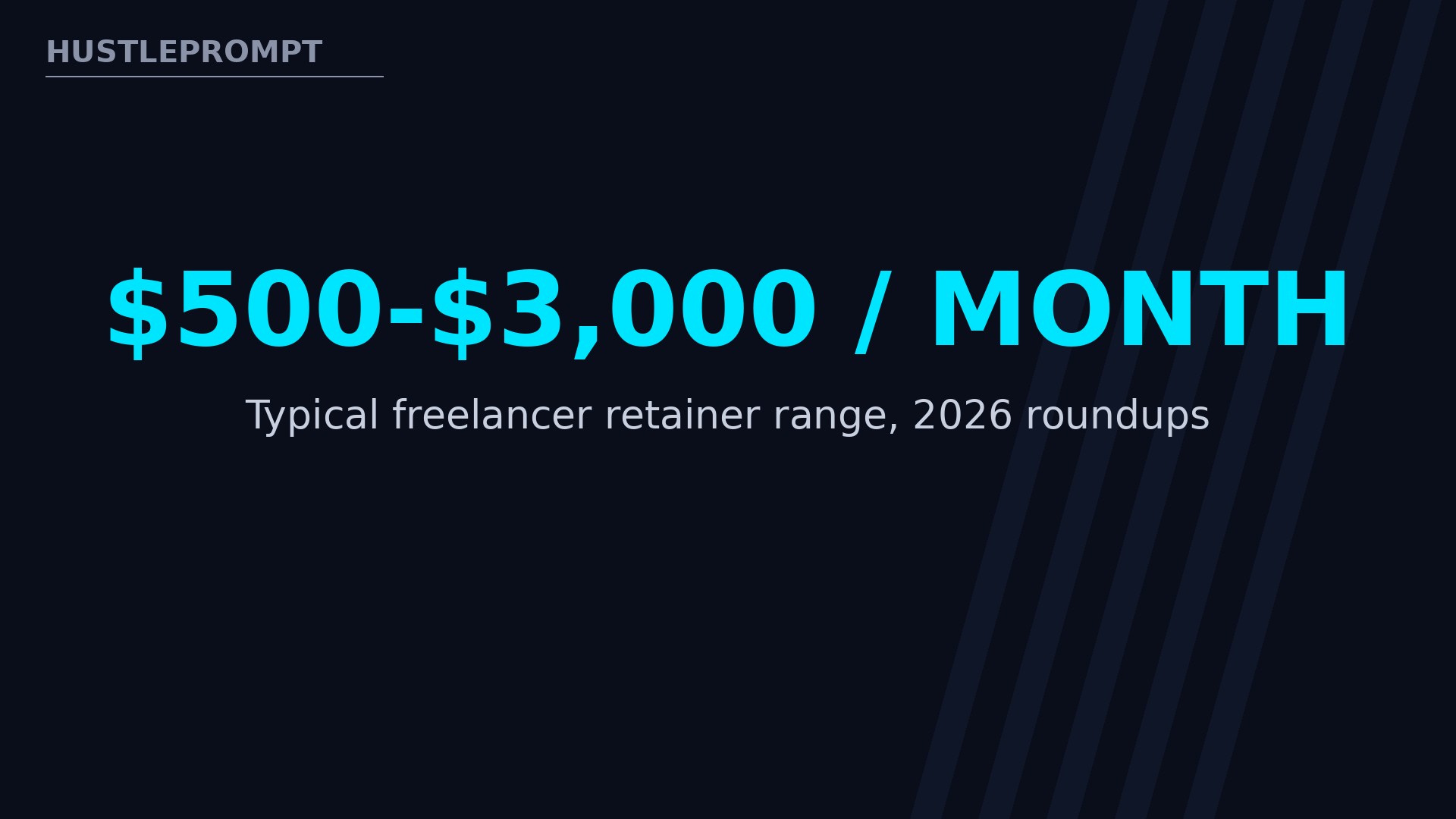
2026 pricing roundups disagree widely. One reports freelancer retainers from $500 to $3,000 a month, while another puts the wider market at $500 to $10,000 a month. Treat every figure below as a reported range, not a quote.
| Tier | What it includes | Reported range |
|---|---|---|
| Per post | One post, one revision round | $50–$500 |
| Starter retainer | 4 posts a month, voice sheet, approval doc | $500–$1,500 |
| Growth retainer | 12 posts a month, pillars, comment strategy | $1,500–$3,500 |
| Executive retainer | 16+ posts, strategy, profile rewrite, reporting | $3,500–$6,000+ |
Sources: Foundera, Unkoa, and Postiv.
Arithmetic illustration only, not an income promise: three clients at $1,500 a month equals $4,500 a month before tool costs and taxes.
Outreach scripts that get replies
Prospects ignore generic pitches. Reference a specific gap in their feed, then offer a paid test.
LinkedIn message template:
- “Hi [Name], your work on [topic] deserves a bigger audience than your current posting pace gives it. I ghostwrite LinkedIn posts for founders in [niche], from a 30-minute interview each week. Open to a paid two-week test of six posts?”
Email template:
- Subject: “Your LinkedIn is quieter than your results”
- “[Name], I read your [recent talk/post]. One post a week on [pillar] would put that insight in front of your buyers. I run a four-post paid pilot for founders in [niche]. Want the details?”
The authenticity rule: non-negotiable
Ghostwritten posts must stay truthful to the client’s real views and experience. No fake results, no invented clients, no borrowed stories presented as their own, and no engagement pods.
LinkedIn’s Professional Community Policies prohibit false or misleading content, and LinkedIn states users are responsible for reviewing AI-generated content before sharing it. Approval is the control that keeps both of you safe.
Put it in writing: the client approves every post, owns the final wording, and can kill any draft. If a draft needs a fact you cannot verify from the client, cut the fact.
How to land your first three clients
Your own LinkedIn profile is your portfolio. Post three times a week for a month in one niche before pitching anyone.
Then take these steps:
- Offer a paid four-post pilot, not free work, so the client treats approval seriously.
- Ask each pilot client for a short testimonial and one referral after week four.
- Publish one anonymized before-and-after case study: posting cadence, profile views, and inbound messages.
- Keep one voice sheet per client in a separate document, so no client’s phrasing leaks into another’s posts.
Frequently asked questions
Is LinkedIn ghostwriting ethical?
Yes, when the ideas are the client’s, the client approves every post, and nothing is invented. The line is truthfulness, not who typed the draft.
Do I need to be a great writer already?
You need to be a strong editor with good taste. AI produces the raw draft; your judgment and the voice sheet turn it into publishable work.
How many clients can one writer serve?
Start with two or three retainer clients. Each one needs an interview, drafts, revisions, and comments. Add clients only when your weekly approval routine still runs on time.
Should I post from the client’s account myself?
Prefer the approval-document route at first: the client posts approved text. Direct account access is a later step needing clear written permission.
What if a client wants daily posts?
Price daily posting as an executive tier, not a starter retainer. If the client cannot approve that fast, daily posting will fail.
Can AI write the whole service?
No. AI drafts fast, but it cannot interview a founder or judge what is true. Voice capture and approval are the service clients pay for.