OpenAI just bought the traffic controller of drug development. On October 20, 2026, the ChatGPT maker announced it has acquired Orchestra Bio, a four-year-old San Francisco startup whose AI agents help biopharma teams run drug programs. The OpenAI Orchestra Bio acquisition was shared exclusively with Axios, and its terms were not disclosed.
The signal is loud: OpenAI is betting the biggest lever in pharma isn’t discovering molecules faster — it’s coordinating the thousands of moving parts around them.
What OpenAI Is Actually Buying
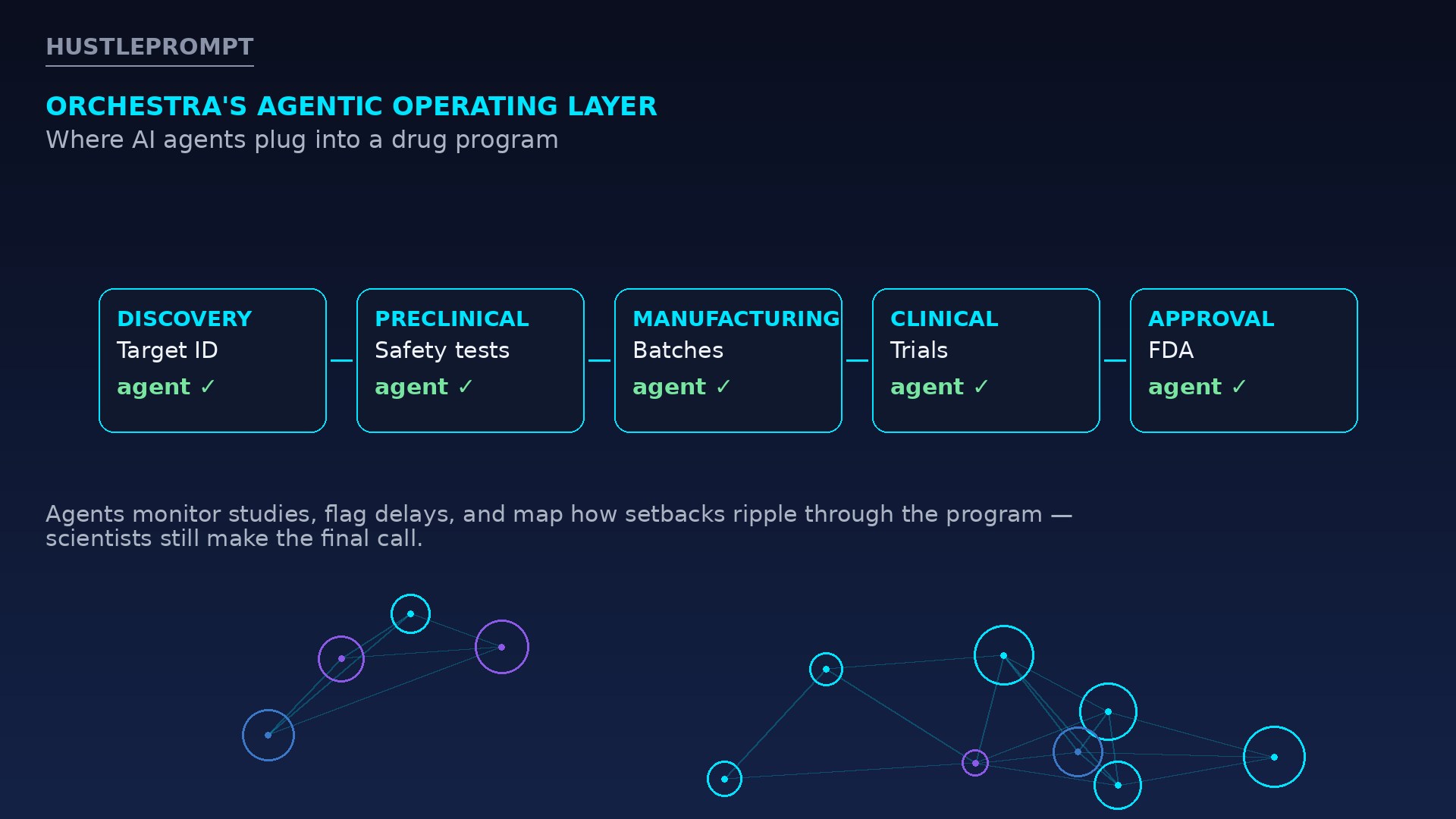
Orchestra Bio isn’t a drug-discovery company. It builds what coverage describes as an “agentic operating layer” — software that sits on top of a drug program and coordinates work across every phase, with AI agents handling tasks alongside human scientists.
Its agents watch timelines, flag delays, and map how setbacks ripple through the program. The scientists still make the final call.
How It Fits Inside Rosalind
Orchestra’s team and technology fold into Rosalind, OpenAI’s suite of AI models and tools for life-sciences research. The pieces:
GPT-Rosalind — reasoning model for biology and chemistry, launched April 2026.
Rosalind Workbench — connects the models to scientific tools and data for experiment planning and analysis.
Orchestra’s agents — the new operational layer: monitoring studies, coordinating programs, connecting findings to decisions.
Agents coordinate work across every phase of the program.
1. DISCOVERY
Agent tracks targets & literature
2. PRECLINICAL
Agent schedules safety studies
3. MANUFACTURING
Agent watches batches & suppliers
4. CLINICAL
Agent monitors trials & timelines
5. APPROVAL
Agent compiles regulatory docs
Real example from the announcement: a failed manufacturing batch can delay a clinical trial. Orchestra’s agents identify which activities and timelines are affected, gather the information, and compare ways to respond — scientists still make the final call.
The Evidence: Two Labs, One Playbook
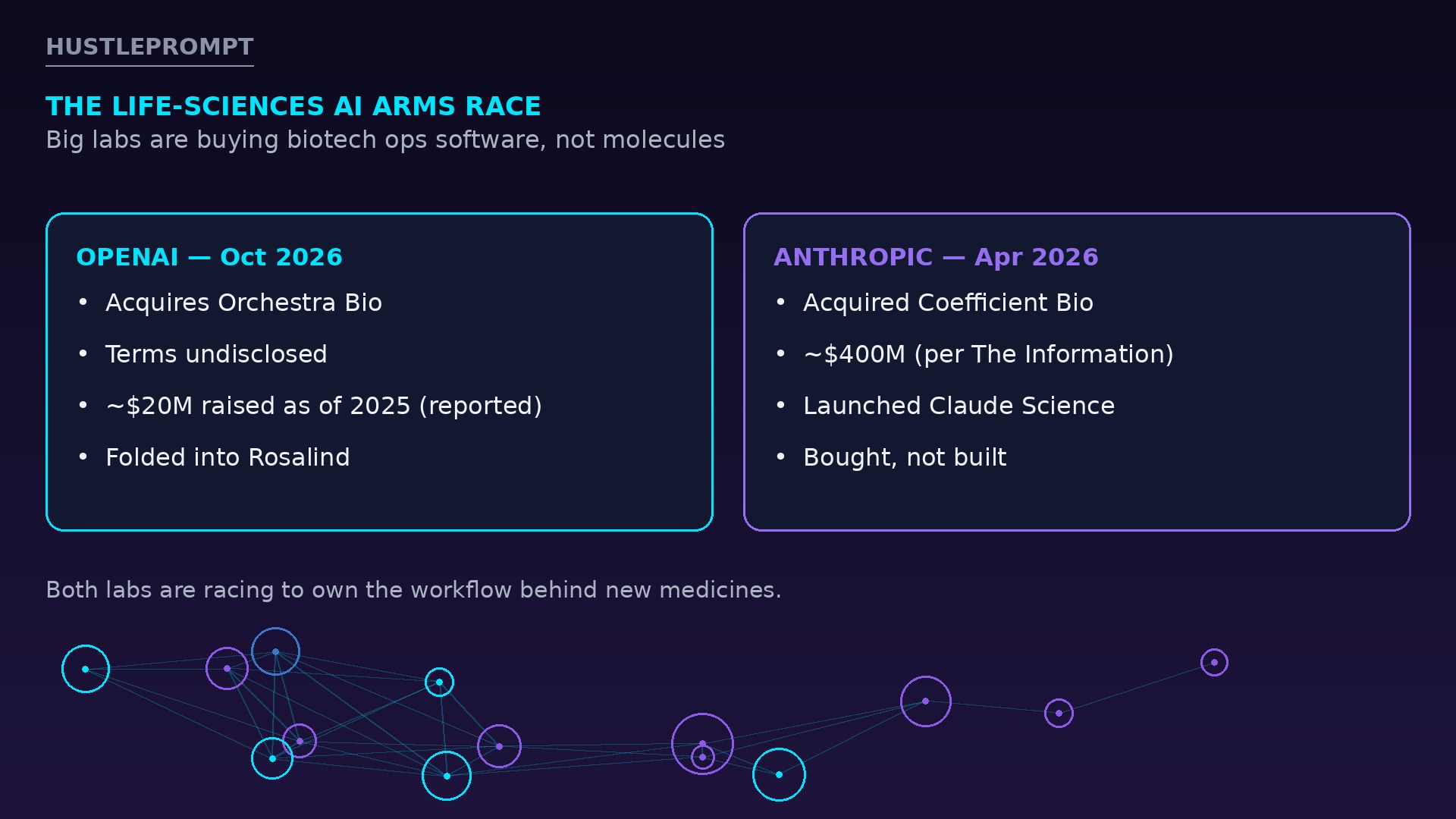
OpenAI isn’t alone. Six months ago, Anthropic made the same kind of move — and the pattern is unmistakable.
Move
OpenAI
Anthropic
Target
Orchestra Bio (SF, founded fall 2022)
Coefficient Bio
Announced
October 20, 2026
April 2026
Deal terms
Not disclosed
~$400M, per The Information
What it does
AI agents for drug-program operations
AI biotech startup
Folded into
Rosalind (GPT-Rosalind + Workbench)
Claude Science platform
Customers named
Moderna, Novo Nordisk
Not disclosed
Why buy operations instead of molecules? Drug development passes through departments and outside partners whose systems often don’t connect — that’s an orchestration problem, exactly what agent-based AI is good at. A better operating system for drug programs can be sold to every pharma company on Earth, and running it generates data that compounds.
TechCrunch’s Julie Bort notes the flip side: founders in pharma-adjacent SaaS now live with the fear that the labs will simply absorb the niche winners instead of competing with them.
Key stats, straight from the sources:
10–15 years. Developing a new medicine takes that long on average, from target discovery to U.S. regulatory approval, per OpenAI’s official announcement.
~$20M raised. Orchestra had raised around $20 million as of 2025, per TechCrunch, from backers including Andreessen Horowitz, Atria and 8VC.
$2.6B+ and <10%. Industry estimates cited in coverage: bringing one approved drug to market can cost more than $2.6 billion, and fewer than 10% of trial candidates ever get approved.
Two named pharma partners. OpenAI confirms a Novo Nordisk partnership aimed at faster R&D, and says Moderna’s scientists use its AI to turn complex data into experimental workflows.
How to Profit From the Life-Sciences AI Gold Rush
You can’t out-build OpenAI or Anthropic. But their gold rush creates openings:
Founders: build the connectors, not the core. The labs buy workflow and operations layers. Niche tools that plug into Rosalind or Claude Science — regulatory document automation, trial-site coordination, vendor management — are acquisition-shaped targets.
Operators: learn agent supervision for regulated industries. Agents gather, compare and flag; humans decide. Program managers who can design and oversee agent workflows with a full audit trail will command a premium.
Investors: watch the pick-and-shovel layer. Orchestra’s backers, including a16z and 8VC, just got an exit after roughly four years. Look for startups filling the gaps between the labs’ platforms and pharma IT.
Content and consulting: translate the race. Pharma executives need to know what Rosalind and Claude Science mean for their budgets. Analysts who can benchmark these platforms — pricing, access, real capabilities — will be in demand.
Frequently Asked Questions
What did OpenAI buy with Orchestra Bio?
An “agentic operating layer” for drug development: AI agents that help biopharma teams monitor studies, track timelines, and flag delays, while scientists make the final decisions. The team and technology join OpenAI’s Rosalind unit.
How much did OpenAI pay for Orchestra Bio?
Terms were not disclosed. Per TechCrunch, Orchestra had raised around $20 million as of 2025 from Andreessen Horowitz, Atria and 8VC.
What is Rosalind?
OpenAI’s suite of AI models and tools for life-sciences research: GPT-Rosalind, a reasoning model for biology and chemistry launched in April 2026, plus Rosalind Workbench for experiment planning and analysis.
Who are Rosalind’s customers?
OpenAI names a Novo Nordisk partnership aimed at faster R&D and says Moderna’s scientists use its AI to turn complex data into experimental workflows.
How does this compare to Anthropic’s Coefficient Bio deal?
Same playbook: a frontier lab acquiring biotech operations software. Anthropic bought Coefficient Bio for roughly $400 million in April 2026 (per The Information) and launched Claude Science. OpenAI’s terms weren’t disclosed, but the strategic goal — owning the life-sciences workflow — is identical.
Will Orchestra Bio’s standalone product survive?
OpenAI hasn’t said. The announcement frames the team and technology as joining Rosalind, with no timeline for when the agents appear in OpenAI’s products.