
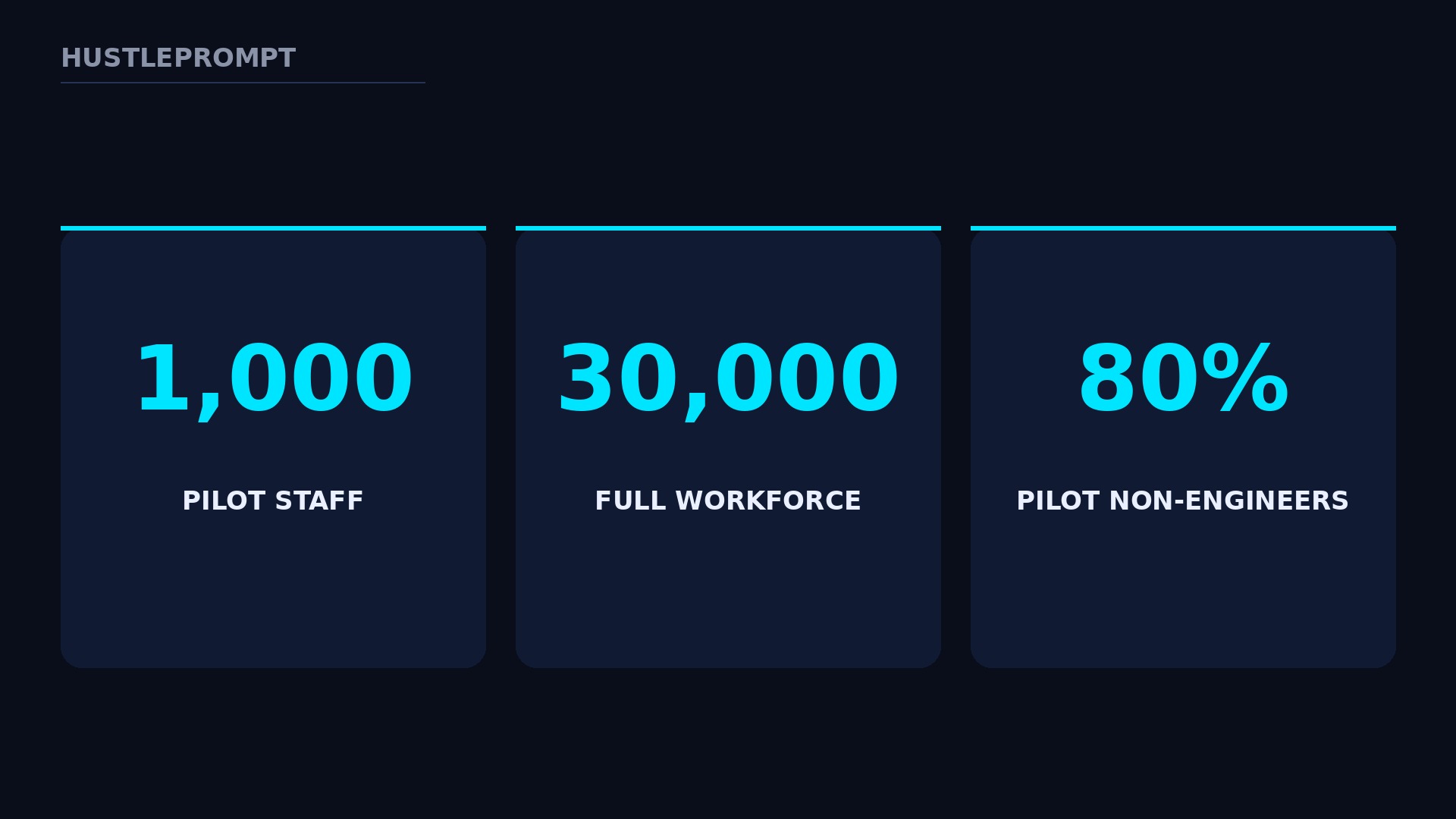
Uber started with 1,000 people. It now has 30,000 on ChatGPT Work — its entire global corporate workforce. The expansion, announced October 22, 2026, is one of the largest company-wide agent rollouts ever disclosed, and it happened in months, not years.
The interesting part is not the headline number. It is who used the tool in the pilot, what they used it for, and what Uber still has not proven. Together, those details form a rollout playbook that freelancers can sell to businesses a thousand times smaller than Uber.
This is not a report that Uber bought software. It is an analysis of why company-wide rollout, not the pilot, is the real trend — and where the paid work sits for everyone else.
What Uber Actually Did
ChatGPT Work is OpenAI’s enterprise agent for multi-step office work. It runs inside ChatGPT Enterprise, connects to tools employees already use — Gmail, Google Drive, Google Calendar, and Slack — and is designed to stay with a project for hours if needed, producing briefs, presentations, sheets, and other finished work rather than single answers.
Uber’s rollout moved in clear stages:
Sources: TechCrunch (Oct 22, 2026) · PYMNTS (Oct 22, 2026).
Why the Non-Engineers Matter Most
About 80% of the pilot users were not engineers, Uber’s VP of engineering Sumanth Sukumar told TechCrunch. That single figure reframes the whole rollout. The pilot was not a developer tool trial. It was an office-work trial, and the office workers adopted it.
What did they actually do with it? Three uses stand out:
- Analyzing operational data to spot trends and build recommendations — not chatting, but working through numbers into decisions.
- Localizing training materials for different markets and languages — repetitive, error-prone work that scales badly by hand.
- Building personalized dashboards to manage daily work — small tools, built by the people who use them, without waiting for IT.
That list is the sales pitch for rollout services. None of those tasks requires an engineering degree. All of them require someone to set up the workflow, connect the right tools, and show a non-technical team what “good” looks like. Uber did that with AI pods: 30 AI engineers paired with operational teams for two-week sprints. A freelancer can run the same pattern at small-business scale: one expert, one team, two weeks, one workflow.
There is also what Uber has not done. The company has not settled on exactly how staff will use the tool, has not disclosed what it is paying, and has not published productivity results from the pilot. Both companies say they plan to share adoption and outcome data later. Until then, the honest claim is narrower than the headline: Uber bet company-wide on agents before proving the payoff. That is a signal about confidence, not evidence of returns.
The Rollout Gap: Big Companies Scale, Small Ones Stall
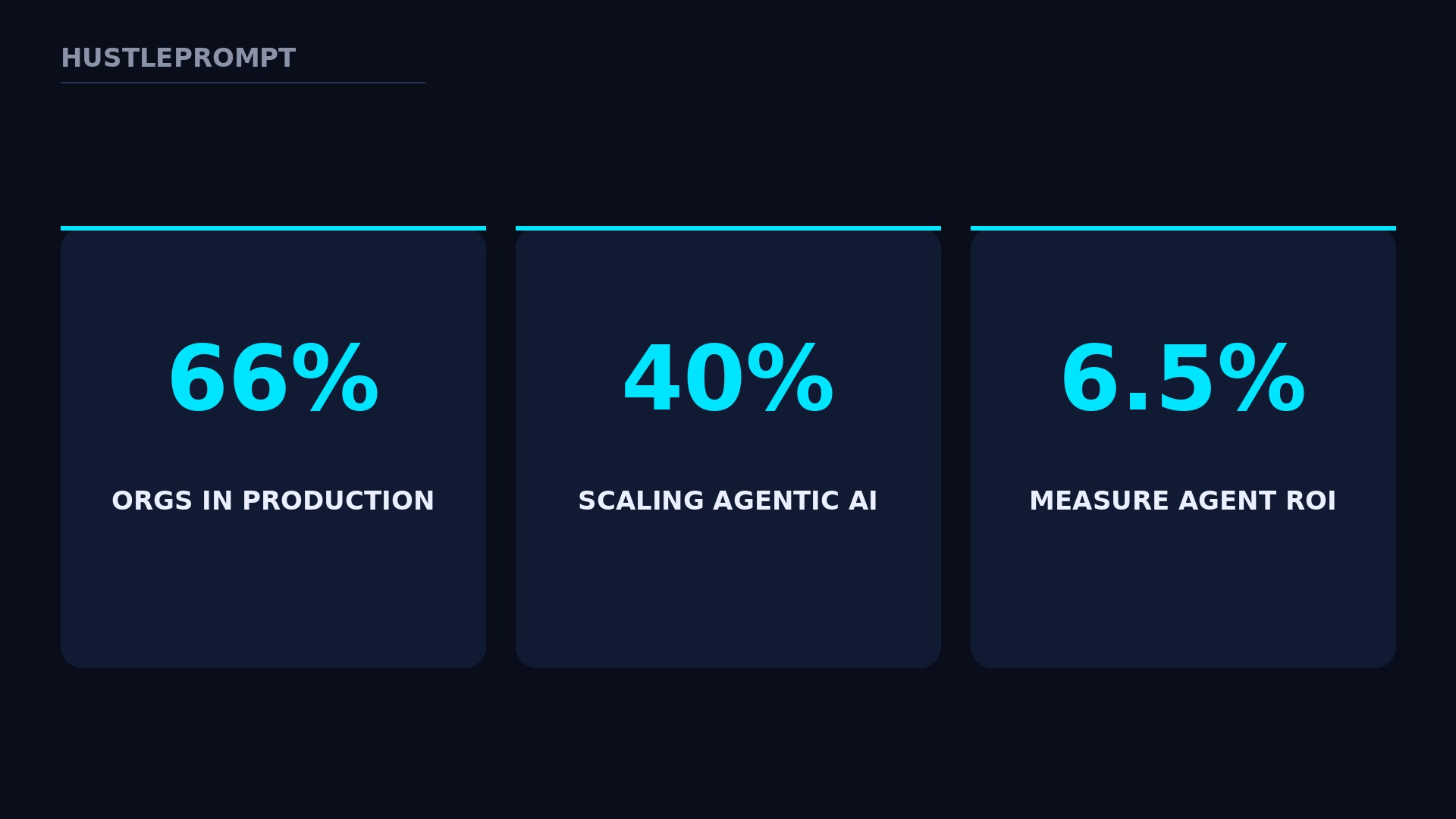
Uber is not an outlier in direction — it is an outlier in speed. G2’s 2026 AI Agents Report found that 66% of organizations already have agents in limited or scaled production, with adoption up 25% year over year. In organizations running mature, high-volume agent workflows, four out of five reported cycle-time improvements of around 11%, and half reported speed gains of up to 25%.
But the averages hide a split. An OpenAI analysis reported in October put agentic adoption at 47% of large EU enterprises — up 23 percentage points since the first quarter — against only 18% of small businesses deploying autonomous agents. McKinsey figures summarized in October coverage put about 40% of organizations scaling agentic AI, with about 32% saying they had skipped a software purchase because internal agent capabilities were enough.
Then comes the measurement gap. Basis published a marketing survey on October 19 finding daily AI usage among marketers nearly doubled year over year and about 51% use AI agents — but only 6.5% measure agent or AI return on investment with defined benchmarks. Companies are buying agents faster than they are learning to measure them.
Read those numbers together and the opportunity sharpens. The market is not “AI agents.” The market is the missing middle: pilot design, training, workflow setup, and measurement for the businesses that cannot hire 30 AI engineers for two-week sprints.
Sources: DigiNomica on G2’s 2026 AI Agents Report (Oct 2026) · Emergent on OpenAI’s EU agentic adoption analysis (Oct 14, 2026) · AI Agent Store on Basis’s 2026 marketing survey (Oct 19, 2026).
How to Profit From This Trend
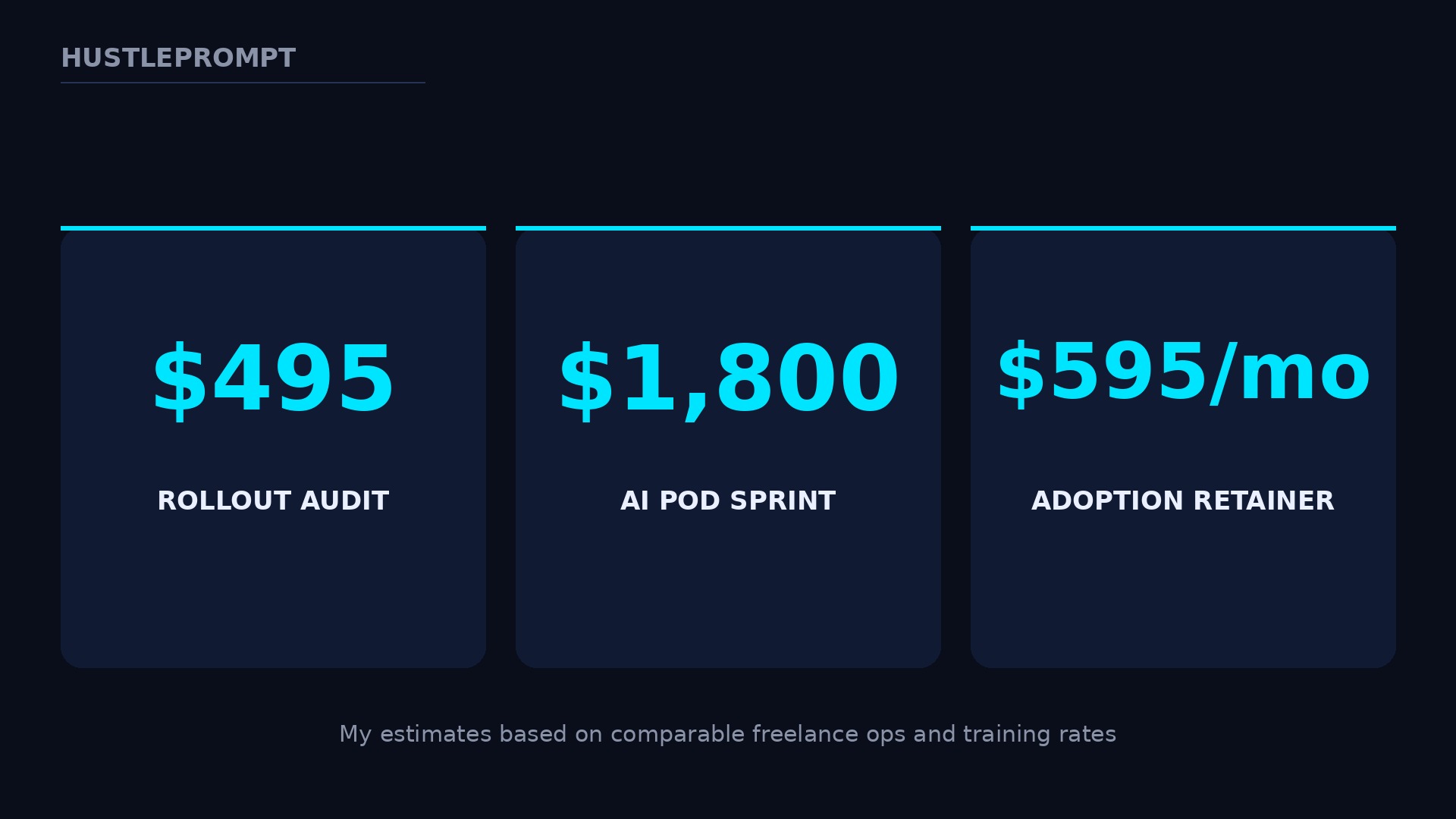
Sell the rollout, not the tool. Clients can buy ChatGPT themselves. What they cannot buy off the shelf is a pilot that produces a case study, a skills library their staff actually uses, and a measurement sheet that survives the first budget review. Prices below are my estimates based on comparable freelance operations and training rates, not market data:
The pod sprint is the wedge. It is short, it ends with a working workflow the client can show their boss, and it creates the case study that sells the next sprint. The retainer only works if you measure what Uber has not yet published: cycle time before and after, rework, and hours returned to real work. A client renews on a sheet, not on enthusiasm.
One pitch to avoid: do not sell this as headcount replacement. Uber rolled out ChatGPT Work about a month after cutting roughly 3,300 corporate jobs, about 10% of office staff — and Uber says those cuts were about reducing management layers, not AI, with no evidence linking the two decisions. The honest, durable pitch is the opposite: make the remaining team faster at the work only they can judge.
The Uber Rollout Playbook
Four stages, in order. Most companies skip stage one and wonder why stage four never arrives.
Small, real, cross-functional
Uber started with 1,000 people across finance, operations, and product — not one department, not only engineers.
Experts embedded, two weeks
30 AI engineers paired with teams to automate real jobs. The sprint, not the demo, is what transfers skill.
Skills, training, connections
Teams get training, approved app connections, and an internal library of AI skills — so the win repeats.
Measure, then expand
Uber plans to track usage and outcomes before deciding future investment. Measurement is the gate, not an afterthought.
What to Do This Week
- Pick one team and one workflow. A five-person operations team with a weekly report is a better first client than a whole company with no workflow in mind.
- Run a two-week pod, not a demo. Embed, automate the real workflow, and document it as a skill the team can reuse without you in the room.
- Build the measurement sheet on day one. Record cycle time and rework before the agent touches the workflow. Without a before, there is no after.
- Package the pod as a fixed-price product. Put it on your site with a clear deliverable: one automated workflow, one skills document, one measurement sheet. Price it, do not hourly-bill it.
Where This Is Heading
Company-wide becomes the default question. After Uber, the question for vendors and buyers shifts from “should we pilot agents?” to “what is our rollout plan?” The firms with a staged answer will win budgets over firms with a demo.
Non-engineers become the buyers. If 80% of early adopters are not engineers, the winning services will be written for operations, finance, and marketing teams — not for developers. Training and skills libraries, not code, are the growth layer.
Measurement decides the second purchase. Uber has not published productivity results yet. When it does — or if results disappoint — the market will split between rollouts that can show cycle-time gains and rollouts that only showed enthusiasm. Build the sheet now, while the first purchase is still easy.
Watch: how to build an AI employee in ChatGPT Work — invoice audits, CRM lead entry, board reports, scheduled tasks, and contract filing, with the human review step kept in place. Watch on YouTube.
Frequently Asked Questions
What is ChatGPT Work?
ChatGPT Work is OpenAI’s enterprise agent for multi-step office work, launched July 9, 2026. It runs inside ChatGPT Enterprise, connects to Gmail, Google Drive, Google Calendar, and Slack, and can work on a project for hours, producing briefs, presentations, sheets, and other finished work.
How many Uber employees use ChatGPT Work?
More than 30,000 — Uber’s entire global corporate workforce — after a pilot with 1,000 employees. The company-wide rollout was announced October 22, 2026. GPT-6.1 Sol is the default model; Uber’s software engineers continue using Codex for coding work.
What did Uber’s pilot actually prove?
It proved adoption by non-engineers: about 80% of pilot users were not engineers, and they used the agent for operational analysis, localizing training materials, and building personal dashboards. Uber has not yet published productivity measurements from the pilot, so the proven claim is adoption and use cases, not measured returns.
What tools does ChatGPT Work connect to?
In Uber’s deployment, it connects to Gmail, Google Drive, Google Calendar, and Slack, inside ChatGPT Enterprise. Teams also receive training, approved app connections, and an internal library of AI skills, according to the companies’ announcement.
How much is Uber paying OpenAI?
Neither company has disclosed the cost. Any figure you see elsewhere for this deal is speculation unless it cites a company disclosure. The absence of a price is itself useful: do not anchor your own service prices to a deal whose terms are private.
How can freelancers sell rollout services?
Sell the staged playbook: a $495 rollout audit by my estimate, a $1,800 two-week AI pod sprint by my estimate, workflow builds at $750–$1,500 by my estimate, and a $595-per-month adoption retainer by my estimate. These are my estimates based on comparable freelance rates, not market data. The pod sprint is the wedge because it ends with a working workflow and a case study.
Do small businesses need ChatGPT Enterprise to start?
Uber’s deployment runs inside ChatGPT Enterprise, but the rollout services in this article — pilot design, workflow setup, training, and measurement — apply to whatever tools a client already has. Start with the workflow and the measurement sheet; the platform choice follows the client’s existing stack and budget, not the other way around.