
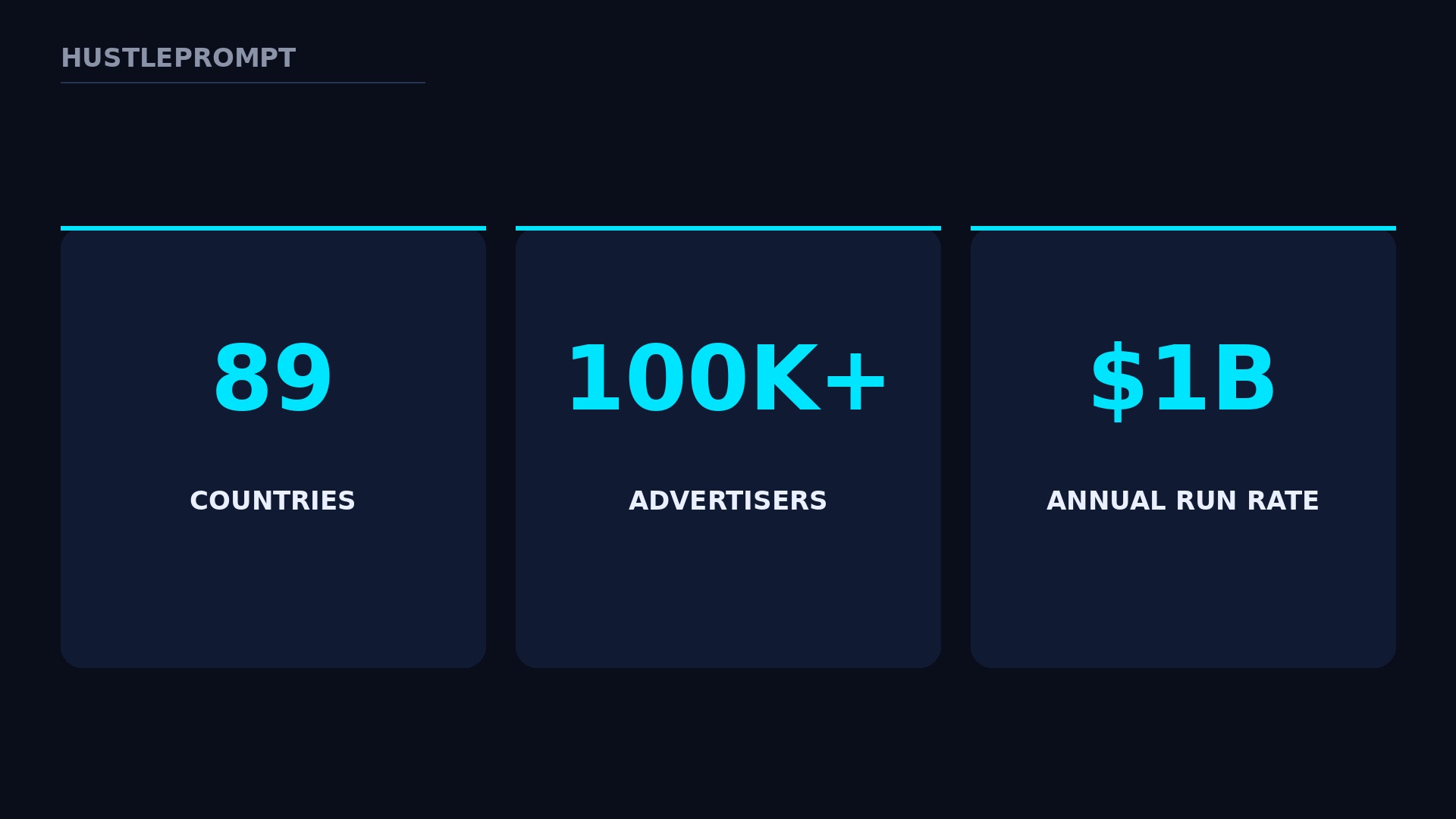
In eight months, advertising inside a chatbot went from an experiment to a business doing $1 billion a year. On October 21, 2026, OpenAI expanded ChatGPT Ads to 26 more countries, taking the total to 89 — and past 100,000 advertisers.
That speed is the story. Google took about four years to reach a comparable ad pace, according to a Fortune report cited by PYMNTS. OpenAI did it in under 200 days.
This is not another “AI changes marketing” think piece. It is an analysis of a new paid channel that is already open, already priced, and already making some advertisers money — plus the traps in it that nobody selling you a course will mention.
What Actually Happened on October 21
OpenAI announced the expansion in a company post, reported the same day by Reuters. The new markets add 14 more Latin American countries — including Argentina, Chile, Colombia and Peru — plus Nigeria, South Africa, Serbia, Ukraine, Cambodia, Bangladesh and Pakistan.
The rollout has moved in clear stages. Here is the timeline, with each step sourced:
Sources: Reuters (October 21 expansion) · Pandromeda (rollout timeline) · PYMNTS (run rate and Fortune comparison).
Two details in that table deserve more attention than they usually get.
First, the advertiser count is cumulative, not current. OpenAI says more than 100,000 advertisers have run campaigns since launch — not that 100,000 are active today. Industry reporting had pegged active advertisers at around 20,000 in late August.
That gap is normal for a new channel. It also means the “everyone is already there” pitch is wrong. The channel is growing fast, but it is still early enough for a small advertiser to test cheaply.
Why This Channel Is Different From Search Ads
Google Ads sells you a click from someone who typed a keyword. ChatGPT Ads sells you a labeled spot next to an answer someone is already discussing with an assistant.
That distinction changes the buyer’s mindset. A searcher has a query. A ChatGPT user has a problem in progress — planning marathon-week meals, comparing contractors, choosing software. OpenAI’s own example is a grocery delivery service shown to someone planning meals for marathon week.
The user is mid-decision, not mid-search. For advertisers, that is either the best intent on the internet or a trap, depending on whether you measure booked jobs or clicks.
Three structural facts shape everything else:
- Ads only show on Free and Go plans. Plus, Pro, Business, Enterprise and Education users see none. Your audience is the free tier — huge, but not the whole 1.2 billion weekly users OpenAI cites.
- Ads are labeled and kept separate from answers. OpenAI says ads do not influence what ChatGPT says. An ad buys you a labeled spot near the answer. It cannot buy the answer itself.
- Buying is now self-service. Advertisers can buy through technology partners or directly in OpenAI’s Ads Manager, which is why freelancers can sell setup and management as a service at all.
That second point is the bridge to our earlier analysis of the AI citation economy: organic mentions in AI answers still have to be earned through citable, well-structured content. Paid placement is a separate door, and it opens faster — but it closes the moment you stop paying.
The Money Numbers Nobody Puts in One Place
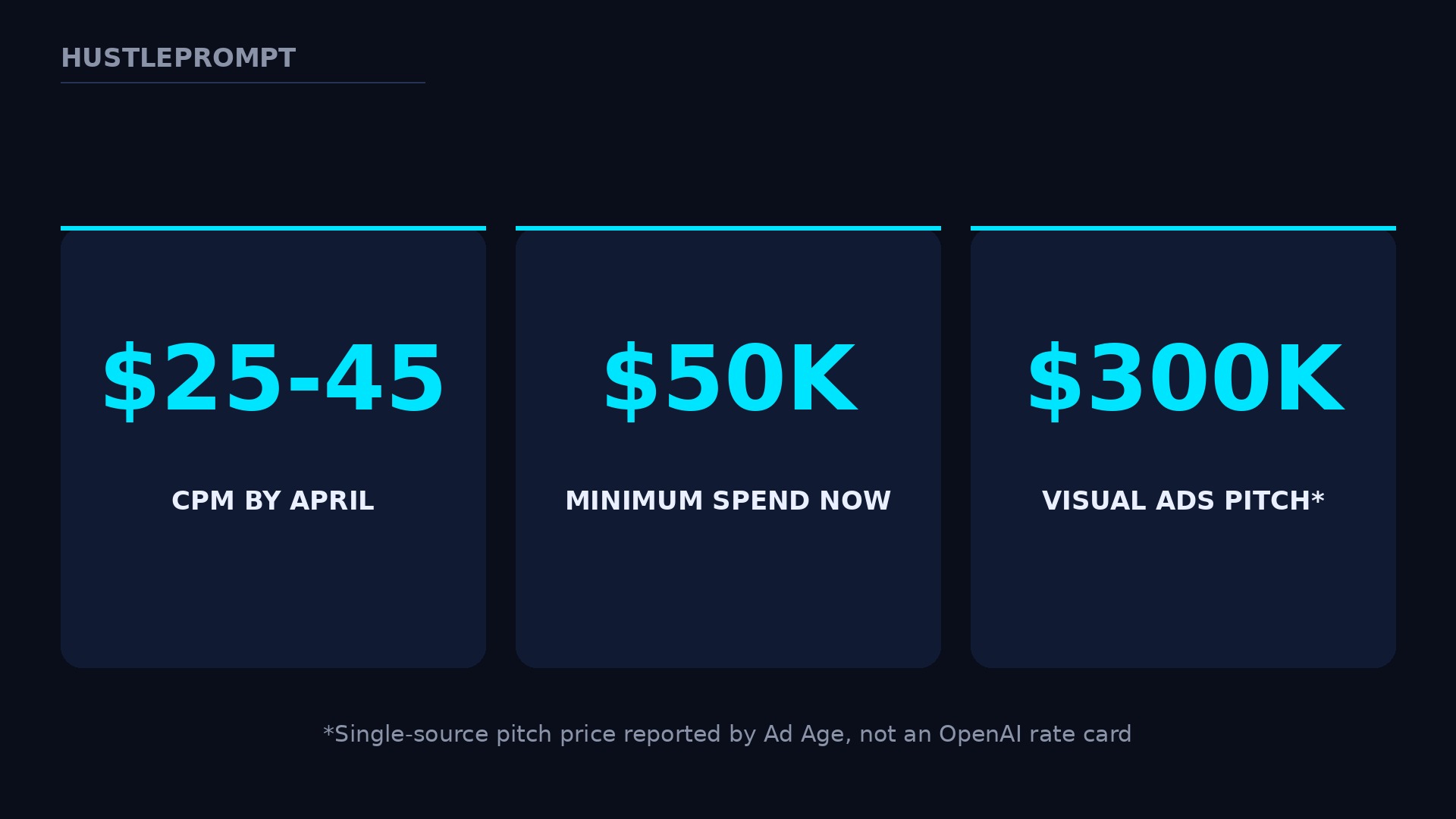
OpenAI publishes no public rate card for ChatGPT Ads. The numbers below come from industry reporting and advertiser disclosures, and each is labeled as such. Treat them as directional, not as a price list:
Sources: AI Money Lab (CPM and spend tracking; $300,000 visual-ad pitch) · Margin of Tomorrow (WeightWatchers figure via Rockerbox) · Marketing Newsroom (creative enhancements default).
Read that table as a trend, not a bargain. Prices are falling because supply is expanding — more countries, more inventory, more advertisers learning the channel. Early movers get cheaper attention. Late movers get a mature auction.
The Two Traps in the Fine Print
Two October developments change how campaigns must be managed — and both are services waiting to be sold.
Trap 1: AI rewrites your ads by default
A day before the expansion, OpenAI emailed advertisers that its automatic ad edits — called creative enhancements — will be switched on by default for new and existing campaigns. That means OpenAI’s system can automatically rewrite headlines, text and landing pages.
For a brand with careful compliance language, that is a risk, not a feature. The fix is a settings audit: find the toggle, decide deliberately, and document the choice. Most small advertisers will never notice it changed.
Trap 2: Targeting follows the conversation
404 Media tested the ad system in October and reported that advertisers can upload customer lists — email addresses, phone numbers, mobile ad identifiers — and target matched users, with at least 25,000 matched users needed for an audience. The current conversation can also shape which ad appears.
OpenAI says advertisers never see conversations and cannot identify matched individuals. But turning personalization off does not stop ads from following the current chat. For a business, the practical rule is simple: assume anything typed into a free-tier chat is ad context, and keep customer data and sensitive work on paid, ad-free seats.
Sources: ROAI briefing (404 Media targeting test) · Verified Privacy News (email/phone matching).
How to Profit From This Trend
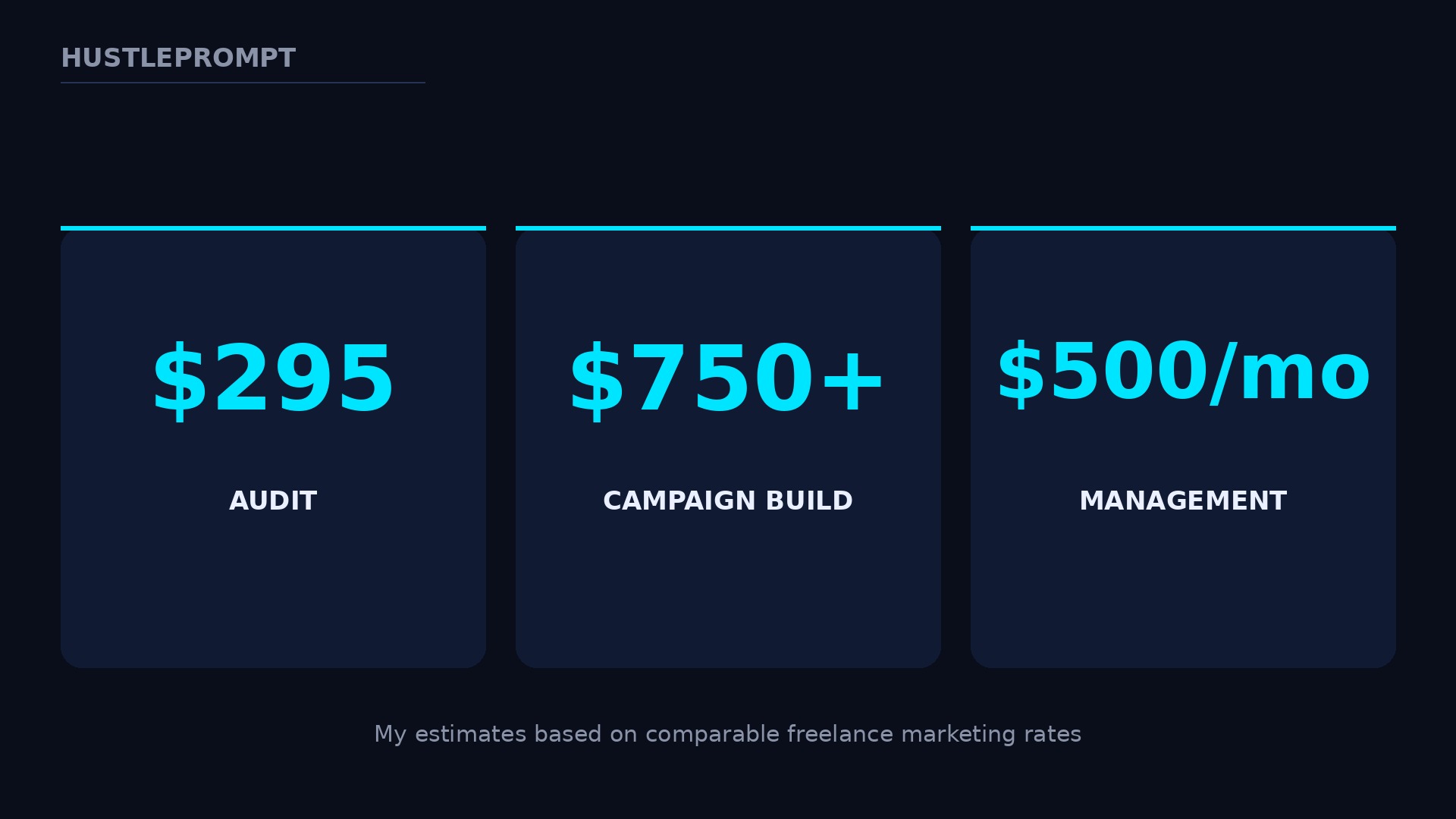
The opportunity is not “run ChatGPT Ads.” It is selling the setup, the audit, and the measurement that small businesses will skip on their own. Here are services with prices labeled as my estimates based on comparable freelance marketing rates, not market data:
The audit is the wedge. It is cheap, it finds a real default setting most owners never changed, and it naturally leads to a campaign build. The monthly retainer only works if you report booked jobs — a local business does not renew on click counts.
The Conversational Ad Funnel
What you can buy — and what you can only earn.
User describes a problem
Planning meals, picking a contractor, comparing tools. Intent is already formed.
The answer itself
Cannot be bought. Earned only through citable content and accurate listings.
Your spot beside the answer
This is what ChatGPT Ads sells. Clearly labeled, separate from the answer.
The only metric that renews
Track calls, bookings and sales — not impressions. Report that, or lose the client.
What to Do This Week
- Open Ads Manager and run the audit on yourself first. Check the creative-enhancements setting, install the tracking pixel, and confirm your own landing pages match your ads. New advertisers have also been offered $500 in ad credit when they spend $500 — check whether the offer is live in your market before committing budget.
- Build one test campaign for one real business. A single local client, a small budget, and a scoreboard that counts booked jobs. That case study is your sales page.
- Package the audit as a fixed-price product. Put it on your site with a clear deliverable: settings report, tracking check, and three fixes. Price it, don’t hourly-bill it.
- Offer the citation combo, not ads alone. A business that is cited organically and advertised converts better than either alone — and it keeps you paid when ad budgets pause.
Where This Is Heading
More formats, more countries, more measurement. OpenAI says the next phase adds formats, objectives, buying options and measurement tools. Expect the auction to mature and the early cheap attention to fade.
Visual ads become the premium door. The reported $300,000 pitch for image-generation ads — if it holds — splits the market: a premium visual tier for big brands and a self-service text tier for everyone else.
Creative control becomes a selling point. As automatic rewrites spread, “we check what the AI changed before it spends your money” becomes a legitimate agency promise. The agencies that audit defaults will outlast the ones that just launch campaigns.
Watch: a step-by-step ChatGPT Ads tutorial — account setup, tracking pixel, and your first campaign. Watch on YouTube.
Frequently Asked Questions
What are ChatGPT Ads?
Paid, clearly labeled ads shown inside ChatGPT to users on the Free and Go plans. They appear beside answers, not inside them, and OpenAI says they do not influence what the assistant says.
How many countries have ChatGPT Ads?
89 countries as of October 21, 2026, after OpenAI added 26 markets — including 14 more in Latin America plus Nigeria, South Africa, Serbia, Ukraine, Cambodia, Bangladesh and Pakistan.
Who sees ChatGPT Ads?
Only users on the Free and Go plans. Plus, Pro, Business, Enterprise and Education accounts remain ad-free, which means the ad audience skews toward free-tier users.
How much does it cost to advertise on ChatGPT?
OpenAI publishes no public rate card. Industry tracking put text-ad CPMs at $25–45 by April 2026, down from about $60 in January, and the reported minimum spend fell from $250,000 to $50,000. The reported $300,000 figure for new visual ads is a single-source pitch price, not a confirmed rate.
Can an ad buy a mention inside ChatGPT’s answer?
No. OpenAI says ads are labeled and separate from answers. A mention inside an answer has to be earned through citable content and accurate business listings — which is why the citation-plus-ads combo works better than ads alone.
What are creative enhancements, and should I turn them off?
Creative enhancements are OpenAI’s automatic rewrites of ad headlines, text and landing pages. They switch on by default for new and existing campaigns. Whether to disable them depends on your brand: if you have compliance-sensitive language, audit the setting and decide deliberately instead of letting a default decide for you.
How can freelancers profit from ChatGPT Ads?
Sell the audit first (my estimate: $295), then a first-campaign build (my estimate: $750–$1,500), and a monthly service that reports booked jobs, not clicks (my estimate: $500/mo). The audit finds real default settings owners missed, which makes it an easy first sale.