
Here is a frontier model you can actually own. On October 29, 2026, Mistral released the Mistral Large 4 open weights — the improved checkpoint of its 1-trillion-parameter flagship, codenamed Le Chonk — so anyone can download it, inspect it, and run it on their own systems.
This is not another preview. The preview arrived on October 6; three extra weeks of reinforcement learning made the released model stronger and cheaper to run.
What Mistral actually released today
The release is the weights themselves, published on Hugging Face alongside API and cloud access. Mistral’s announcement puts it plainly:
“Today, we release the weights of a new and improved Le Chonk, advancing the open frontier for agentic coding and cybersecurity.”
Unlike closed models that only run through a vendor’s platform, Large 4 can be downloaded and deployed independently. Reuters, reporting the release on October 29, noted that organizations can use it on their own systems, reducing dependence on a third-party provider. Mistral vice president of science Pierre Stock framed it as a principle:
“I’m not comfortable living in a world in which open weights do not exist. Once the model is out, it’s impossible to contain access.”
That permanence protects users from being cut off — and it means the model is available to everyone. Mistral says it is adjusting its guardrails for that reason.
The evidence: coding and cyber scores
Mistral pitches Large 4 as the best open-weight model for coding. The reported numbers support the ambition, with one caveat: these are Mistral-reported scores, not yet independently re-run on the released checkpoint.
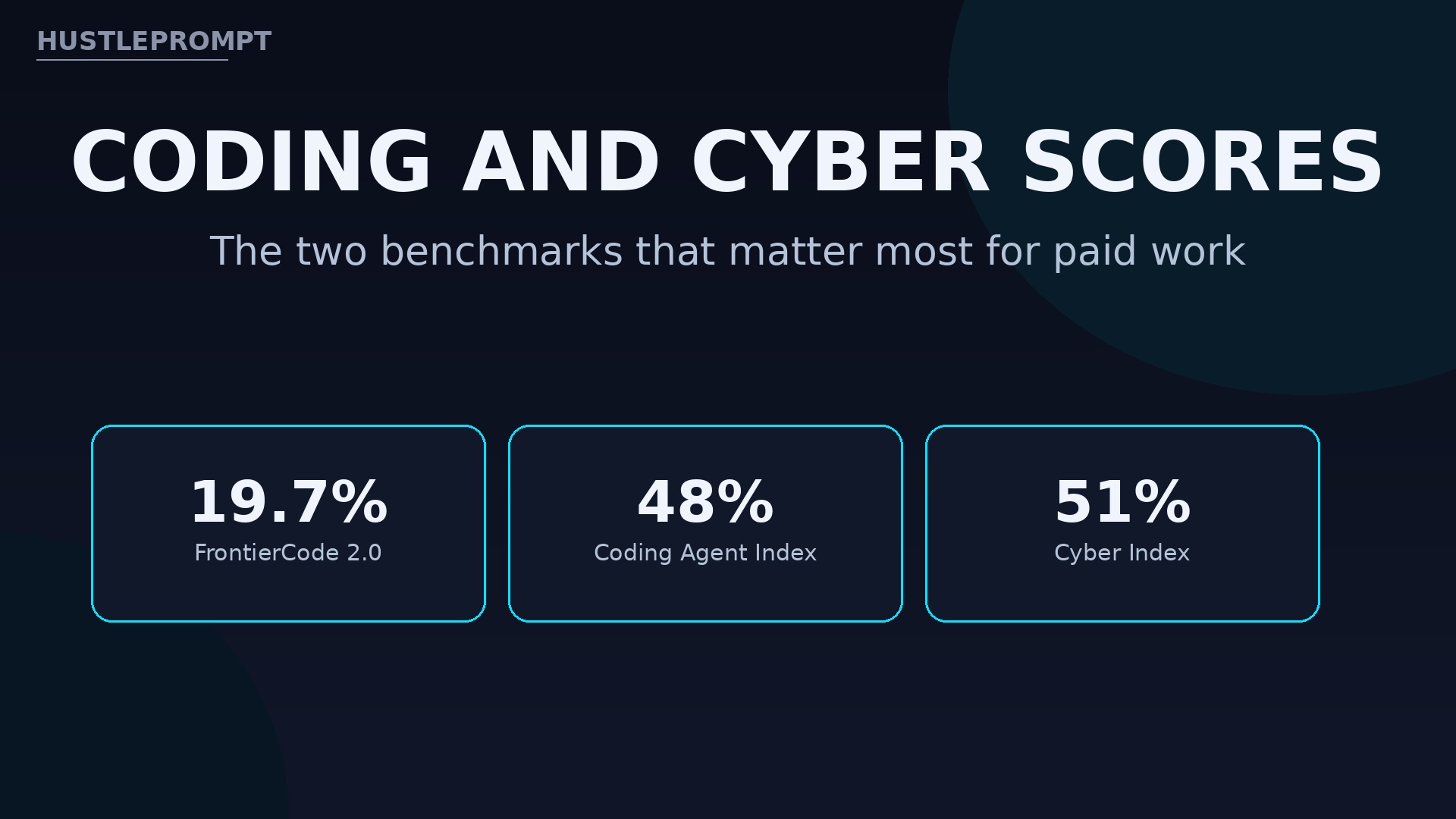
| Benchmark | Score | Meaning |
|---|---|---|
| FrontierCode 2.0 | 19.7% | No. 1 open model on end-to-end coding |
| Coding Agent Index | 48% | Tied with GLM-5.3, 47% fewer tokens |
| Terminal-Bench 4.0 | 41% | Up 13 points; output tokens down 30% |
| Cyber Index | 51% | Find, reproduce, validate, patch flaws |
| Surge Code blind tests | 2nd overall | Behind only Claude Opus 5.5 |
Three reasoning modes, one cost dial
Large 4 ships with Low, Medium, and High reasoning modes, with High as the default. Low replaces the old “None” mode for simple tasks, Medium covers everyday work, and High is for the hardest problems. For builders, this is a pricing lever: use Low for triage, Medium for routine agents, and High only where the answer is worth the tokens.
How it works: open weights, explained simply
“Open weights” means the trained model files are public. You can download them, run them on hardware you control, fine-tune them on your own data, and inspect their behavior — instead of renting access and hoping the terms never change.
1. Download. Get the Large 4 checkpoint from Hugging Face under the Mistral Ecosystem Open-Weight license.
2. Serve it. Run it with vLLM or SGLang, or use the quantized NVFP4 checkpoint on Blackwell GPUs.
3. Connect agents. Use the Mistral API, Mistral Studio, OpenRouter, Microsoft Foundry, NVIDIA endpoints, or your own server.
4. Tune for one job. Fine-tune on a client’s codebase or security reports, and sell the workflow, not raw tokens.
Under the hood, it is a mixture-of-experts model: about 1 trillion total parameters, roughly 52 billion active per token. It takes text and image input, handles a 1-million-token context, and is fluent in more than 160 languages.
What it costs, and the one license catch
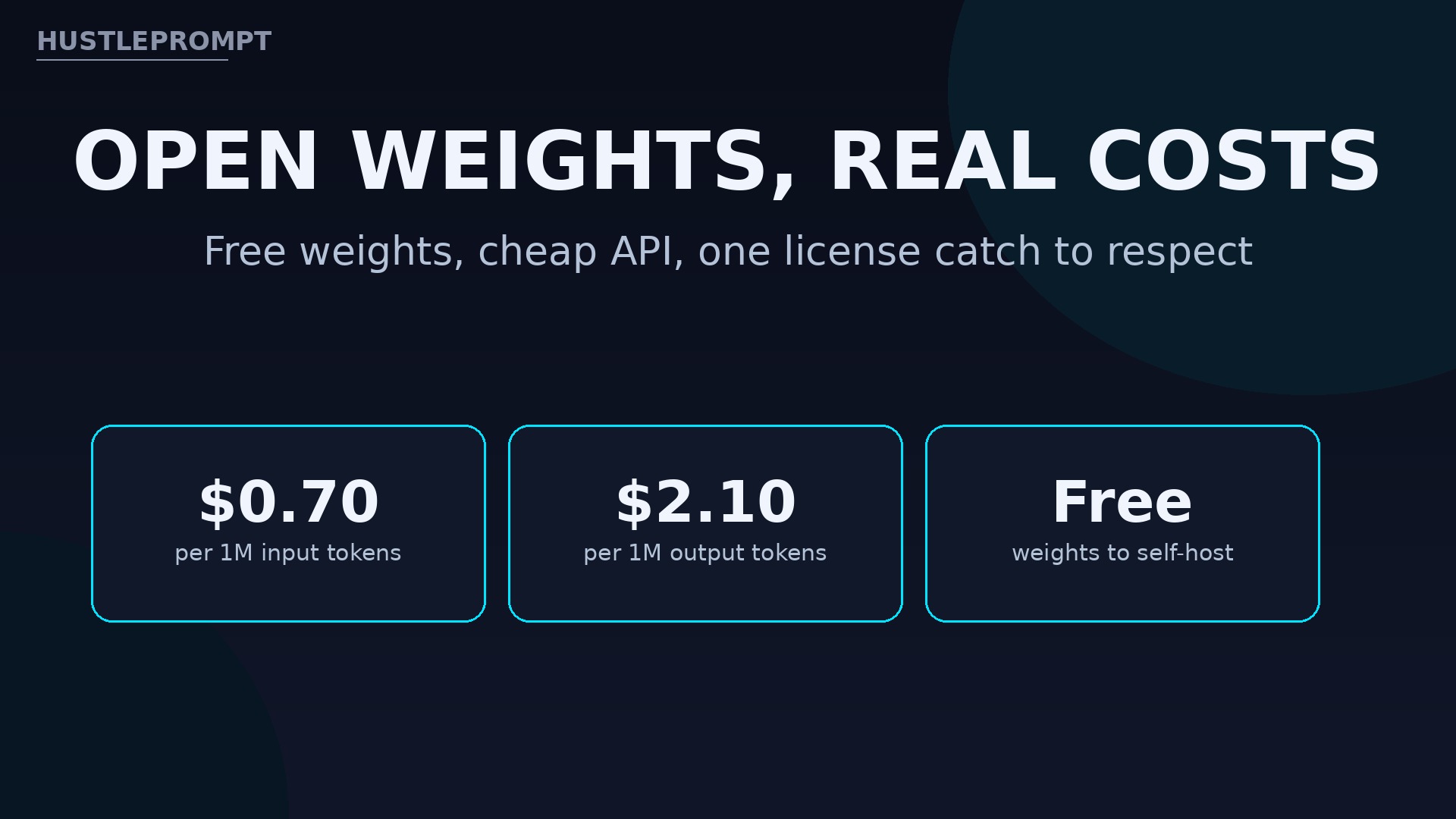
| Access route | Price |
|---|---|
| API input tokens | $0.70 per million |
| API cached input | $0.07 per million |
| API output tokens | $2.10 per million |
| Self-hosted weights | Free to download (you pay for hardware) |
The license is a modified MIT license permitting free use, modification, fine-tuning, and commercialization — with one condition: businesses offering the model itself as a service need a separate commercial license from Mistral first.
How to profit from Large 4 this week
The fastest money here is services, not speculation. Frontier weights are free; expertise in deploying them safely is not.
- Offer private deployments. Banks, clinics, and law firms want AI that never leaves their servers. Charge a setup fee plus a monthly retainer.
- Sell defensive security reviews. Use its vulnerability finding and patching strengths on code the client owns — with written authorization, in a controlled environment, and a human reviewing every patch.
- Build one-niche coding agents. A tuned agent for one stack or workflow beats a generic chatbot, and the 47% token saving is a real selling point.
- Start on the API, move to self-hosting. Prototype at $0.70/$2.10 pricing, prove the workflow, then move high-volume clients in-house and keep the margin.
The guardrail warning
Mistral disclosed potential uplift for real attacks in live-traffic monitoring and says it is modifying its guardrails. Its reported refusal rate on malicious cyber requests averages 96.6%. A specialized cyber variant is tested only with vetted partners, restricted to owned or authorized systems.
Frequently asked questions
Is Mistral Large 4 really free?
The weights are free to download, but self-hosting costs hardware and engineering time. The hosted API is $0.70 per million input tokens, $0.07 cached, and $2.10 per million output tokens.
How is this different from the October 6 preview?
October 6 was the preview announcement. October 29 is the release of the improved weights, after three more weeks of reinforcement learning and testing with government and corporate users.
Can I use Large 4 commercially?
Yes, for most products. The exception is Model-as-a-Service offerings, which need a separate commercial license from Mistral.
Where can I run it?
Self-host with vLLM or SGLang, or use the Mistral API, Mistral Studio, OpenRouter, Vibe Code, NVIDIA endpoints, or Microsoft Foundry.
Sources: Mistral AI official Large 4 announcement; Reuters report on the October 29 public release. Figures are as reported by Mistral and summarized in same-day coverage; independent re-testing of the released checkpoint is still pending.