
On October 29, 2026, Alphabet lost roughly $500 billion in market value in a single day. The company had just reported a record quarter — and admitted, on its own earnings call, that its AI answers earn less money than its old list of links.
That admission is the story. Google built the product now eating its best business, and told investors the replacement does not pay as well yet. For anyone earning from search traffic, that ends the deal the creator economy was built on: rank well, get the click, earn the ad dollar.
The click is no longer guaranteed; the answer is, and the money must move with it.
What Is Actually Trending
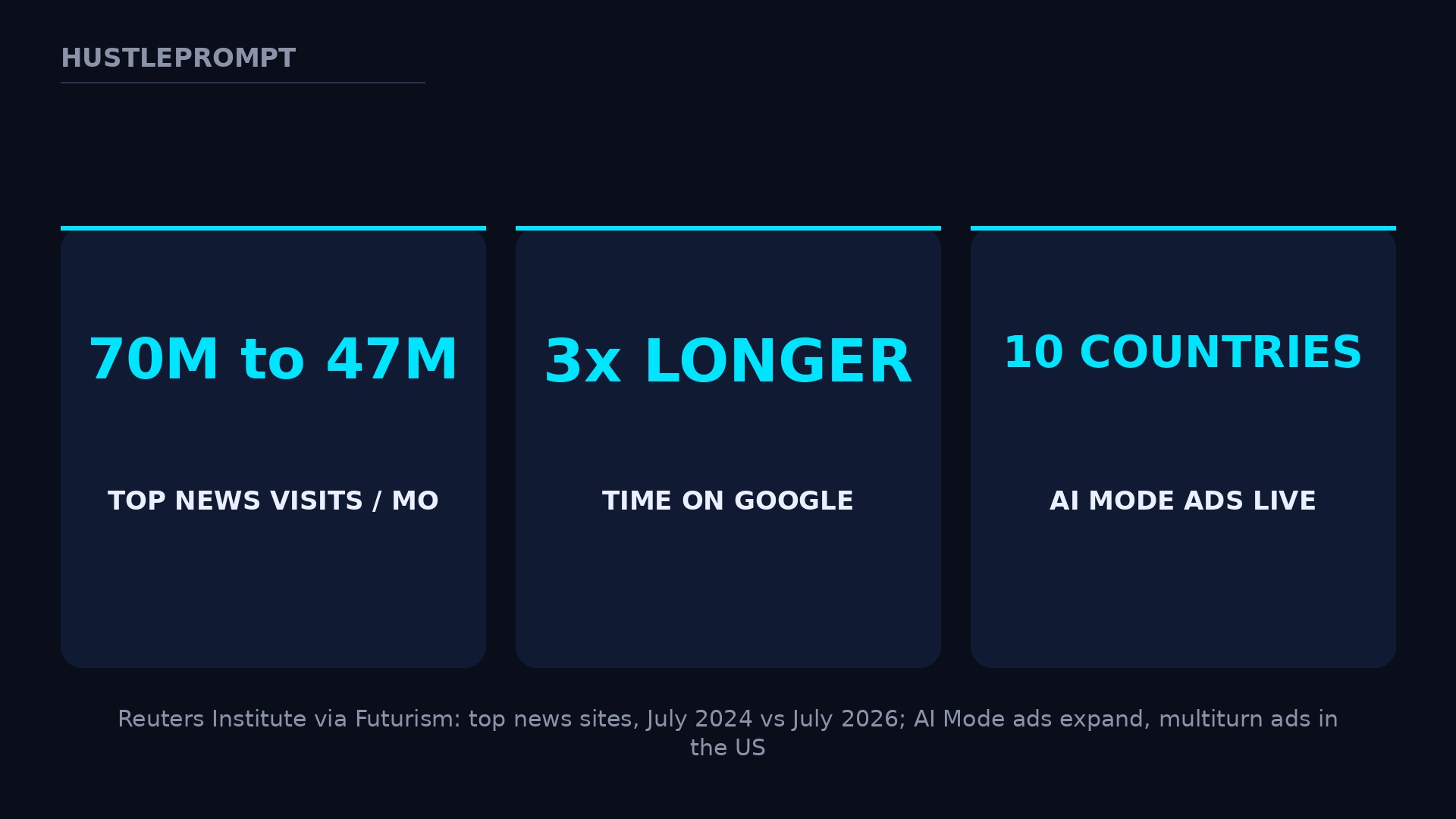
AI Mode is Google’s Gemini-powered search experience: instead of ten blue links, the user gets a conversational answer, sometimes with follow-up questions. Google is pushing it hard, and users are staying — Google says people spend about three times as long on Google when they use AI Mode and AI Overviews compared with traditional search.
The problem is arithmetic, not popularity. A classic results page shows many ads around many links. An answer shows fewer ads, and the user often leaves satisfied without clicking anything. More queries, longer sessions, fewer paid clicks per query — that is the gap chief business officer Philipp Schindler named on the October 28 earnings call.
His words, as reported from the call, were plain: “It’s worth noting that the strong growth in AI Mode queries had an impact because of the lower monetization we’re seeing in AI Mode.” He added that ad experiments showed promising results and that Google is now scaling ads inside AI Overviews and AI Mode to more users and more queries.
Schindler also offered the bull case: many AI Mode queries are upper-funnel, meaning early-stage research rather than ready-to-buy searches, and most are incremental — new queries that would not have happened at all. His argument is that Google is capturing new commercial intent that will pay later. Investors, on October 29, declined to wait.
The Evidence: A Record Quarter That Still Disappointed
Start with the numbers, because the paradox is the point. Alphabet reported third-quarter revenue of about $127.6 billion, up 25% year over year. Search advertising grew 12% to about $63.3 billion — solid in isolation, but down from 17% growth in the previous quarter, and below what analysts expected.
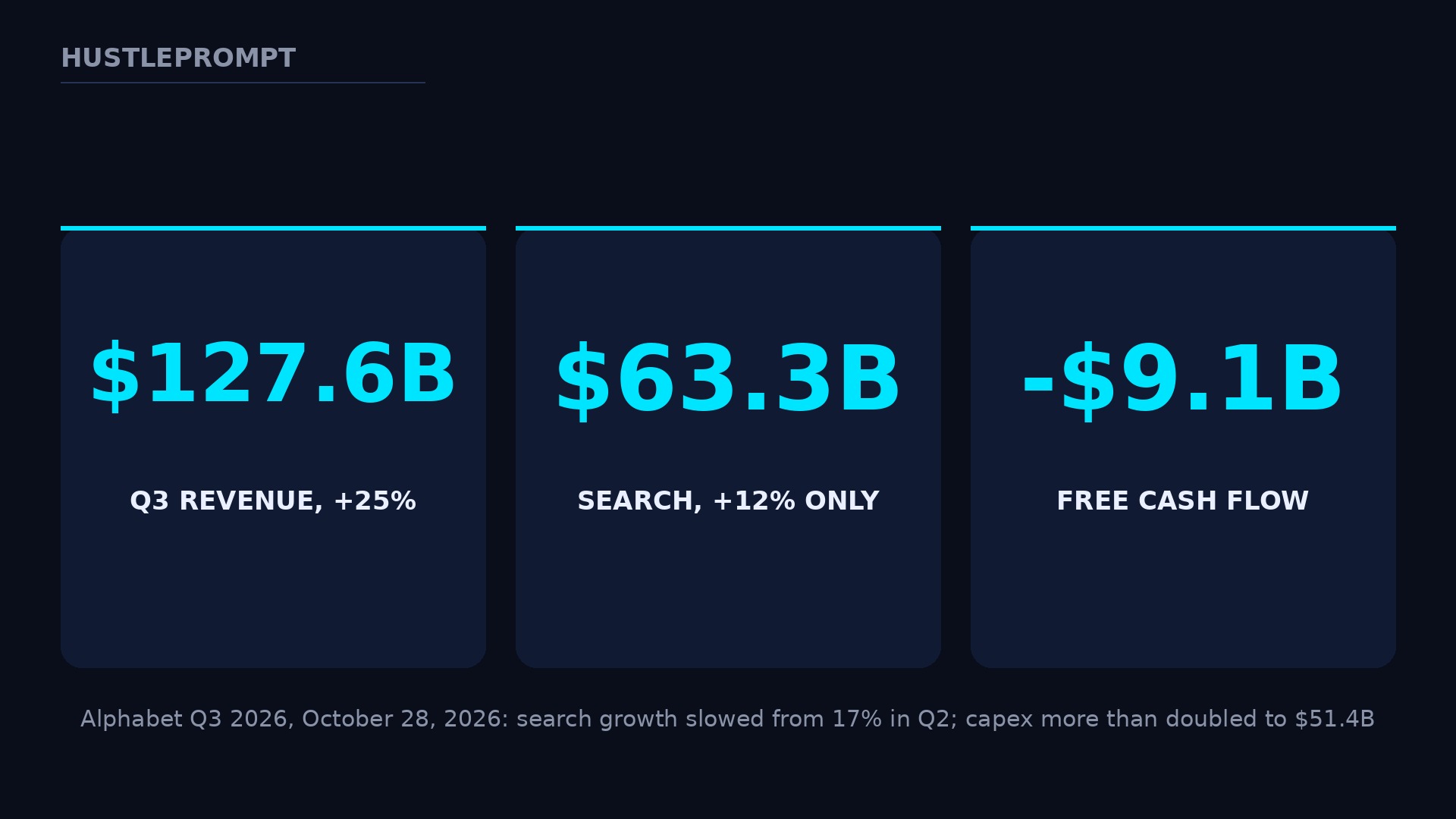
Sources: 9to5Google, “$GOOG stock drops amid AI fears, more AI Mode ads” (Oct 29, 2026) · TechSpot, “Alphabet shares plunge over 10% as Google’s AI search struggles to make money” (Oct 29, 2026) · AI Weekly, “Alphabet sheds $500B as Google admits AI Mode earns less” (Oct 30, 2026).
Two cautions: the drop was not caused by AI Mode alone — earnings, currency, and advertiser spending all played a part — and Google has not disclosed a dollar figure for the per-query gap. What is confirmed is the direction, and the direction is what changes creator strategy.
Who Else Pays When the Click Disappears
Google is not the only business built on the click. Every publisher, affiliate site, and creator who ranked for a question and monetized the visit faces the same squeeze — and the traffic data now shows it plainly.
Citing a Reuters Institute survey, Futurism reported that monthly visits to top news sites fell from over 70 million in July 2024 to just over 47 million in July 2026, as AI Overviews and AI Mode absorbed clicks that once ended on third-party pages. That is roughly a one-third drop in two years, and it happened before AI Mode ads even scaled globally.
One video analysis of the week adds a second casualty: Reddit shares fell 29% on October 30, after Google search traffic to the platform dropped by more than a million referrals a week. Treat that as reported, not confirmed from Reddit’s own filing — but the mechanism is the same either way. When the answer stays on Google, the referral never leaves Google.
Google’s fix is ads inside the answer: AI Mode ads in ten countries, with Brazil, Mexico, and the United Kingdom planned for the fourth quarter of 2026, plus “multiturn” ads in follow-up queries for US users. That helps Google. It does not restore the click to anyone else.
Why an Answer Earns Less Than a Page of Links
A traditional results page is a marketplace: ten organic results, several ads, and a user who must choose. Every choice is a measurable commercial moment.
An AI answer is a verdict. The model synthesizes, ranks silently, and presents one response. The user reads it, maybe asks a follow-up, and is done. There are fewer slots to sell, less reason to click, and — crucially — the most valuable thing the user wanted, the answer, has already been given away free.
CEO Sundar Pichai framed the sequencing as a repeat of the mobile transition: “Just like our shift to mobile over a decade ago, we are focused on building the best Search user experience, followed by monetization.” The mobile transition eventually paid — but it killed companies that waited for the old model to return. The survivors rebuilt for the new screen before the money arrived.
Click Economy vs Answer Economy
The old funnel sold the visit. The new funnel has to sell something before the visit ends.
Win the click
Rank for the question, earn the visit, monetize with ads and affiliates on your page.
Win the citation
The model quotes you or it does not. A citation without a click is exposure, not income.
Own the relationship
Email, community, and products turn a cited answer into a customer you can reach again.
Revenue per answer
Track income per topic, not traffic per page. Topics that cite but never convert get cut.
How to Profit From This Trend
Do not sell “SEO” as it was sold in 2023. Sell the answer-economy rebuild: a service that takes a creator or small business whose traffic is falling, finds which of its pages still get cited by AI answers, and rebuilds each one so the citation leads somewhere that pays — an email signup, a product, a booking, or an affiliate offer the reader can act on without a second search.
The audit is the entry product because it produces a number the client has never seen: what share of their revenue actually depends on search clicks, and which topics already earn nothing per visit. Most creators discover that half their library is traffic without income. Cutting or rebuilding that half is the fastest profit lever in this trend.
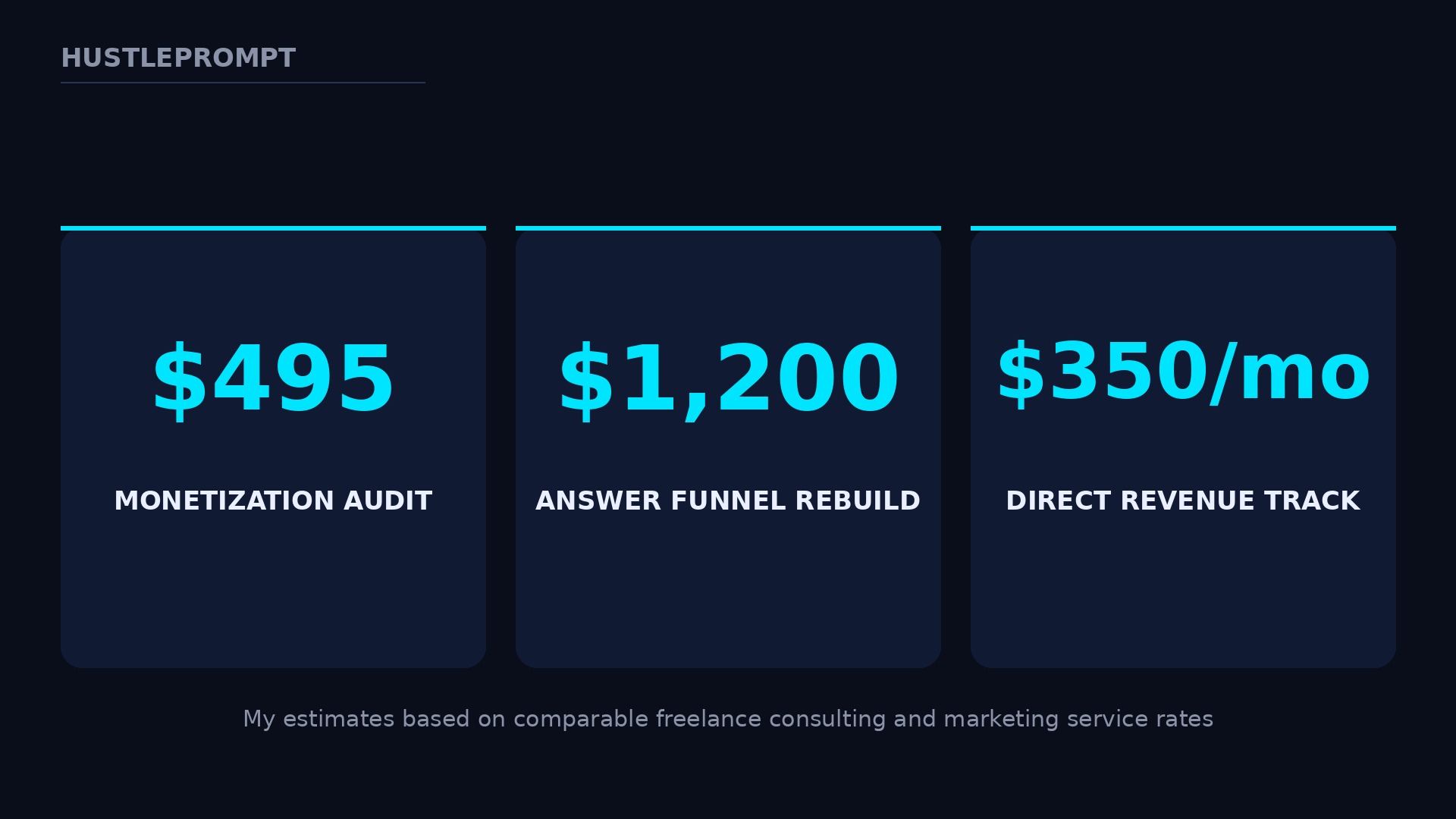
Prices below are my estimates based on comparable freelance consulting and marketing service rates, not market data:
Lead with Google’s own admission, not with your service list. “Google just told investors its AI answers earn less than its links. How much of your income still depends on the click?” Then show the client’s own numbers: the topics that get cited, the visits that never convert, and the one product that could capture the reader the answer already convinced.
What to Do This Week
- Measure revenue per topic, not traffic per page. List your top 30 pages with income attached. Any page with traffic and no income is the problem to fix first.
- Put the offer where the answer ends. If an AI answer quotes your page, the reader arrives pre-sold. The signup or product must be visible without scrolling or searching again.
- Build one owned channel this month. An email list or community you control is the only audience an AI answer cannot intercept between you and the reader.
- Pitch the audit to one creator whose traffic is falling. Falling traffic plus visible AI citations is the warmest lead in this market — they already feel the squeeze and can see the cause.
Watch: why an AI answer earns Google less than a page of links, who else pays for it, and Google’s fix — ads inside the answer. Watch on YouTube. This video is analysis, not investment advice.
Where This Is Heading
Ads inside answers become normal. Google is already scaling them across ten countries, with more coming in the fourth quarter of 2026. Expect every AI search product to follow, and expect the ad inside an answer to be priced differently from the ad beside a link.
Citation becomes a vanity metric. Being quoted by an AI answer will feel like winning, until creators notice the quote pays nothing. The metric that matters shifts from “were we cited” to “did the citation produce a subscriber or a sale.”
The winners own the customer, not the ranking. Publishers and creators with email lists, products, and communities keep the revenue when the click disappears. Those renting all their traffic from one search page do not. The $500 billion day was Google’s warning to itself — and a free warning to everyone downstream of it.
Frequently Asked Questions
What did Google admit about AI Mode monetization?
On Alphabet’s October 28, 2026 earnings call, chief business officer Philipp Schindler said the strong growth in AI Mode queries had an impact because of the lower monetization Google sees in AI Mode, compared with traditional search.
How much value did Alphabet lose, and why?
Shares fell over 11% on October 29, 2026, wiping roughly $460–500 billion in market value depending on the source. Earnings missed expectations, search growth slowed to 12%, and free cash flow was negative $9.1 billion — with AI Mode’s lower monetization named as one reason search growth slowed.
Why does an AI answer earn less than a results page?
A results page offers many ads and many links to choose from. An AI answer gives the user the information directly, so there are fewer ad slots and less reason to click anywhere — including to the publisher that supplied the information.
How are publishers and creators affected?
Citing a Reuters Institute survey, Futurism reported monthly visits to top news sites fell from over 70 million in July 2024 to just over 47 million in July 2026, as AI answers absorbed clicks. Traffic that never reaches your page cannot see your ads, offers, or signup forms.
What is Google doing about the monetization gap?
Google is scaling ads inside AI Overviews and AI Mode to more users and queries, including ten new countries and multiturn ads in follow-up queries for US users. That helps Google’s revenue; it does not restore referral clicks to publishers.
How do I make money when AI answers replace clicks?
Measure revenue per topic, rebuild cited pages so the answer leads to an email signup or product, and build an owned channel. Sell that rebuild as a service: audit first, then funnel rebuild, then monthly direct-revenue tracking.