
$215 million. That is what investors just handed a company that did not exist publicly yesterday. Warp Sciences, launched today by OpenAI’s former science chief Kevin Weil, is betting that AI and robotics can rebuild drug discovery on American soil — and the backers include the CFO of OpenAI, the CEO of Coinbase, and the co-founder of LinkedIn.
This is the biggest AI-for-science launch of the year, and it is aimed squarely at a market the U.S. government now considers a national priority.
What Is Warp Sciences
Warp Sciences is building a U.S.-based chemistry contract research organization (CRO) — a company that brings expert chemists, AI, and robotics together to make and test the molecules that biotech and pharmaceutical teams need to discover new medicines.
The pitch, from the company’s official announcement: make discovery compound. Experimental data helps train better AI, better AI powers more capable labs, and scientists gain the capacity to test more ideas. Each cycle makes the next one faster.
The Funding: Who’s Betting $215M
| Detail | Fact |
|---|---|
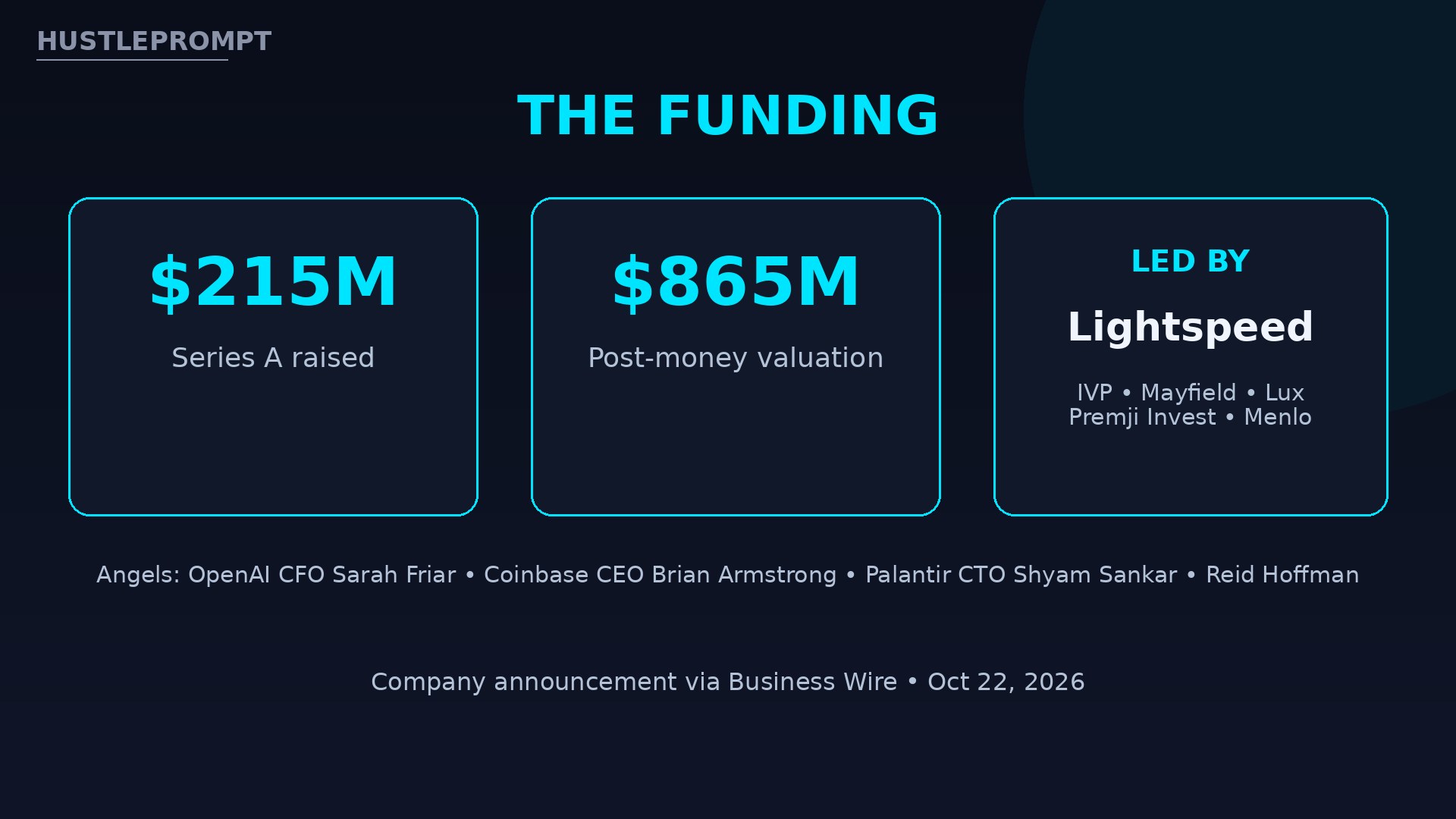
| Amount raised | $215 million Series A |
| Valuation | $865 million post-money |
| Led by | Lightspeed Venture Partners |
| Co-investors | IVP, Mayfield, Lux Capital, Premji Invest, Menlo Ventures |
| Angel investors | OpenAI CFO Sarah Friar, Coinbase CEO Brian Armstrong, Palantir CTO Shyam Sankar, LinkedIn co-founder Reid Hoffman |
When the CFO of OpenAI, the CEO of Coinbase, and the co-founder of LinkedIn all write checks on day one, it signals conviction that AI-for-science is the next serious capital cycle — not a hype trade.
The Founding Team
This is not a first-time-founder story. The founding team’s résumés span the exact intersection Warp needs:
| Founder | Background |
|---|---|
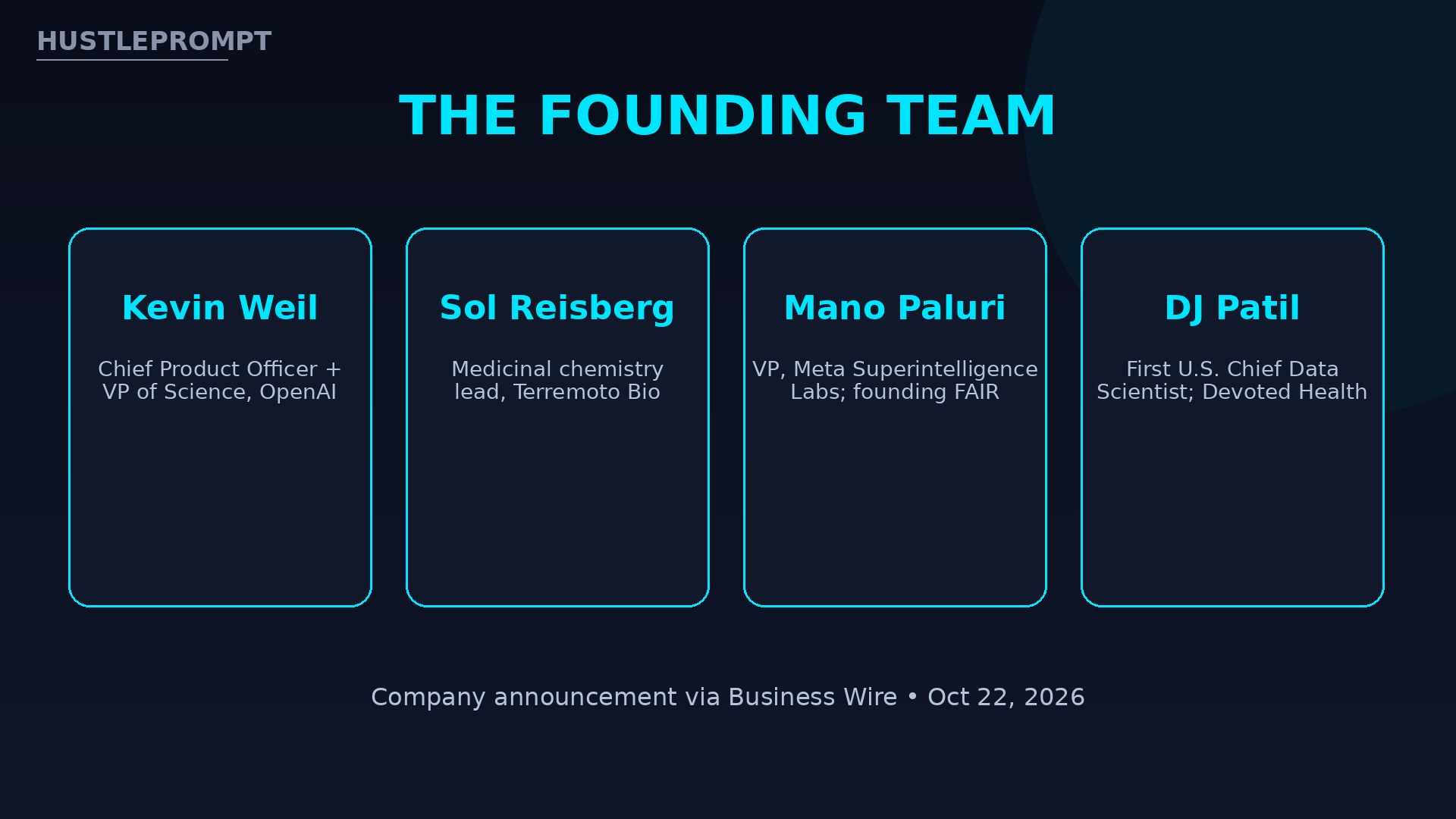
| Kevin Weil | Most recently Chief Product Officer and VP of Science at OpenAI, where he led AI-for-science efforts |
| Solomon “Sol” Reisberg | Medicinal chemistry leadership roles at Terremoto Biosciences |
| Manohar “Mano” Paluri | VP at Meta Superintelligence Labs; founding member of FAIR (Meta’s AI research lab) |
| DJ Patil | Founding executive at Devoted Health; the first U.S. Chief Data Scientist at the White House |
Early hires add robotics experience from Genesis, Skild AI, and 1X, plus scientific expertise from Genentech and Lawrence Livermore National Labs — again per the official announcement.
Why Now: The China Reshoring Bet
Warp’s timing is not accidental. The molecule-optimization work it targets — producing and testing hundreds or thousands of variants of a promising molecule to improve effectiveness and limit side effects — has traditionally been handled by Chinese contractors like WuXi AppTec. Two forces are now pulling that work back to the U.S.:
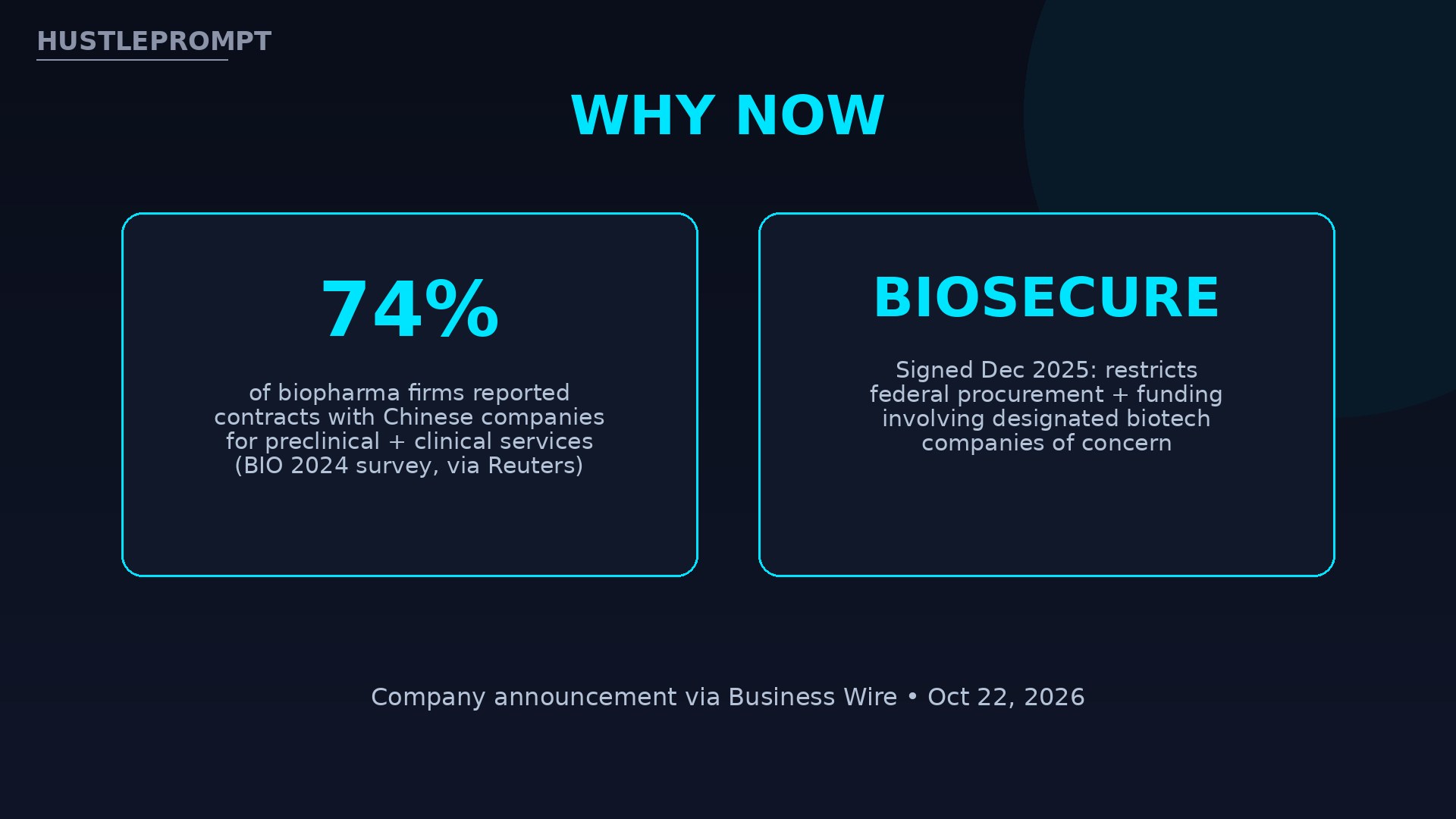
- The BIOSECURE Act, signed into law in December 2025, established a framework for restrictions on federal procurement and funding involving designated biotechnology companies of concern.
- Supply-chain reality: in a 2024 Biotechnology Innovation Organization survey, 74% of biopharma firms reported contracts with Chinese companies for preclinical and clinical services (via Reuters). That dependence is now a recognized risk.
Warp’s bet: U.S. pharma will pay a premium for a domestic, AI-accelerated alternative — and the government tailwind makes the timing right.
How the AI Lab Actually Works
Here is the part that separates Warp from a traditional CRO. Instead of chemists working in isolation, Warp plans to capture data from its own chemists as they work — using wearable cameras, pressure-sensing gloves, and other devices — with the ultimate goal of building a fully automated laboratory.
Chemists work
Expert chemists make and test molecules, wearing cameras and sensor gloves
Data captured
Every motion and result becomes training data for AI models
AI improves
Models learn from real experimental outcomes, not just simulations
Labs automate
Robotics take over more of the make-and-test loop
Discovery compounds
Faster answers, more ideas tested, better medicines found sooner
How to Play the AI-for-Science Money Trend
You do not need $215M to ride this wave. Practical angles:
- Skills: computational chemistry + machine learning is now one of the highest-leverage skill stacks in biotech. Courses in cheminformatics and ML for drug discovery are cheap; the talent shortage is real.
- Services: if you run an AI consultancy, pharma CROs are buying AI tooling aggressively — data pipelines, lab automation software, and model evaluation are all billable right now.
- Investing: watch the AI-for-science startup cohort. With OpenAI, Coinbase, and Palantir leadership personally backing Warp, expect a wave of copycat raises — and public-market biotech-AI names to reprice.
- Careers: Warp is hiring robotics and scientific talent now. Early employees at a $865M-valued company with this cap table are positioned for serious upside.
Frequently Asked Questions
What is Warp Sciences?
Warp Sciences is a U.S.-based chemistry contract research organization (CRO) launched on October 22, 2026, that combines expert chemists, AI, and robotics to make and test molecules for biotech and pharmaceutical drug discovery.
Who founded Warp Sciences?
Kevin Weil, most recently Chief Product Officer and VP of Science at OpenAI, co-founded Warp Sciences with Solomon ‘Sol’ Reisberg (Terremoto Biosciences), Manohar ‘Mano’ Paluri (Meta Superintelligence Labs, founding FAIR member), and DJ Patil (first U.S. Chief Data Scientist).
How much did Warp Sciences raise?
Warp Sciences raised $215 million in Series A funding led by Lightspeed Venture Partners, at an $865 million post-money valuation.
What does Warp Sciences actually do?
It automates a key step of drug development: producing and testing hundreds or thousands of variants of a promising molecule to improve effectiveness and limit side effects — work traditionally outsourced to Chinese contractors.
Why is Warp Sciences based in the U.S.?
74% of biopharma firms reported contracts with Chinese companies for preclinical and clinical services (BIO 2024 survey), and the BIOSECURE Act (signed December 2025) restricts federal dealings with designated biotech companies of concern — creating demand for domestic alternatives.
Who invested in Warp Sciences?
Lightspeed led the round with IVP, Mayfield, Lux Capital, Premji Invest, and Menlo Ventures. Angels include OpenAI CFO Sarah Friar, Coinbase CEO Brian Armstrong, Palantir CTO Shyam Sankar, and LinkedIn co-founder Reid Hoffman.
How does Warp’s AI lab work?
Warp captures data from its chemists via wearable cameras and pressure-sensing gloves, uses that experimental data to train AI models, and deploys robotics toward a fully automated laboratory — a loop where better data produces better AI and better labs.