
Manufacturing has a math problem: robots are smarter than ever, but buying and running them still costs a fortune upfront. Formic just raised $50 million to kill that barrier — renting robots to factories for one flat monthly rate, no capital outlay required.
The Chicago-based company announced the raise on October 22, 2026, in an official press release: a Series B led by Mercato Partners, with Light Ray Ventures, Lightscape Partners, Citi, and other investors, plus debt financing from S2G Investments.
The Raise, by the Numbers
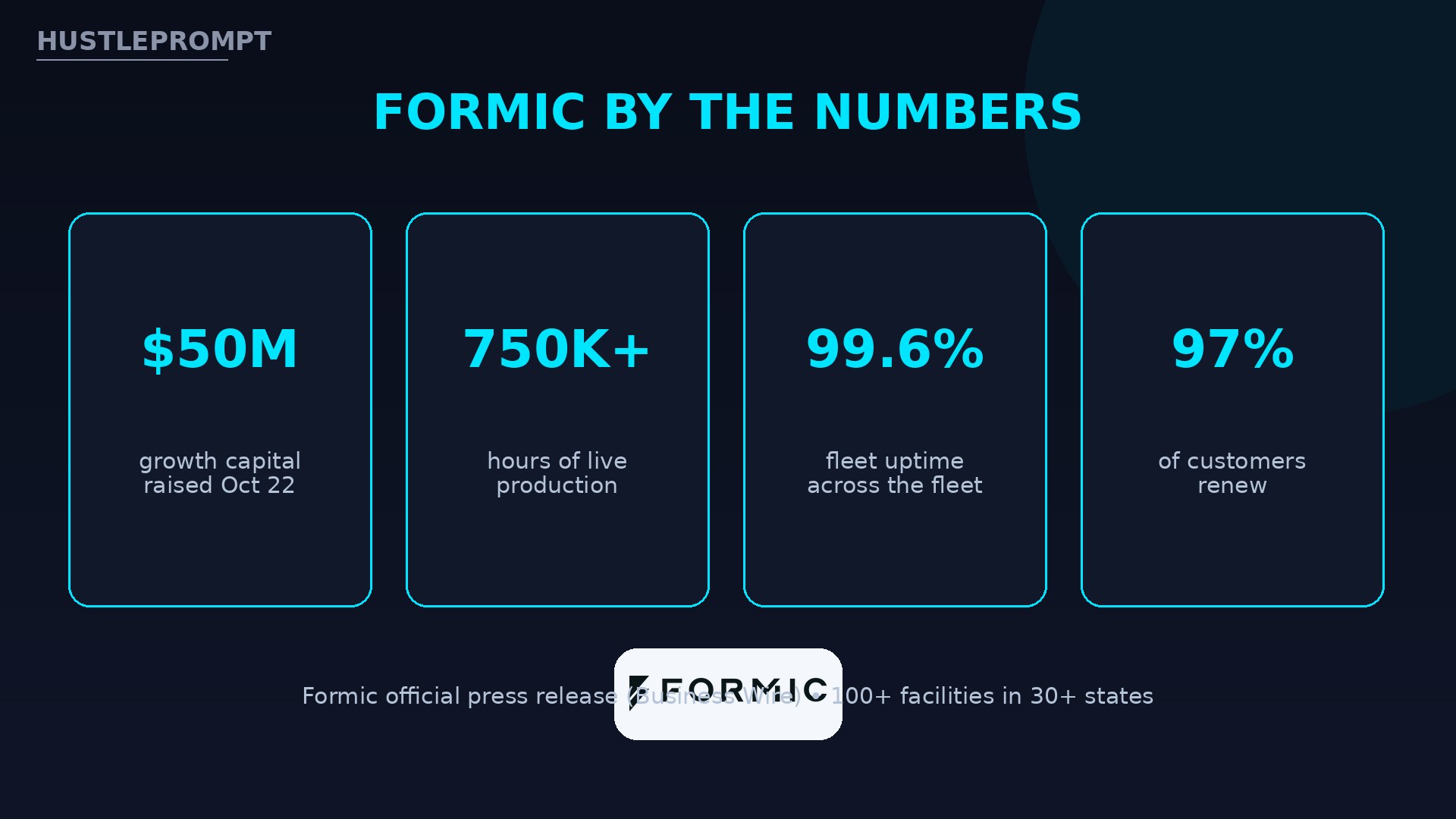
Formic operates hundreds of robots across more than 100 facilities in over 30 states. The fleet has logged five-plus years of production experience, and Formic says it now deploys robots into production roughly three times faster than it did a year ago.
| Round detail | What Formic says |
|---|---|
| Total raised | $50M in growth capital |
| Lead investor | Mercato Partners (Series B); Ryan Sanders joins Formic’s board |
| Other investors | Light Ray Ventures, Lightscape Partners, Citi, plus other new and existing investors |
| Debt financing | S2G Investments |
| Use of funds | Shift from task-specific automation to general-purpose robotics; expand into metal fabrication; deepen aerospace, space, defense, medical, and energy work |
What Formic Actually Sells
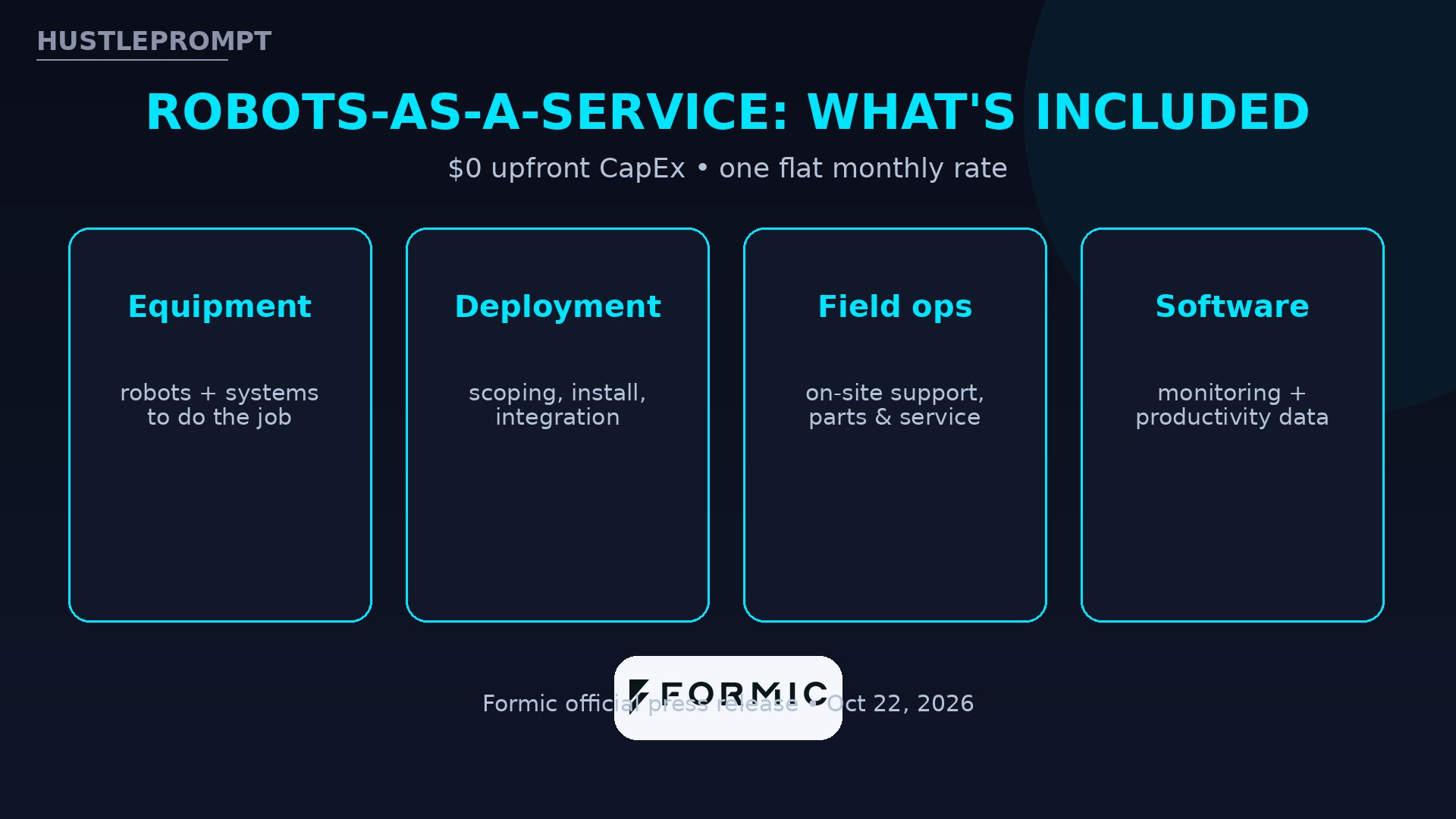
Formic calls itself “the commercialization platform for physical AI.” The pitch is simple: robots-as-a-service. For one flat monthly rate, Formic provides the equipment, the deployment software, the field operations, the maintenance, the financing, and the performance monitoring. The factory pays nothing upfront.
Applications already in production include palletizing, case packing, machine tending, kitting, and assist work — across food and beverage, consumer packaged goods, chemicals, aerospace, defense, packaging, and the broader U.S. industrial base.
“The robotics industry has made extraordinary progress in what robots can do. But building a capable robot and making it productive in a real factory are two very different challenges. We’ve spent five years building the commercialization platform that bridges that gap.”
Why Now: From Task-Specific to General-Purpose
The funding has a specific target: moving Formic’s platform from task-specific automation to general-purpose robotics. The logic is a data flywheel — and it’s worth understanding, because it explains why investors keep writing checks:
Deploy robots
Hundreds of robots across 100+ real factory floors
Collect data
Tasks, conditions, performance, corrective actions from live production
Improve fleet
Feedback informs robot improvements and future deployments
Partner up
Physical Intelligence foundation models + Formic production data for manufacturing
Generalize
Same platform, more robot types, more complex tasks, more industries
Formic is already advancing this with Physical Intelligence, combining its robotic foundation models with Formic’s production data and operational expertise. It assembles and tests robots at a new facility in Bolingbrook, Illinois, with R&D in Oakland, California.
The Money Playbook: Three Ways to Ride This
- If you run a factory or warehouse: the RaaS pitch is zero-CapEx automation with 24/7 service and performance guarantees. With 97% of Formic customers renewing, the model has survived contact with real production lines. Get quotes from RaaS providers before budgeting a robot purchase.
- If you sell B2B services: “physical AI” integrators are the new systems integrators. Deployment scoping, safety compliance, and workflow redesign around rented robots are billable — and the bottleneck, per Mercato’s Ryan Sanders, is “deploying, servicing, and financing robots in real plants,” not the robots themselves.
- If you invest or job-hunt: reshoring plus the U.S. industrial base is where the money is flowing — Formic explicitly names metal fabrication, aerospace, space, defense, medical, and energy as expansion targets. Skilled robotics technicians and automation salespeople are the scarce resource in this story.
“As robots get smarter, the bottleneck moves from the lab to the loading dock: deploying, servicing and financing robots in real plants. Formic has built all three, and its customers stay and add robots. That’s the operating record you want underneath the next generation of physical AI.”
Frequently Asked Questions
What is Formic?
Formic is a Chicago-based physical AI company founded in 2020. It operates a robots-as-a-service platform for American manufacturers: factories get automation for one flat monthly rate with no upfront capital investment, and Formic handles deployment, maintenance, and performance.
How much did Formic raise?
Formic raised $50 million in growth capital on October 22, 2026, including a Series B round led by Mercato Partners with participation from Light Ray Ventures, Lightscape Partners, Citi, and others, plus debt financing from S2G Investments.
What are Formic’s operating numbers?
Per its official press release: more than 750,000 hours of live production, hundreds of robots across 100+ facilities in 30+ states, 99.6% fleet uptime, and a 97% customer renewal rate. It deploys robots about three times faster than a year ago.
What does robots-as-a-service include?
Equipment and systems to perform the job, deployment software, field operations, service and parts, financing, and productivity/performance monitoring — all bundled into one recurring monthly payment, with no upfront capital from the customer.
What will Formic do with the $50M?
Expand from task-specific automation into general-purpose robotics, enter new applications like metal fabrication, and deepen work in aerospace, space, defense, medical, energy, and the broader U.S. industrial base.
Who is behind Formic?
Founder and CEO Saman Farid leads the company. With this round, Ryan Sanders, Managing Director at Mercato Partners, joins Formic’s board of directors. Formic is also working with Physical Intelligence to adapt robotic foundation models for manufacturing.