
Your ChatGPT subscription just learned to multitask. On October 16, 2026, OpenAI updated GPT-6 Pro in ChatGPT so one request can be split across GPT-6 Pro parallel agents — several agents working on different parts of the same task at the same time, each one’s progress visible in the conversation.
For freelancers selling research or writing by the project, this changes what one Pro seat produces per hour. But OpenAI published no latency figures, no agent limit, and no cost detail. Here is what is real, what is unknown, and how to profit.
What OpenAI announced on October 16
Per OpenAI’s October 16 release notes, GPT-6 Pro in the Chat tab runs multiple agents on different parts of a task in parallel. Follow each agent’s progress live; open finished tasks to inspect their work.
It also brings faster responses and improved plugin and tool use, rolling out gradually to eligible Pro users. Managed workspaces depend on settings and eligibility; no schedule published.
Naming note: the notes say “GPT-6 Pro” (powered by GPT-6 Astra); OpenAI’s X post called it “GPT-6 Astra Pro.” Same upgrade.
How parallel agents actually work
Think small team, not one assistant: GPT-6 Pro divides one task into lanes, assigns an agent to each, and the lanes run simultaneously.
What you see in the Chat tab
The key design choice is visibility. Agent work is usually silent — you can’t tell if it’s progressing or stuck. Per-agent streams turn a black box into something you can interrupt.
How a parallel task runs
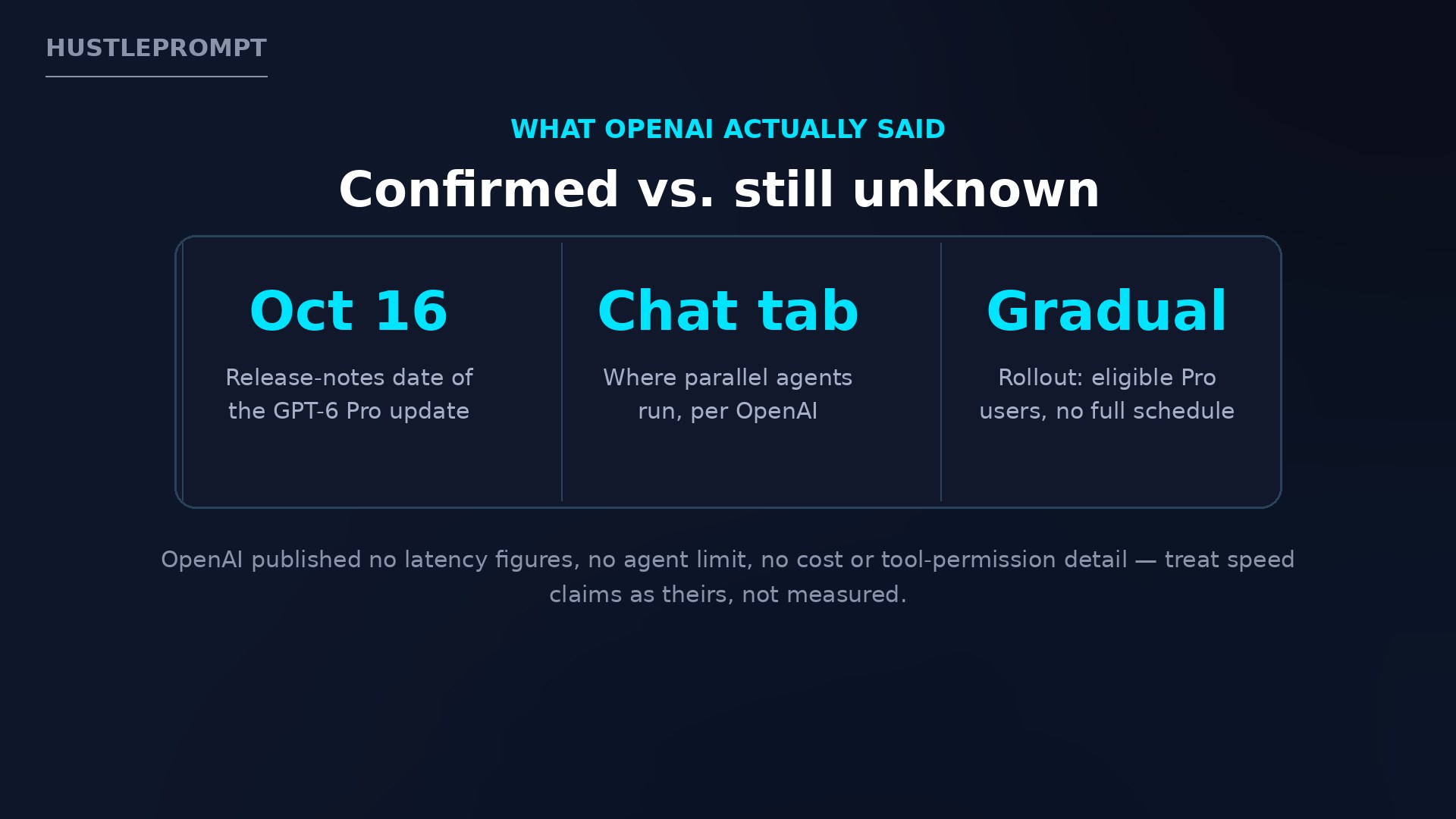
What OpenAI confirmed — and what it didn’t
Here is the release split into confirmed facts and open questions, based on OpenAI’s own notes as quoted across October 17–18 coverage:
The last gap matters most: several agents at once multiplies whatever each one can reach. Until permissions are documented, stick to read-only-style tasks and keep a human approving anything that sends, spends, or publishes.
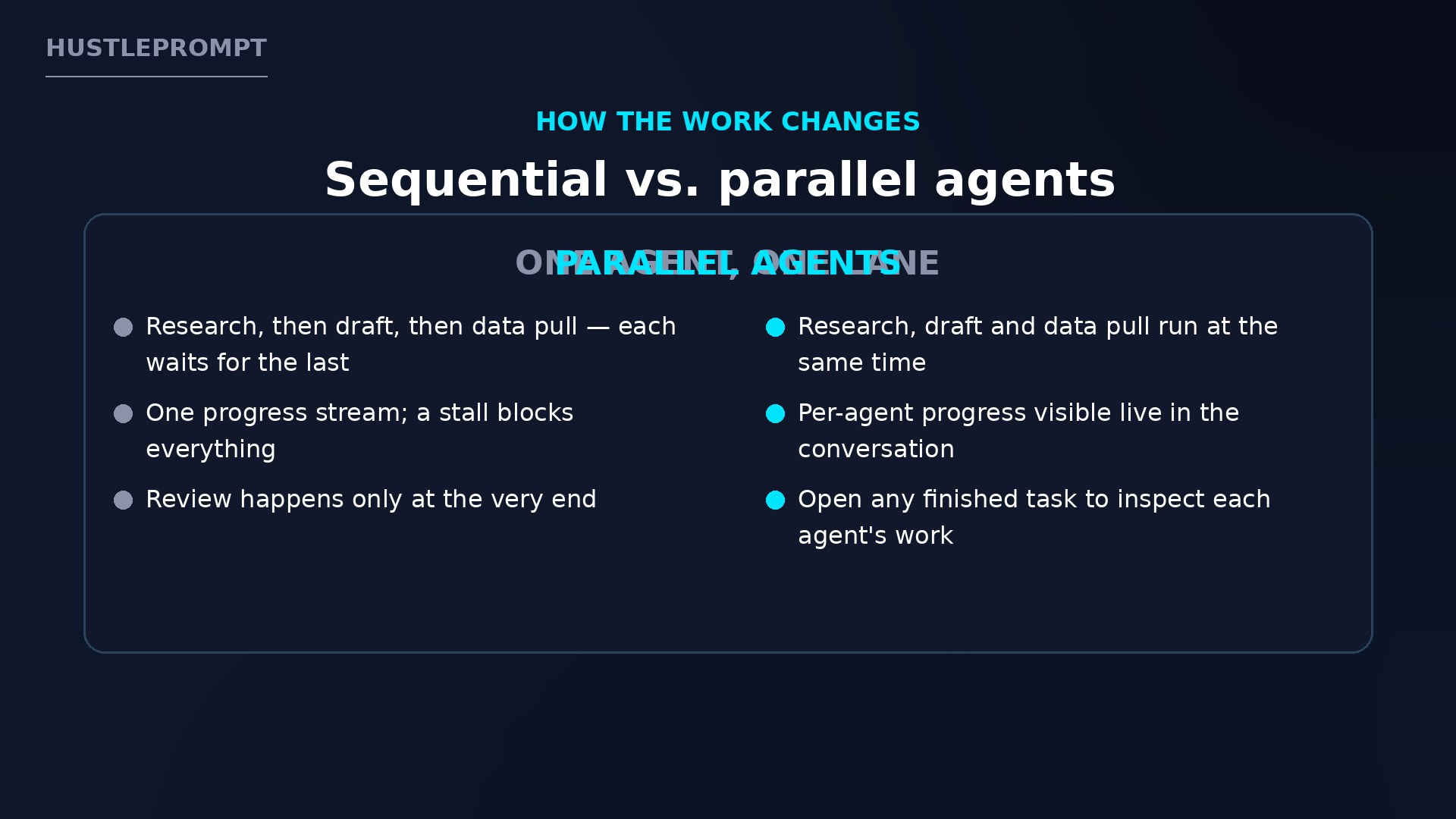
Sequential vs. parallel: why it matters for throughput
Before this update, a complex task ran like a relay race: research, then draft, then data pull — each step waiting for the last, one stall blocking everything.
Parallel agents change that shape. Independent lanes overlap in time, so a three-part task finishes closer to its longest lane than to the sum of all three.
The one rule that decides whether parallel helps or hurts is independence:
- Parallel wins: competitor research, first-draft writing, and pricing data collection for the same client report.
- Parallel loses: anything where lane B needs lane A’s answer, like drafting conclusions before the research lands.
- The test: if you can describe each lane’s inputs without referencing another lane’s outputs, split them. If not, use one agent.
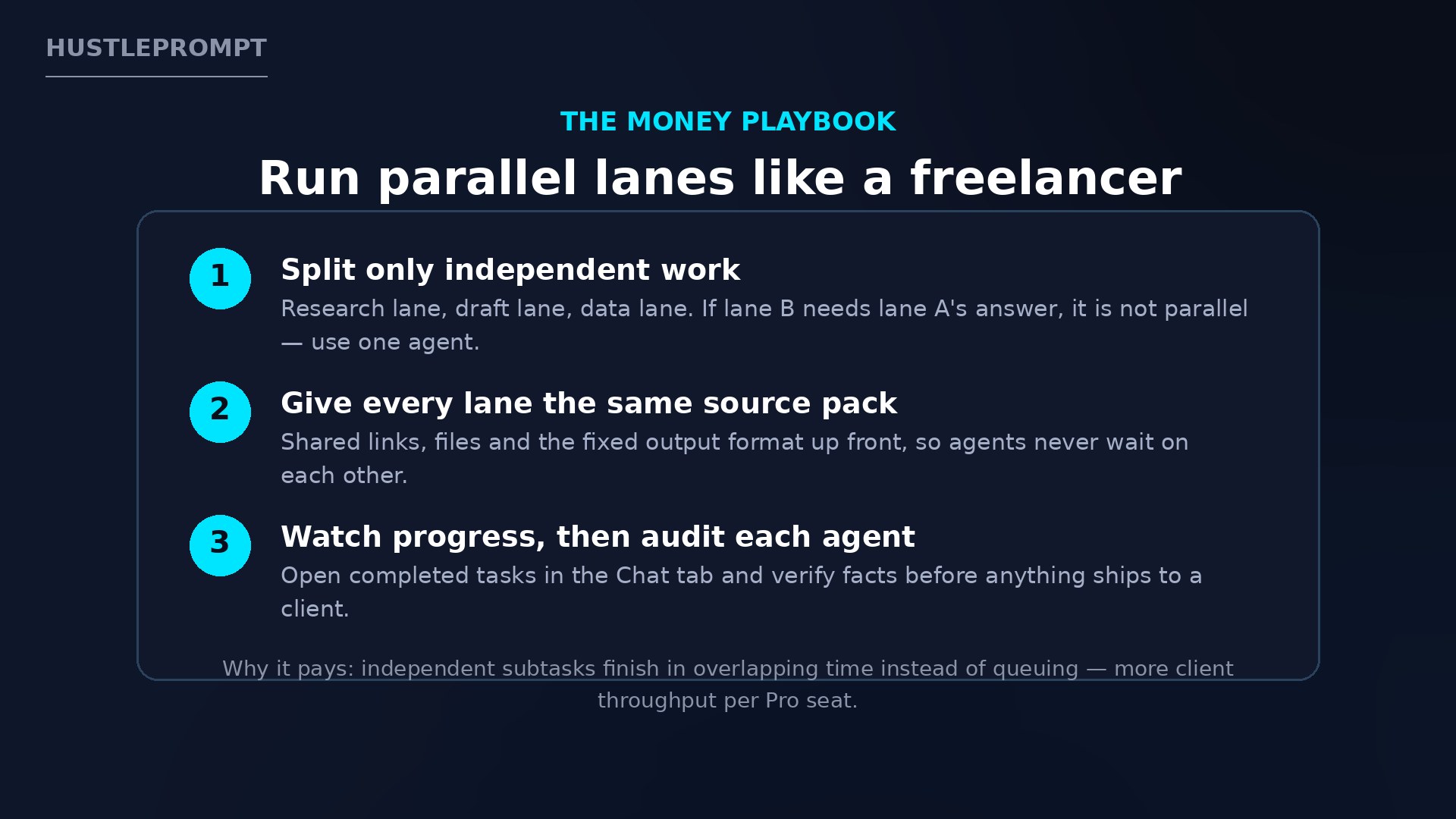
How to profit: the freelancer’s parallel playbook
Turn parallel agents into billable throughput with this workflow:
- Split only independent work. For a client report: a research lane, a draft lane, a data lane — launched in one task.
- Give every lane the same source pack. Links, files, audience, tone, output format up front — no lane stalls waiting on another.
- Watch, then audit each agent. Open finished tasks; verify facts, numbers, quotes before anything ships. Parallel output still needs a human editor.
- Price on throughput, not hours. Three overlapping lanes turn a two-hour research package into a 40-minute review. Keep the fee; pocket the margin.
Two or three lanes is the sweet spot — more lanes add coordination overhead while the parallelism dividend shrinks.
FAQ
What are GPT-6 Pro parallel agents?
AI agents in ChatGPT’s Chat tab that split one task into simultaneous lanes, announced October 16, 2026. Watch each lane live; open finished tasks to review.
Who gets the parallel agents update?
Eligible Pro users, rolling out gradually. Managed workspaces depend on settings and eligibility — no schedule published.
Is GPT-6 Pro faster now?
OpenAI claims faster responses but published no figures. Treat the speed gain as the company’s claim until independent measurements exist.
Does running parallel agents cost extra?
OpenAI has not said how parallel runs count against plan allowances. Watch your usage until the accounting is documented.
When should I NOT use parallel agents?
When subtasks depend on each other. If lane B needs lane A’s answer, use one agent — splitting just creates agents waiting on agents.
Is it safe to let parallel agents use my tools and plugins?
No tool-permission detail published. Until there is, prefer read-only tasks and keep human approval on anything that sends, spends, or publishes.
Sources
- OpenAI Help Center: ChatGPT release notes — official release notes; the October 16, 2026 entry documents parallel agents, faster responses, improved tool use, and the gradual rollout to eligible Pro users.