
MiniMax just gave away the model it spent weeks hiding. The weights for MiniMax M3.1 Flash open weights landed on Hugging Face on October 23, 2026, turning a fast, cheap API model into something you can download, inspect, and run yourself.
That changes the math: you can now weigh renting tokens against running the model, on published price, context, and effort settings.
What MiniMax M3.1 Flash Is
MiniMax M3.1 Flash is a multimodal model for programming and agent tasks. It accepts text, image, and video input and returns text.
Its context window is 1,000,000 tokens — how much text, code, and conversation it holds in one session. That covers a large codebase or a multi-step agent run without constant trimming.
MiniMax launched it on its API on October 19, 2026. The weights followed on October 23, as promised.
The Price, in One Table
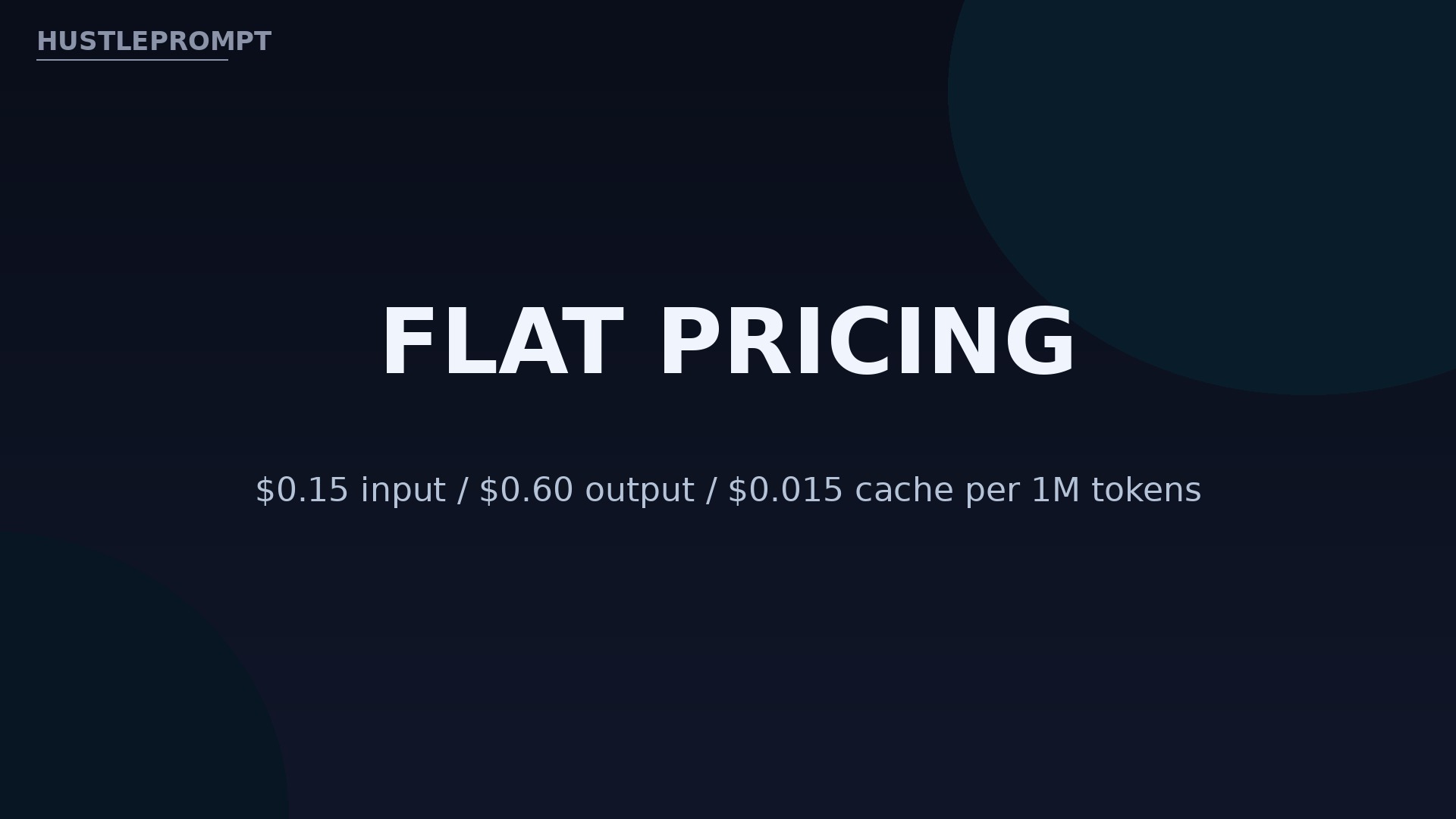
MiniMax lists flat pricing — one rate at every prompt length, with no long-context surcharge:
| Item | MiniMax M3.1 Flash | MiniMax M3 (up to 512K input) |
|---|---|---|
| Input, per 1M tokens | $0.15 | $0.30 |
| Output, per 1M tokens | $0.60 | $1.20 |
| Cache reads, per 1M tokens | $0.015 | $0.06 |
| Context window | 1,000,000 tokens | 1,000,000 tokens |
Source: MiniMax launch announcement and pricing, via MiniMax — “MiniMax M3.1 Flash: Redefining Agent Performance and Cost” (October 19, 2026). M3 rates above 512K input tokens double under MiniMax’s M3 pricing; M3.1 Flash has no such tier.
Example: 100,000 input tokens plus 20,000 output tokens cost $0.027 on M3.1 Flash, versus $0.054 at M3’s standard rates. That is arithmetic from published rates.
“MiniMax M3.1 Flash delivers a generational leap in agentic tasks, coding, Computer Use and cybersecurity, while making online inference nearly three times faster and reducing usage costs by 70%.”
— MiniMax launch announcement, October 19, 2026 — vendor claims, not independent test results
The Five Effort Levels
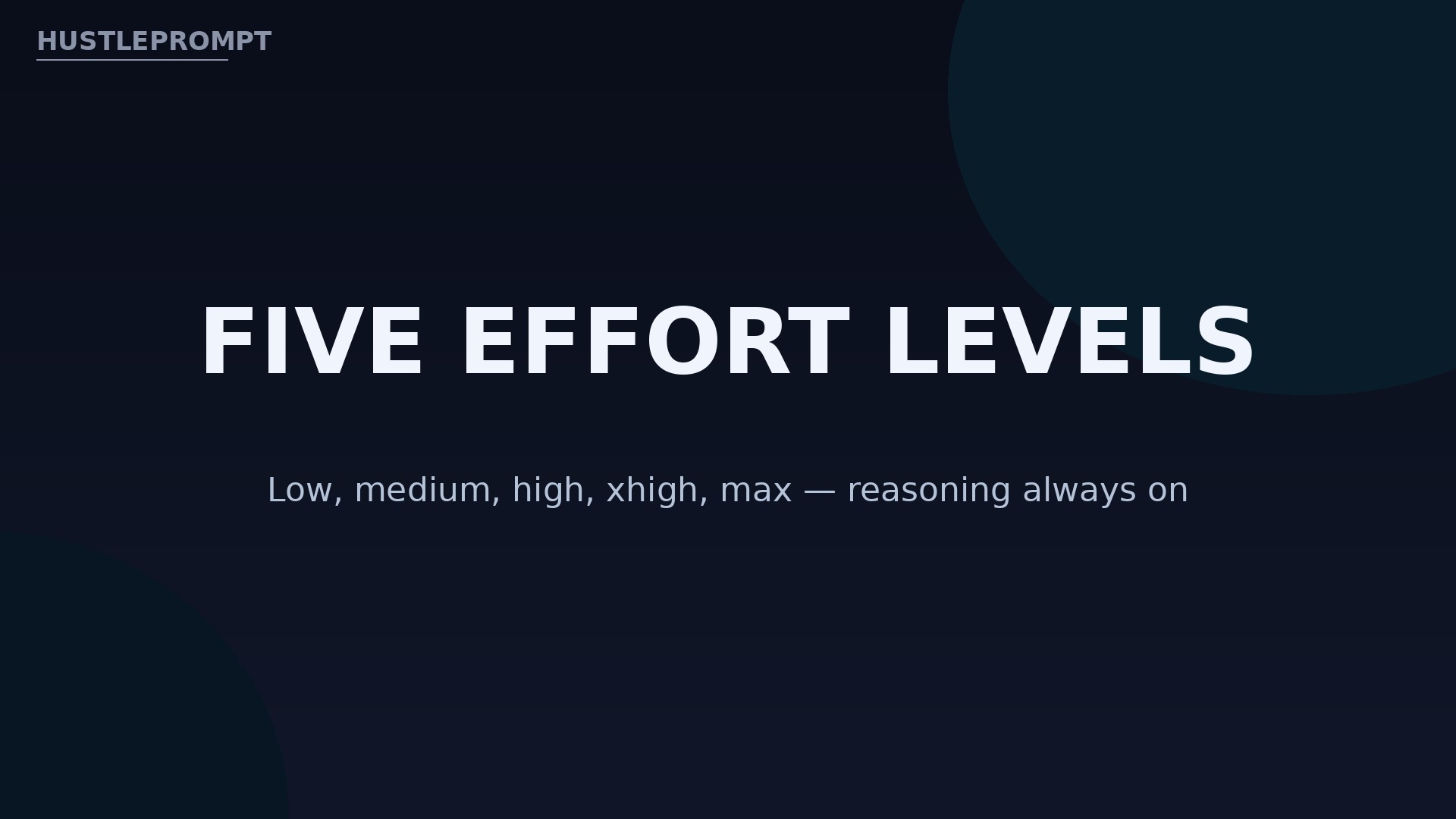
Reasoning is always on. You cannot switch it off, but you choose its depth:
- low: fastest, cheapest, best for simple or repetitive tasks.
- medium: a balance for everyday coding and triage work.
- high: deeper reasoning for harder bugs and multi-step plans.
- xhigh: very deep reasoning for complex agent runs.
- max: the default, for the hardest tasks where accuracy matters most.
Lower effort means fewer reasoning tokens, billed as output. You pick a reasoning budget per task, not just a model.
Picking the right effort level
Low / Medium
Triage, formatting, simple fixes.
High
Feature work and code review.
Xhigh / Max
Hard debugging and long-horizon agents.
What the Open Weights Change
Weights are the numbers learned in training. Publishing them lets anyone with suitable hardware run the model without MiniMax’s servers.
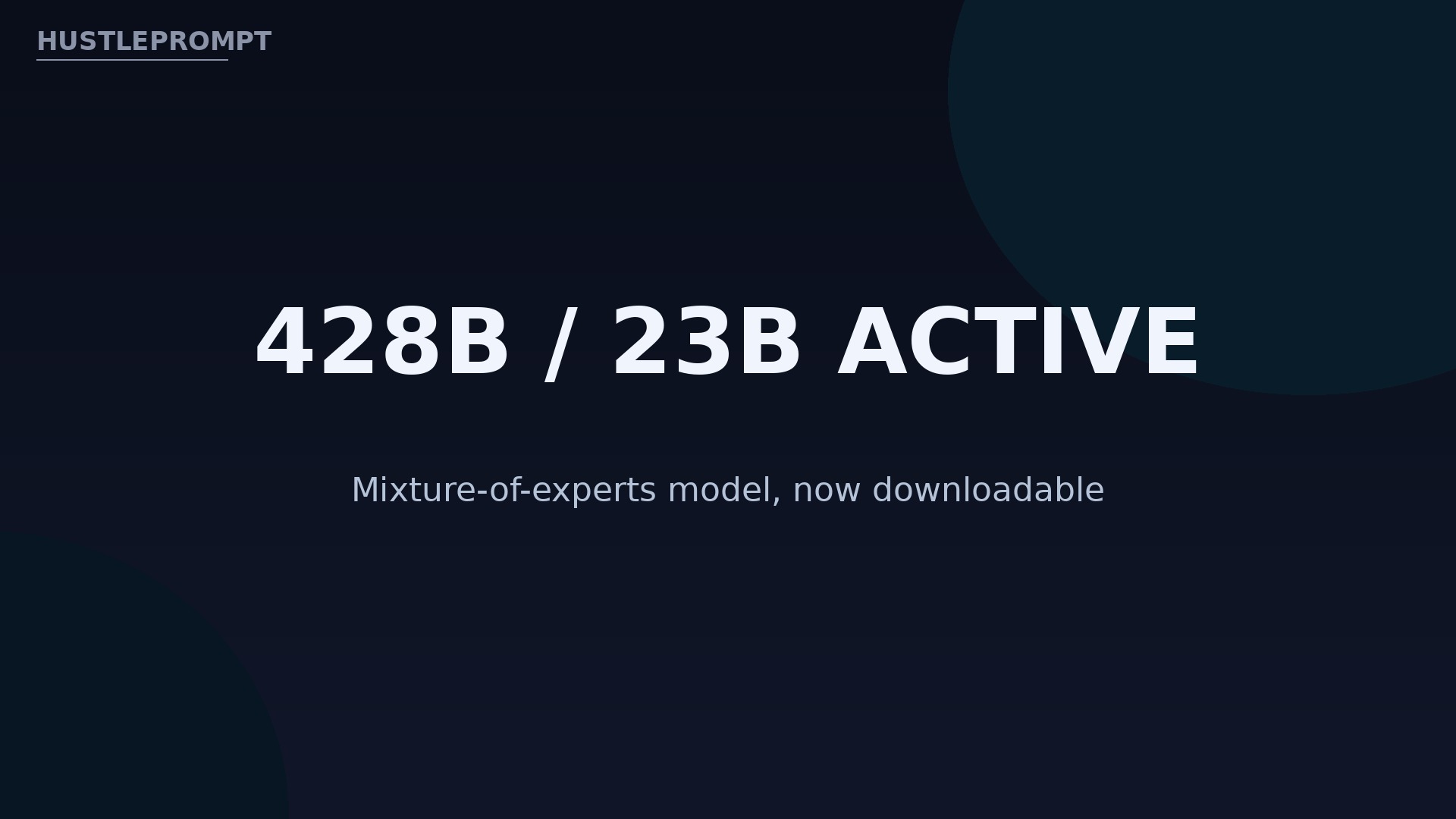
It is a mixture-of-experts design with 428 billion total parameters and about 23 billion active per token. Only a fraction fires per token, so it still runs fast.
The weights use the MiniMax Community License: free for non-commercial use, with attribution and, above $20 million in annual revenue, written authorization for commercial products. Read the license before shipping.
For most freelancers, the API remains practical. The weights matter when a client needs data in-house.
MiniMax-Reported Benchmarks
MiniMax reports these scores in its own comparison table. They are vendor numbers, not independent tests:
| Benchmark (MiniMax-reported) | M3.1 Flash score |
|---|---|
| Automation-Bench v1.0.6 | 62.2 |
| DeepSWE v1.1 | 73.7 |
| Terminal Bench 4.0 | 38.1 |
| BabyVision (with tools) | 91.0 |
Source: MiniMax comparison table via MiniMax.
The read is mixed: strong on agentic office work, mid-pack on hard terminal coding. Test it on your client’s tasks before promising results.
How to Profit With M3.1 Flash
A concrete service you can sell this week:
- Pick one repeatable job: inbox triage, spreadsheet cleanup, or bug triage for one client type.
- Build on the API first: use
MiniMax-M3.1-Flashat medium effort and log tokens per job. - Price by completed job: quote a flat fee per task and keep token cost as margin. Most small jobs cost cents.
- Tune the effort dial: drop simple steps to low, keep hard steps at high or max, and re-measure.
- Offer the self-hosted upgrade: for privacy-sensitive clients, quote self-hosting separately.
- Report real numbers: jobs completed, errors, and cost per job. That turns a trial into a retainer.
It is also available via the M Plan subscription and MiniMax Code. Start on the API, where costs are measurable.
What to Watch Out For
First, reasoning tokens count as output, so max effort on every call eats margin. Second, the weights are roughly 250 GB, so self-hosting is a server project, not a laptop project.
Third, this is the weights follow-up to the October 19 API launch, covered separately: launch first, downloadable weights four days later.
Frequently Asked Questions
What is MiniMax M3.1 Flash?
A multimodal model for programming and agent tasks, with a 1,000,000-token context window.
How much does the API cost?
$0.15 per million input tokens, $0.60 per million output tokens, and $0.015 per million cache reads.
What are the effort levels?
Low, medium, high, xhigh, and max, with max as the default. Reasoning cannot be switched off.
Where are the weights?
On Hugging Face since October 23, 2026, as promised in the October 19 launch announcement.
How big is the model?
428 billion total parameters, with about 23 billion active per token.
Can I use it in MiniMax Code or on a subscription?
Yes, via the API, the M Plan subscription, and MiniMax Code.
Should I self-host or use the API?
Use the API first. Self-host only when a client needs data in-house or at scale.
Keep Reading
Official source: MiniMax — “MiniMax M3.1 Flash” (October 19, 2026), which announced the API, pricing, effort levels, and the October 23 weights date.