
Salesforce just bought its way into the phone call. The Salesforce Cresta voice AI deal, announced November 2, puts AI voice agents that resolve complex customer calls end to end inside Service Cloud — the system where millions of customer records already live.
The price was not disclosed. But the strategy is unmistakable: Salesforce wants the conversation itself, not just the ticket that comes after it.
What Salesforce actually announced
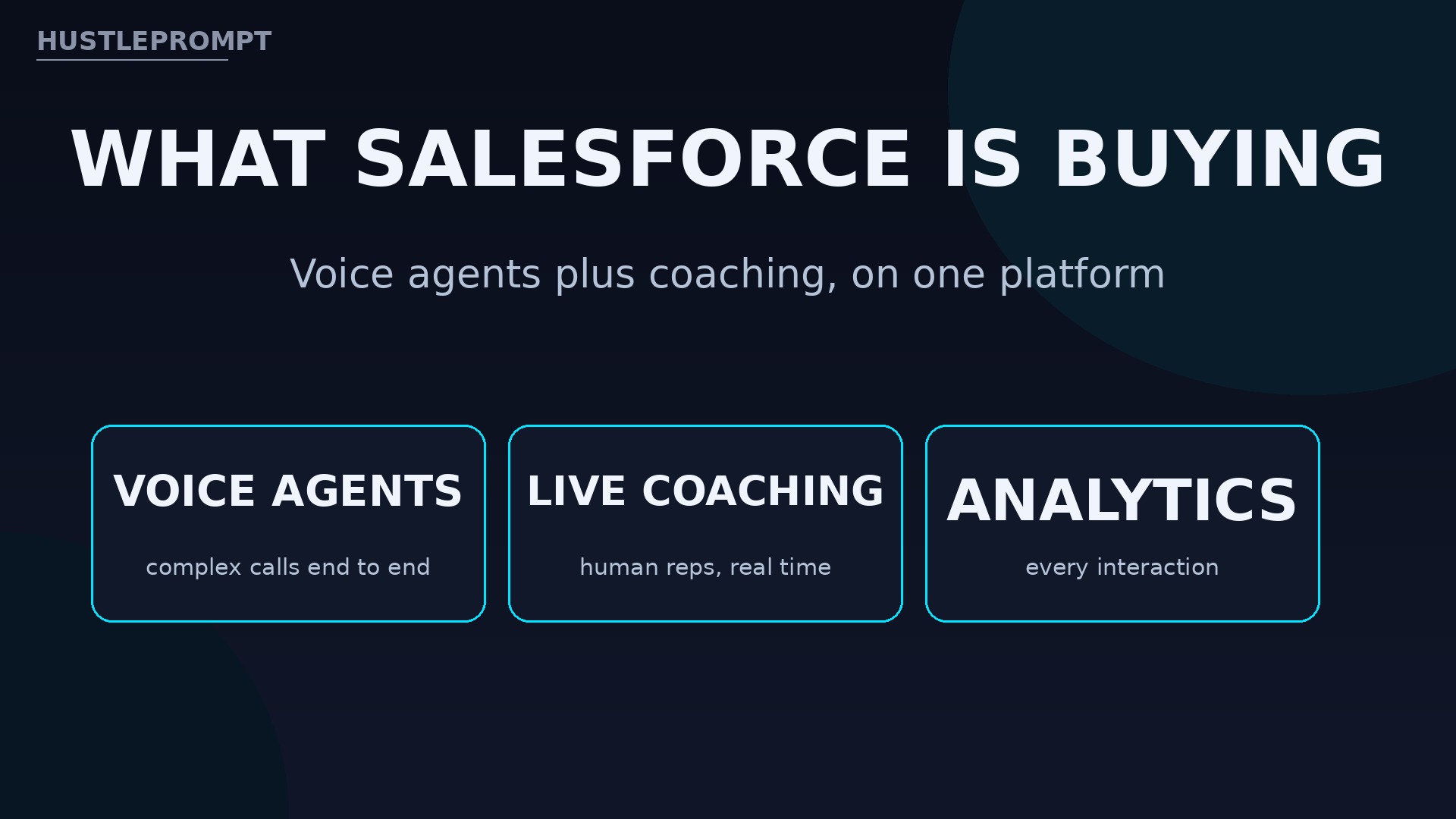
Salesforce announced on November 2, 2026 that it has signed a definitive agreement to acquire Cresta, the voice-first operating system for customer experience. Cresta’s voice agents resolve complex calls end to end, guide human representatives in real time, and analyze every interaction.
Salesforce names Marriott, Comcast, and Alaska Airlines among the brands using Cresta’s technology at enterprise scale. Its voice agents hold natural, real-time conversations and handle interruptions — the two things that make phone automation feel human or fall apart.
Kishan Chetan, EVP and GM of Agentforce and Service Cloud at Salesforce, said: “Voice is where service is hardest to get right, and where it matters most to customers.”
Cresta CEO Ping Wu said the combination will embed “real-time conversation intelligence and agentic experiences directly into Salesforce’s first-class customer service Platform.”
One commitment matters: after the close, Cresta will keep supporting the leading contact-center and telephony platforms its customers use today.
The deal at a glance
| Deal fact | Detail | Status |
|---|---|---|
| Announced | November 2, 2026 | Official |
| Structure | Definitive agreement to acquire Cresta | Official |
| Price | Not disclosed by Salesforce; $2.7 billion reported by The Information | Reported, not official |
| Expected close | First quarter of fiscal year 2028 (February–April 2027) | Official, subject to approvals |
| Customers named | Marriott, Comcast, Alaska Airlines | Official |
| Reported revenue | About $100 million annual recurring revenue | Reported, not official |
Source: Salesforce’s official Cresta acquisition announcement, with reported figures labelled as reported.
Customer phones in
Resolves it, or coaches a human
Conversation joins the customer record
Resolution, retention, revenue
The deal is signed, not closed. Nothing in Service Cloud changes until approvals land and the transaction completes.
The reported $2.7 billion price — what it is and isn’t
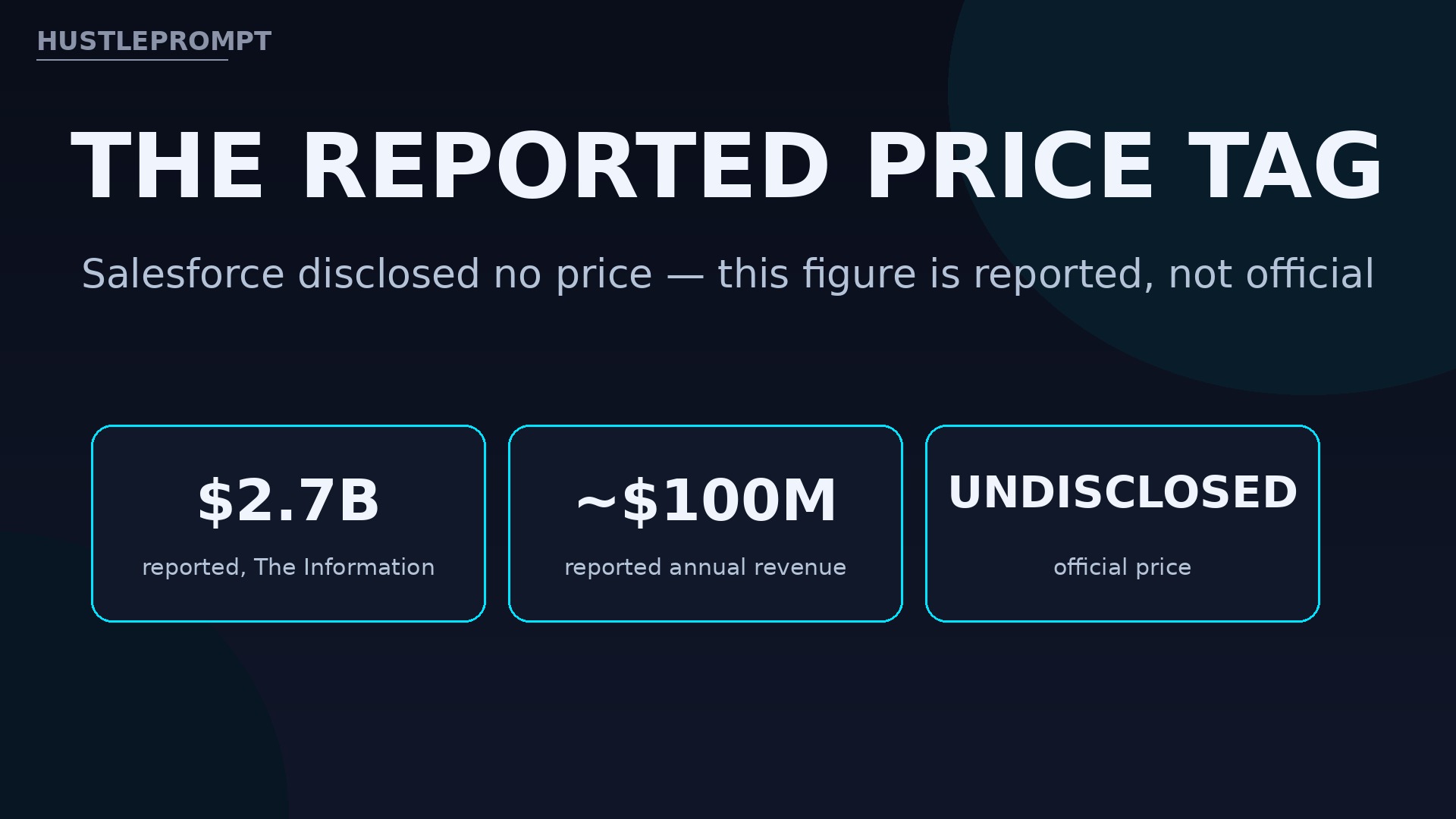
Salesforce disclosed no financial terms. The Information, cited by multiple outlets, puts the price at approximately $2.7 billion. That figure is well-reported, not company-confirmed, and no filing cited in coverage mentions Cresta.
For context, reporting puts Cresta at roughly $100 million in annual recurring revenue, and its last public valuation at $1.6 billion in 2022, when Tiger Global led an $80 million round. If the $2.7 billion figure holds, Salesforce is paying about 27 times that reported revenue.
Why voice, and why now
Voice is the hardest service channel to automate well. A chat agent can pause. A phone agent cannot — interruptions, accents, and angry customers all arrive at once.
That is why Chetan’s line matters. Salesforce is buying the channel where customer relationships are won or lost in real time.
Cresta also fits a buying spree. Salesforce closed its purchase of Fin, formerly Intercom, on September 10 for about $3.6 billion, agreed to buy Braze in October, and has signed eight definitive acquisition agreements since June according to coverage of its acquisitions page.
The pattern is a platform play: own the customer conversation end to end — messaging with Fin, marketing with Braze, and now voice with Cresta — and connect all of it to the CRM record.
How to profit from the Salesforce-Cresta deal
The deal will not change Service Cloud tomorrow. It closes, on Salesforce’s timeline, in February–April 2027. That gap is the opportunity:
- Sell voice-agent readiness audits now. Map a client’s top 20 call reasons, measure containment rates, and document where a voice agent could resolve calls without a human. That audit becomes the integration brief when Cresta lands in Service Cloud.
- Build Service Cloud + voice integration skills. The valuable work after close is connecting conversations to customer histories, orders, and next actions — not just answering the phone. Consultants who can wire voice to CRM outcomes will be hired first.
- Offer call QA and coaching as a service. Cresta’s platform coaches human reps in real time and analyzes every interaction. Small and mid-size firms cannot staff that analysis themselves — sell it as a monthly service.
- Do not promise Cresta features before close. The agreement is subject to regulatory approvals. Sell preparation, audits, and pilot designs — not a product that has not yet changed hands.
- Target the named-customer playbook. Marriott, Comcast, and Alaska Airlines run high-volume, high-stakes calls. If your clients look like that — travel, telecom, hospitality — they are the first buyers for voice AI, with or without Salesforce.
Salesforce just declared that the phone call is an AI product. Businesses that prepare their call data and CRM records before the close will sell into the rollout.
Frequently asked questions
Did Salesforce buy Cresta?
It signed a definitive agreement to acquire Cresta on November 2, 2026. The deal is not closed yet and remains subject to regulatory approvals.
How much is Salesforce paying for Cresta?
Salesforce did not disclose the price. The Information reports approximately $2.7 billion — a reported figure, not an official one.
When will the deal close?
Salesforce expects it to close in the first quarter of its fiscal year 2028, which runs February–April 2027.
What does Cresta actually do?
Its voice agents resolve complex customer calls end to end, its platform coaches human representatives in real time, and it analyzes every interaction.
Will Cresta stop supporting other phone systems?
No. Salesforce says Cresta will continue to support the leading contact-center and telephony platforms its customers use today after the close.
Which brands use Cresta?
Salesforce names Marriott, Comcast, and Alaska Airlines. Other coverage adds United, Verizon, Cox, and Hilton from Cresta’s own materials.