
Google just made its AI answers more clickable — on purpose. On October 15, 2026, the company announced it is pushing AI Search inline links higher inside AI Mode and AI Overviews, testing a dedicated box for official websites, and expanding news carousels worldwide.
For creators and small businesses, this is the year’s biggest shift in AI search visibility: the cited source gets the click. Here is what changed, what is still a test, and how to become the quoted page.
What Google announced on October 15
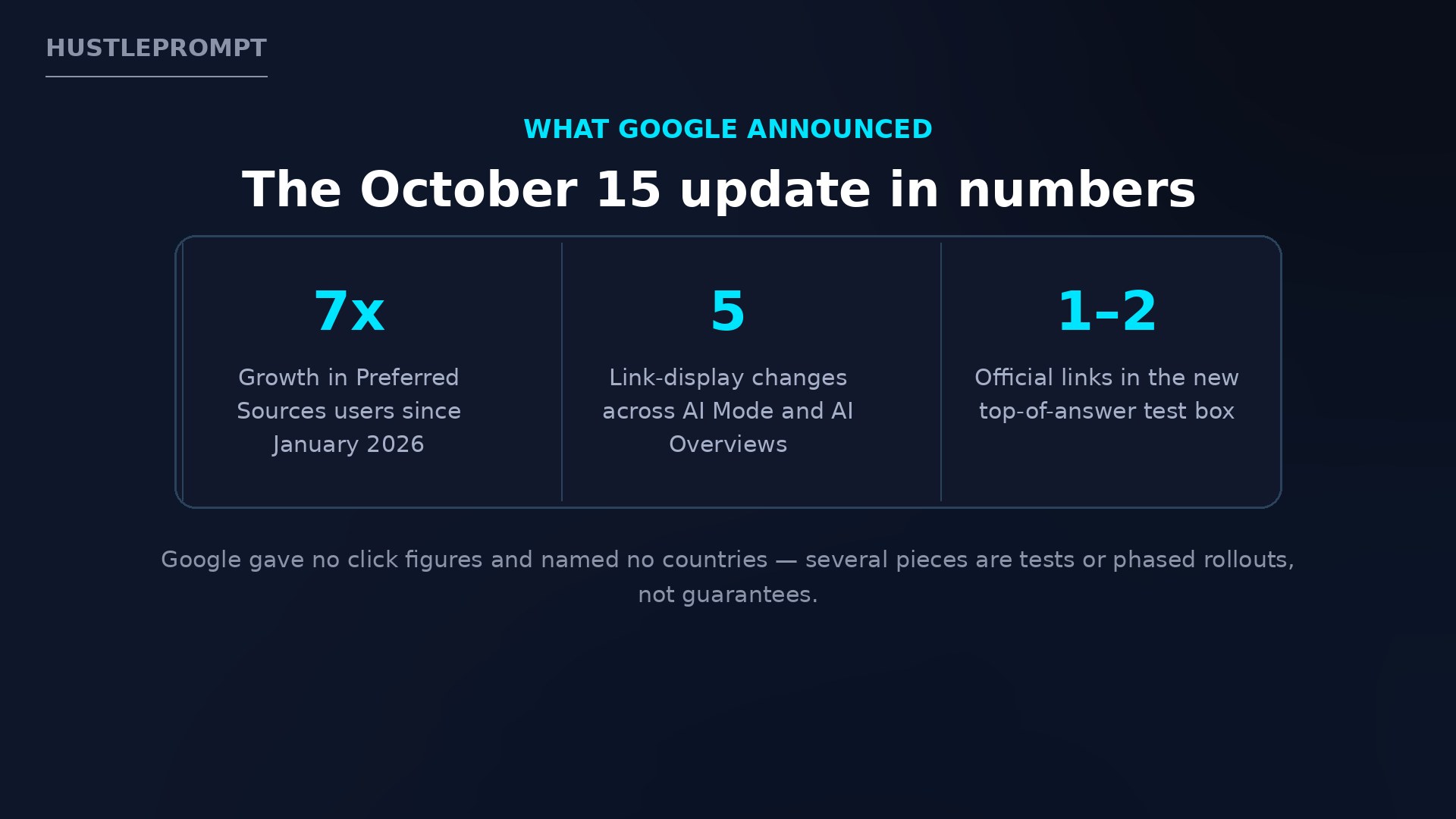
In Google’s official blog, Hema Budaraju, VP of Product Management for Search, laid out five link-display updates to help users “find links to click out and dive deeper.”
Context: Preferred Sources use is up more than 7x since January — the announcement’s only hard number, signaling demand for named, trusted publishers.
The 5 changes, in plain English
Two of the five are explicitly tests. Each item’s real status:
The first change matters most. Inline links used to sit too low for many readers to reach. Google reports “continued and substantial increases” and now shows them higher in responses, more frequently — clickable at the moment of reading.
What the new AI Search inline links look like
An AI answer is a page with link real estate. Google is moving it upward:
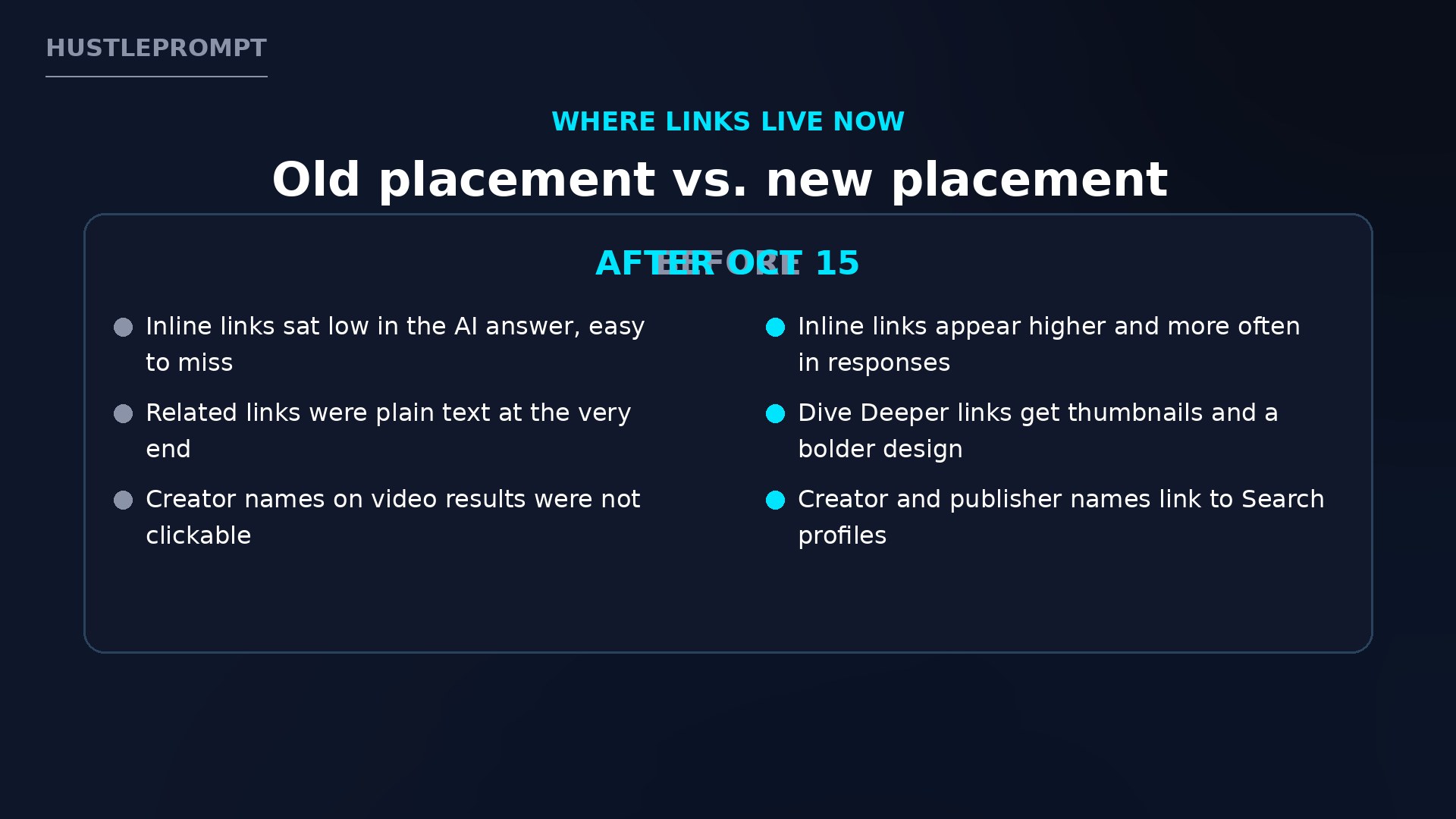
Link placement: before vs. after October 15
- Inline links buried low in the answer text
- Related links as plain text at the very end
- Creator names on video results not clickable
- Inline links appear higher and more often
- Test box: 1–2 official links at the very top
- Dive Deeper links get thumbnails, bolder design
- Creator and publisher names link to profiles
Note the official-sites box: a tested top-of-response section for queries with “only one or two official places on the web” to complete a task — refund pages, government forms, docs. Each link carries context on why it’s useful. For brand queries, that’s the new position zero.
How to profit: become the cited source
Every new in-answer link is a door. The checklist:
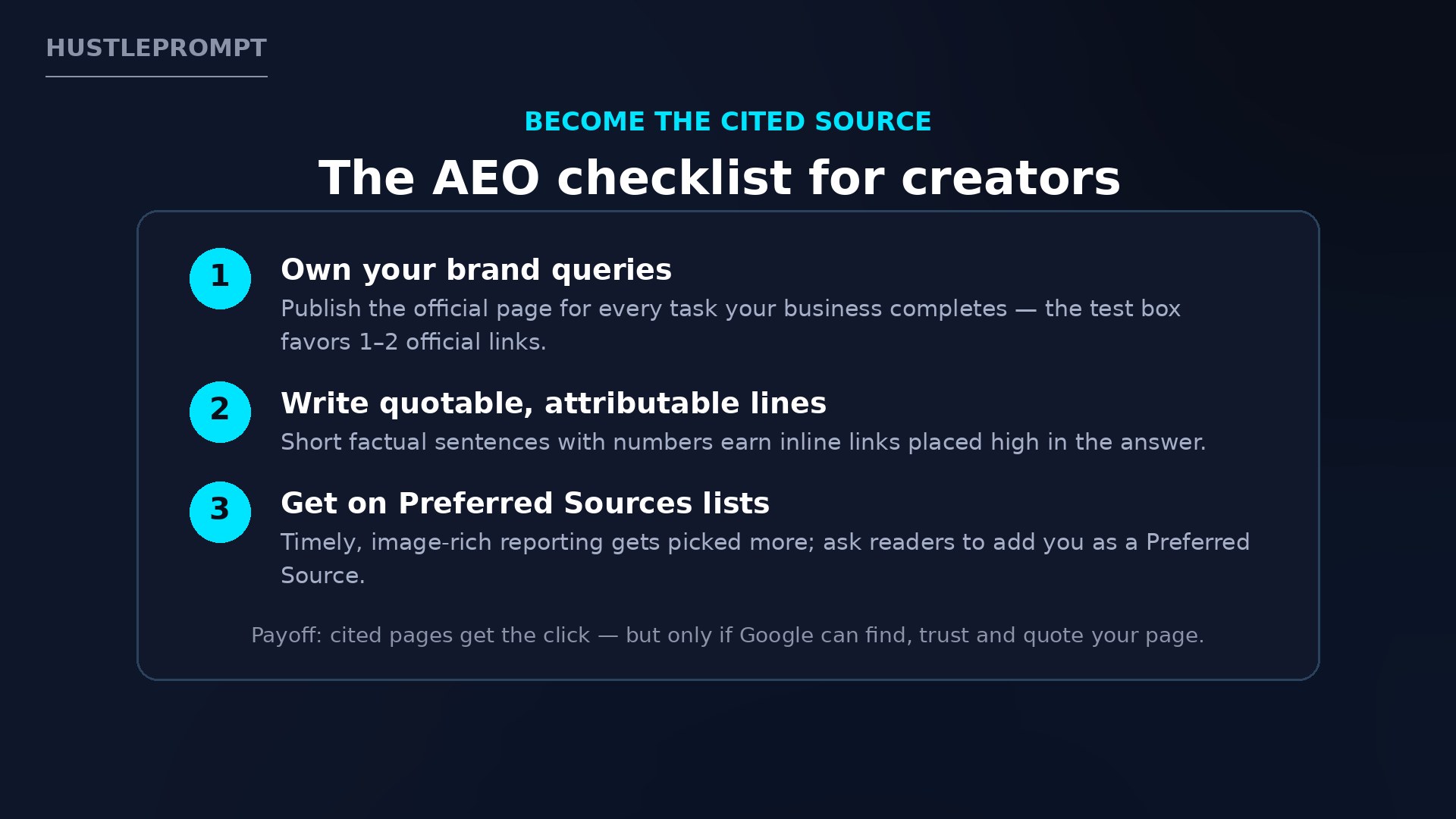
- Own your brand and task queries. Publish the definitive official page for pricing, booking, returns, docs. The test favors 1–2 authoritative links per task — be the obvious candidate.
- Write quotable, attributable lines. Short factual sentences with specific numbers and named sources. Vague marketing copy earns no inline link.
- Get on Preferred Sources lists. Publish timely, image-rich reporting — and ask readers to add you as a Preferred Source.
- Put your name on video. Creator names are becoming clickable on AI Mode video results — use one consistent name everywhere.
- Track citations, not just rankings. Weekly: which pages appear as inline links in AI Overviews for your target queries?
The honest caveats
A product announcement, not a traffic guarantee. Three things it does not say:
- No click figures. No data on whether higher links actually send more clicks.
- No countries or timelines. Unnamed carousel locales; the box and creator profiles are dateless tests.
- Tests can vanish. Build for them, but don’t bet the business on any single surface.
FAQ
What did Google announce on October 15, 2026?
Five link-display changes in AI Mode and AI Overviews: higher inline links, a 1–2 official-site test box, global news carousels, thumbnail Dive Deeper links, clickable creator names (test).
What are inline links in AI Search?
Links embedded in an AI answer’s words — now shown higher and more often.
What is the official-sites box?
A tested top-of-answer section with 1–2 official links for task queries, each explained. Not yet launched.
What are Preferred Sources?
A feature letting users pick trusted sites. Use is up 7x+ since January; preferred sites get highlighted.
Will this send more traffic to my site?
That’s the intent — but no click data published. Make pages quotable, own brand queries, get chosen as a Preferred Source.
Do I need to change my SEO strategy?
Evolve it. SEO decides if Google trusts your page; AEO decides if the answer quotes it. Factual sentences, real numbers, official pages serve both.
Sources
- Google Blog: AI Mode and AI Overviews updates to explore the web — official October 15, 2026 announcement by Hema Budaraju, VP of Product Management for Search; documents all five link-display changes and the 7x Preferred Sources growth figure.